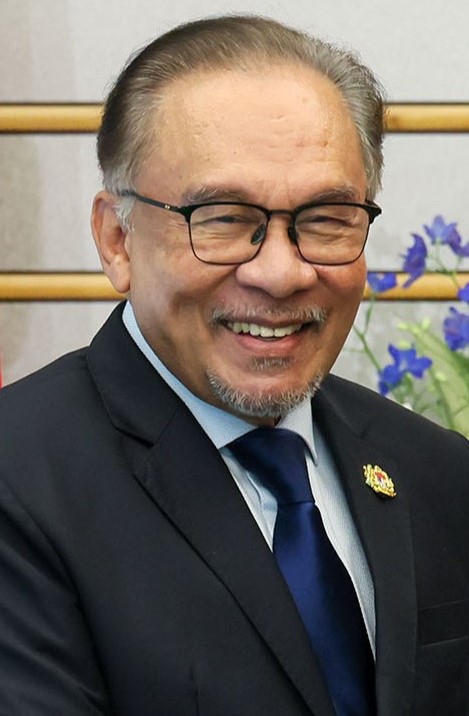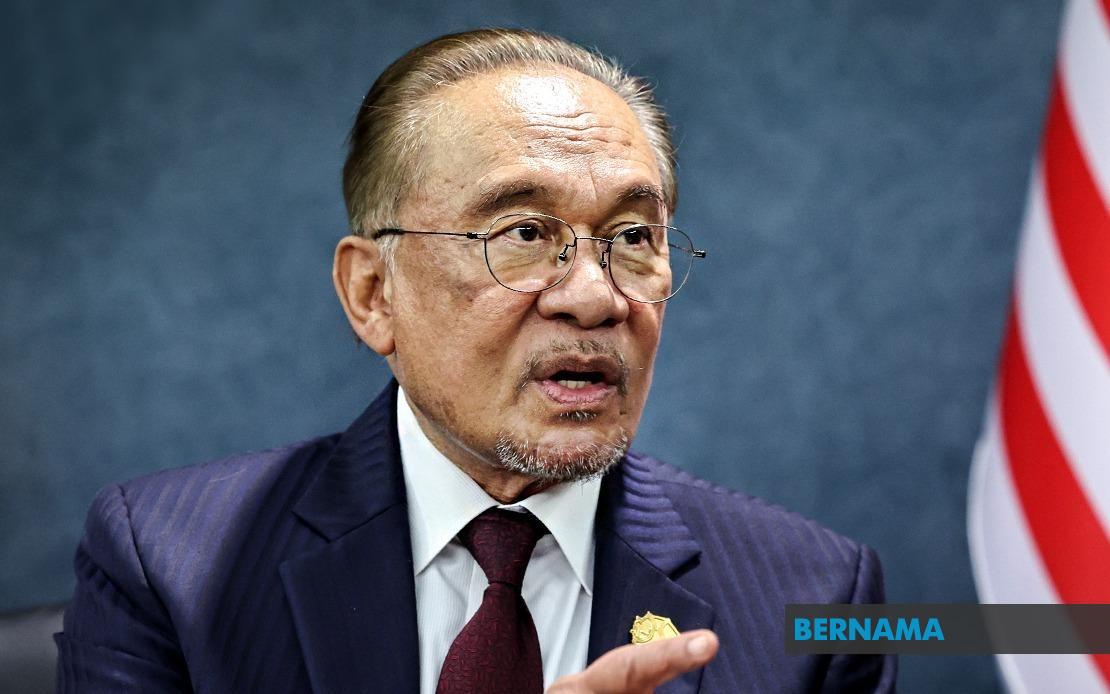
Prime Minister Datuk Seri Anwar Ibrahim is set to address the ASEAN-Russia Business Forum in Kazan, the capital of Russia's Republic of Tatarstan, as part of the broader ASEAN-Russia Commemorative Summit. His participation underscores Malaysia's commitment to strengthening regional engagement with Russia at the highest political level, with the forum providing a crucial platform for business dialogue between Southeast Asian and Russian enterprises.
The forum will be held at Kazan IT Park, where Anwar will be received by Ilya Nachvin, Minister of Digitalisation of Public Administration, Information Technologies and Communications of the Republic of Tatarstan. Drawing on his dual role as Prime Minister and Finance Minister, Anwar will deliver remarks addressing business representatives and officials representing all ten ASEAN member states alongside Russian counterparts, positioning Malaysia as an active contributor to bilateral economic discussions.
Beyond the business forum, Anwar's schedule includes attendance at the ASEAN-Russia Commemorative Summit Gala Dinner at the Tatar State Academic Theater. Notably, the Prime Minister is also expected to participate in a courtesy call on Russian President Vladimir Putin, reflecting the significance Malaysia places on maintaining high-level political relations with Moscow despite complex global geopolitical dynamics.
The timing of this summit carries symbolic weight. This year marks the 35th anniversary of ASEAN-Russia dialogue relations, a milestone underscoring three decades of sustained engagement between Southeast Asia's premier regional grouping and one of the world's major powers. Russia's elevation to full ASEAN Dialogue Partner status in 1996 represented a watershed moment in institutionalising the relationship, which subsequently evolved into a Strategic Partnership in 2018—a designation that formalised mutual commitments across political-security, economic, and socio-cultural cooperation.
Kazan itself holds particular significance as a venue for such discussions. Situated approximately 800 kilometres east of Moscow at the confluence of the Volga and Kazanka rivers, the city functions as Russia's principal centre of Islamic culture and heritage, with a history spanning more than a millennium. Often described as Russia's 'third capital' after Moscow and St Petersburg, Kazan serves as a unique bridge between the Russian and Muslim worlds, making it symbolically appropriate for dialogue involving ASEAN nations with substantial Muslim populations and Islamic heritage.
Economically, the ASEAN-Russia relationship demonstrates solid growth momentum. In 2024, bilateral trade between the two regions reached USD18.1 billion, while Russian foreign direct investment in ASEAN totalled USD92.97 million. These figures reflect ongoing commercial interdependence despite various international pressures and sanctions regimes that have affected Russian economic engagement globally in recent years.
For Malaysia specifically, Russia occupies an important position in the country's European trade portfolio, ranking as the ninth-largest trading partner among European nations in 2025. Malaysian-Russian bilateral trade is valued at RM8.72 billion, equivalent to USD2.04 billion, representing a substantial economic relationship that extends beyond the political sphere. This commercial dimension provides tangible incentives for both countries to maintain dialogue and expand cooperation.
Malaysia's export profile to Russia centres on high-value manufactured goods, particularly electrical and electronic products alongside machinery, equipment and component parts that reflect the country's manufacturing competitiveness in the region. The inclusion of processed food products in the export mix demonstrates diversification across multiple sectors. Conversely, Malaysia's imports from Russia are concentrated in commodities and raw materials, principally petroleum products, minerals, and chemical-based products, reflecting Russia's resource-rich economy and Malaysia's need for energy security and industrial inputs.
This economic interdependence lends practical substance to the diplomatic engagement occurring at summits such as the Kazan gathering. Business forums provide venues where commercial opportunities can be explored, supply chains can be discussed, and investment frameworks can be negotiated. For Malaysian businesses seeking to understand market opportunities or develop partnerships in the Russian market, or for Russian counterparts exploring Southeast Asian expansion, such forums offer invaluable networking opportunities.
The broader context of ASEAN-Russia relations also warrants consideration. ASEAN has historically maintained a policy of strategic autonomy, avoiding alignment with major powers while engaging constructively with all. Russia, despite its global geopolitical positioning, represents an important partner for ASEAN in areas including energy security, trade, technology cooperation, and regional stability dialogue. For Malaysia, balancing engagement with Russia alongside relationships with Western partners and other major powers remains a cornerstone of its foreign policy framework.
Anwar's personal involvement in these proceedings reflects Malaysia's recognition that high-level political presence matters in sustained bilateral relations. His addresses to business representatives will likely emphasise the commercial opportunities available through enhanced Malaysia-Russia cooperation while potentially exploring avenues for expanded engagement across sectors aligned with Malaysia's economic diversification priorities.
The coincidence of the 35-year anniversary with this commemorative summit suggests that both ASEAN and Russia view their relationship as sufficiently mature and valuable to merit celebration and recommitment. For Malaysia, participating meaningfully in this engagement signals its intention to remain an active regional voice in shaping ASEAN's external relations while preserving direct bilateral connections with major powers including Russia.