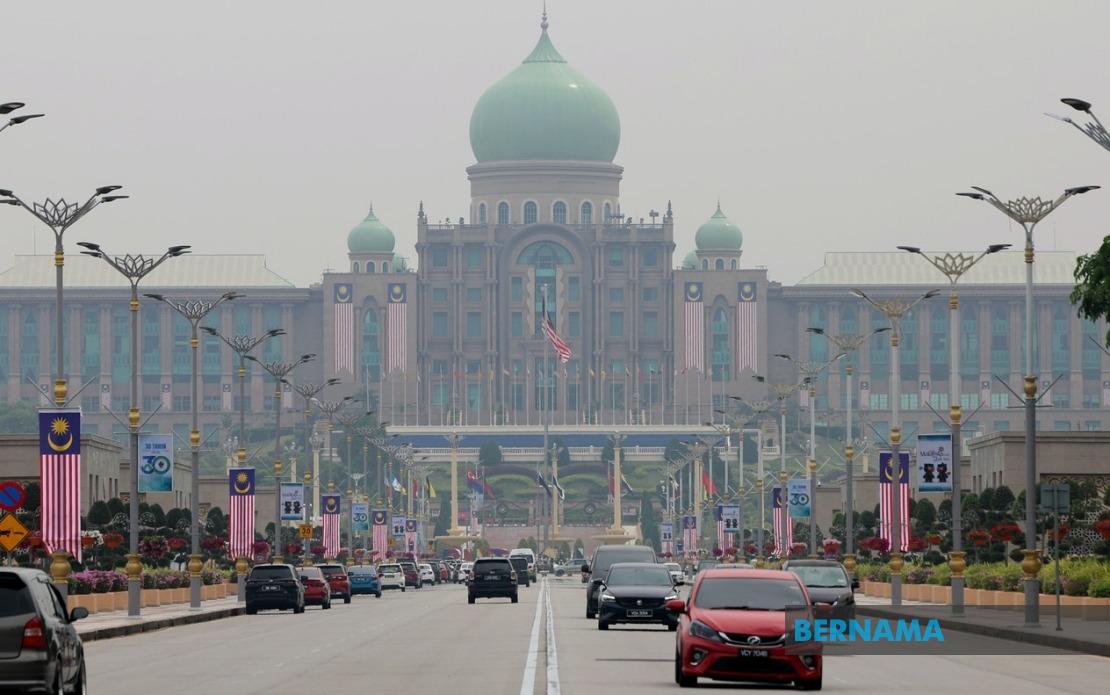
Prime Minister Datuk Seri Anwar Ibrahim is expected to place the regional haze problem high on the agenda when he meets Sultan Hassanal Bolkiah during the 27th Malaysia-Brunei Annual Leaders' Consultation, commencing tomorrow in Bandar Seri Begawan. The transboundary air quality crisis, which has intensified across the region, represents a shared environmental concern that demands coordinated diplomatic attention between the two neighbouring nations.
Datuk Mohd Aini Atan, Malaysia's High Commissioner to Brunei, confirmed during a press briefing that air pollution will feature prominently in discussions, noting that this issue carries strategic importance for both countries. The inclusion of the matter in formal bilateral talks underscores its severity and the Malaysian government's commitment to addressing it through high-level engagement rather than routine administrative channels. By elevating the haze discussion to the leaders' consultation level, Malaysia signals that transboundary pollution warrants the same diplomatic weight as trade, security, and political relations.
The timing of this announcement proves significant given that Sarawak currently faces unprecedented air quality deterioration. The state, which serves as the economic and demographic centre of Malaysian Borneo, is experiencing pollution levels that pose genuine public health risks. Serian recorded the most severe readings at 204 on the Air Pollutant Index scale—classified as "very unhealthy"—as of this afternoon, while five other major towns in the state also registered hazardous concentrations. Kuching, the state capital, registered 195, while Samarahan, Sri Aman, Sarikei, and Sibu all exceeded the "unhealthy" threshold, with readings ranging from 152 to 182.
The presence of both Sarawak Premier Tan Sri Abang Johari Tun Openg and Sabah Chief Minister Datuk Seri Hajiji Noor at the consultation signals that this represents more than routine bilateral courtesy. By including the heads of Malaysia's two largest East Malaysian states, the delegation demonstrates institutional commitment from the federal government to addressing concerns specific to Borneo. Their participation lends additional weight to Malaysian representations, as they bring on-the-ground experience and can articulate the direct impacts on their constituents, economic productivity, and environmental management efforts.
The Annual Leaders' Consultation mechanism itself serves as the pinnacle of Malaysia-Brunei bilateral relations, representing the formal structure through which both nations address matters of mutual concern. This framework has functioned since its inception as the principal vehicle for high-level political dialogue, allowing leaders to move beyond departmental discussions to comprehensive strategic engagement. By channelling the haze issue through this mechanism, both governments elevate it from an environmental problem to a matter of bilateral importance that requires coordinated policy responses.
For Malaysian readers, particularly those in Sarawak and Sabah, the haze represents an annual challenge that affects not only quality of life but also economic activity, school operations, and healthcare demand. The spike in Air Pollutant Index readings during August reflects established seasonal patterns in the region, yet this year's figures suggest conditions may be reaching critical levels that demand urgent intervention. The transboundary nature of air pollution means that unilateral action by Malaysia alone proves insufficient—neighbouring countries must similarly commit to monitoring and controlling their own sources of particulate matter and smoke.
Brunei's position in these discussions carries particular relevance, as the sultanate sits geographically between Malaysian states and Indonesian territory where significant land-clearing activities often originate. Though Brunei itself experiences less dramatic haze episodes than Sarawak due to its smaller landmass and population, it shares the same atmospheric conditions and has incentive to support regional coordination on air quality management. Engagement with Brunei at the prime ministerial level potentially strengthens broader Southeast Asian diplomatic efforts to pressure Indonesia on transboundary pollution control.
The Malaysian Air Pollutant Index Management System provides real-time monitoring data that informs both public health guidance and diplomatic discussions. These objective measurements strengthen Malaysia's position when raising the issue internationally, as they document the severity and persistence of the problem with precise data rather than anecdotal reporting. The distribution of problematic readings across multiple Sarawak towns indicates that this represents a widespread phenomenon rather than localised pollution, justifying the scale of diplomatic attention it receives.
Regionally, the haze issue carries implications for the broader Association of Southeast Asian Nations framework and bilateral relationships throughout the peninsula and Borneo. Malaysia has frequently raised transboundary air pollution through ASEAN channels, yet persistent challenges underscore the limitations of voluntary regional agreements without enforcement mechanisms. Bilateral discussions between Malaysia and Brunei, followed by potential trilateral arrangements involving Indonesia, may prove more effective in establishing concrete commitments to pollution control and monitoring.
Looking forward, the consultation provides an opportunity for Malaysia to propose enhanced monitoring arrangements, joint research initiatives, or coordinated diplomatic pressure on Indonesian authorities to strengthen enforcement of environmental regulations. The presence of East Malaysian leadership in these discussions suggests that the Malaysian government recognises the state-level dimensions of the problem and intends to incorporate regional perspectives into national diplomatic strategy. How these discussions translate into concrete action will ultimately determine whether they represent meaningful progress toward cleaner air or simply bureaucratic acknowledgement of an intractable problem.

