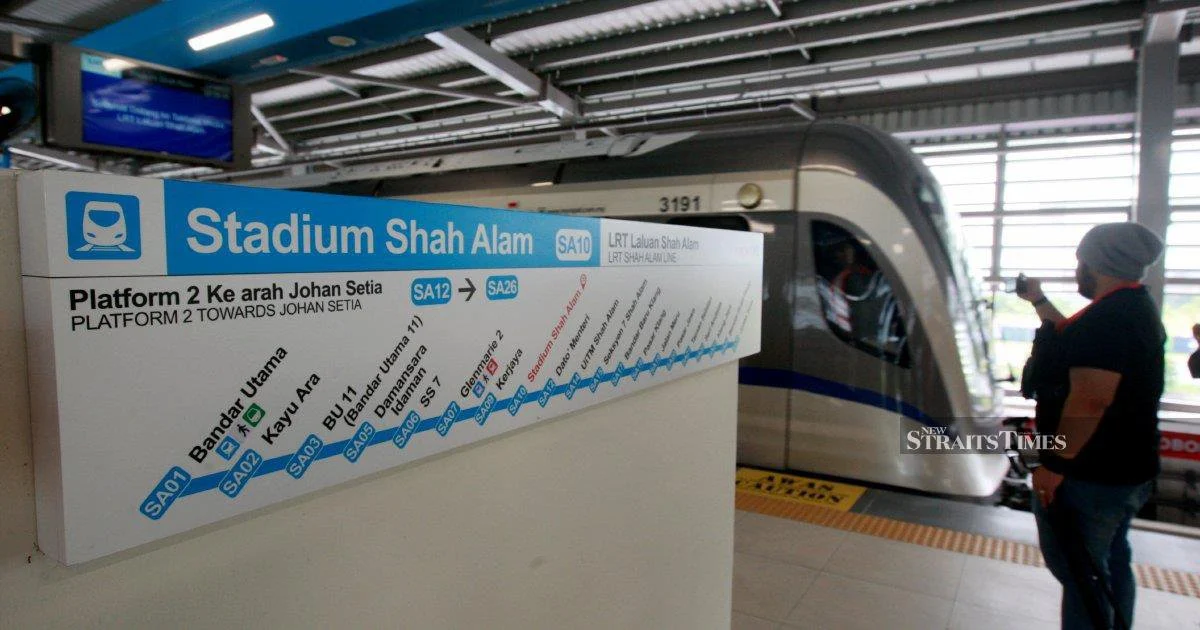
Prime Minister Datuk Seri Anwar Ibrahim will formally inaugurate the Light Rail Transit Line 3 (LRT3) Shah Alam extension this Sunday, with the newly expanded rapid transit corridor set to commence passenger operations the following day. The opening ceremony marks another milestone in Malaysia's efforts to expand public transportation infrastructure across the Klang Valley, one of the nation's most congested urban corridors.
The LRT3 Shah Alam line represents a significant expansion of the existing LRT3 network, which has served commuters in the Bandar Utama to Pavilion KL corridor since its launch in 2016. This extension will connect Shah Alam, the capital city of Selangor, to the broader Klang Valley rapid transit ecosystem, providing residents with enhanced connectivity to commercial centres, employment hubs, and educational institutions across the metropolitan area.
The decision to extend the LRT3 network into Shah Alam responds to mounting transportation pressures in Selangor, where population growth and urban development have consistently outpaced infrastructure expansion. Shah Alam, home to over 800,000 residents and numerous industrial parks and manufacturing facilities, has long faced chronic traffic congestion during peak hours. The new line promises to alleviate some of this burden by offering a viable alternative to car-dependent commuting for thousands of daily travellers.
Investments in public transportation infrastructure remain central to the government's broader urban development strategy. The expansion aligns with Malaysia's commitment to sustainable city planning and reducing carbon emissions from transportation, objectives that have gained prominence as Southeast Asian cities grapple with air quality and climate change concerns. By enhancing rapid transit options, authorities aim to encourage modal shift away from private vehicles, particularly in densely populated metropolitan regions.
The LRT3 Shah Alam extension will integrate with existing rapid transit networks, including the KTM Komuter and the Selangor-owned monorail systems, creating a more interconnected public transportation network. This integration is crucial for addressing the first and last-mile problem that often deters commuters from using rapid transit, as seamless transfers between different modes of transport significantly improve overall journey convenience and travel time.
The project's completion comes amid broader discussions about funding mechanisms for transportation infrastructure in Malaysia. Public-private partnerships and direct government investment have both played roles in financing these expansions, reflecting the substantial capital requirements involved in developing modern rapid transit systems. The successful delivery of this extension demonstrates sustained commitment to infrastructure projects despite economic headwinds affecting the region.
Regional observers have noted that Malaysia's rapid transit expansion follows broader Southeast Asian trends toward modernising urban transportation networks. Cities like Bangkok, Singapore, and Jakarta have invested heavily in mass rapid transit systems to manage urbanisation and congestion. Malaysia's continued expansion of its LRT network places it among regional leaders in rapid transit development, though questions remain about whether such investments can keep pace with rapid urban population growth across the country.
For residents and commuters in Shah Alam, the new line offers tangible benefits including reduced commuting times, lower transportation costs, and decreased vehicle ownership pressures. The extension may also stimulate property development patterns along the corridor, as transit-oriented development typically follows rapid transit expansion, potentially reshaping residential and commercial landscapes in Shah Alam and surrounding areas.
The timing of the inauguration and subsequent operational launch reflects careful planning to ensure system readiness before opening to the public. Such staging allows transit authorities to conduct final safety checks, staff training, and system optimisation while maintaining public visibility of the project's completion. The high-profile nature of a prime ministerial opening ceremony underscores the political significance authorities attach to transportation infrastructure delivery.
Looking forward, the LRT3 Shah Alam extension establishes a foundation for potential further network expansions, though any subsequent phases would require careful feasibility assessment and funding confirmation. The success of this extension in managing demand and serving commuter needs will likely inform future decisions regarding rapid transit development priorities across Selangor and the broader Klang Valley region.

