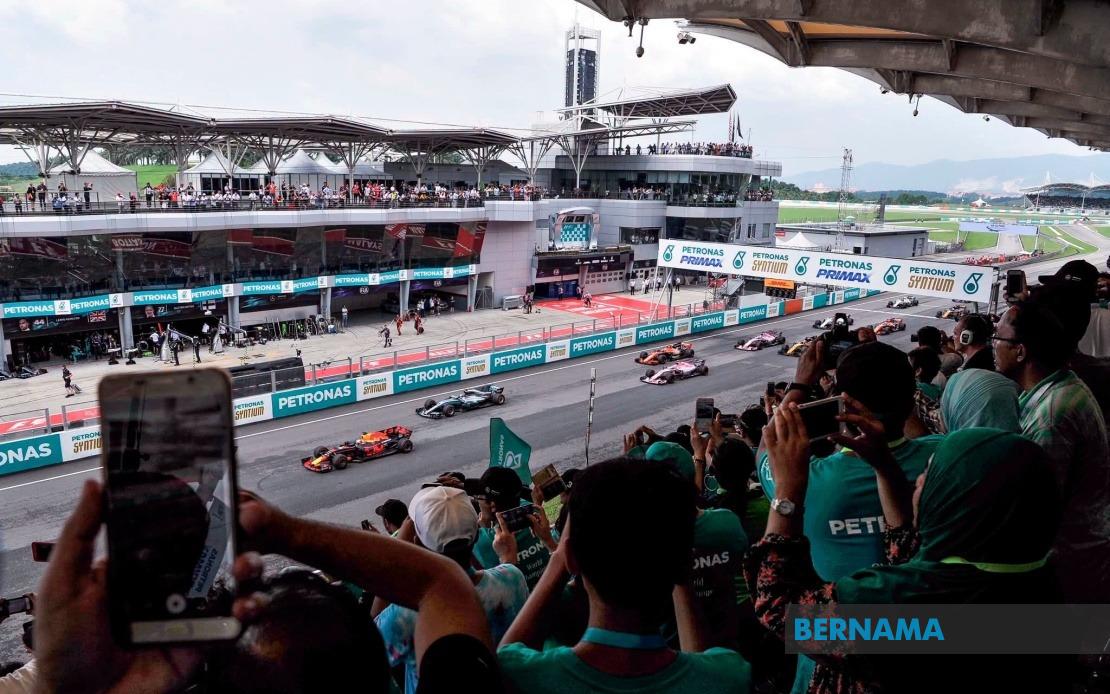
Prime Minister Datuk Seri Anwar Ibrahim has thrown open the doors to Formula 1 racing for ordinary Malaysians, announcing a specially designed ticketing programme that will allow MyKad holders to experience the Bahrain Grand Prix live at Sepang International Circuit for as little as RM200. The MADANI Tickets initiative represents a conscious effort by the government to democratize access to what has traditionally been an expensive spectacle, ensuring that cost does not remain a barrier to Malaysian participation in one of motorsport's marquee events.
The pricing structure, which begins at RM200 and grants admission across the entire three-day festival scheduled for October 2 to 4, marks a significant departure from the commercial models that have historically governed Formula 1 ticketing in the region. This threshold represents roughly one-third the cost of standard general admission tickets at comparable international racing venues, signalling a deliberate policy choice to prioritize breadth of access over maximum revenue extraction from premium seating categories. The initiative emerged following government deliberations spanning several weeks, culminating in an agreement negotiated between Malaysian authorities and their Bahraini counterparts, whose Grand Prix was relocated to Sepang after geopolitical disruptions forced postponement from its originally scheduled April date in the Middle East.
The logistics of bringing Formula 1 back to Malaysia carry particular resonance for a nation that hosted the Malaysian Grand Prix annually from 1999 until 2017, when escalating hosting expenditures and international licensing fees rendered the event economically unsustainable under previous arrangements. That near-two-decade presence had established Sepang as a globally recognized venue and cultivated a passionate local motorsport community that extended beyond Kuala Lumpur into surrounding states. The circuit itself required substantial infrastructure investment and hosted not only the Malaysian GP but numerous international racing championships, positioning it as Southeast Asia's premier racing facility. Its departure from the Formula 1 calendar represented a setback for Malaysian sporting ambitions and a lost annual showcase for domestic talent and engineering capabilities.
The return of Formula 1 under the unusual framework of hosting Bahrain's Grand Prix at Malaysian soil presents both opportunity and complexity. The geopolitical circumstances that necessitated this relocation—regional tensions that forced the original Bahrain International Circuit date to shift—underscore how international sporting events intersect with broader Middle Eastern political dynamics. Malaysia's willingness to accommodate this change demonstrates diplomatic flexibility while simultaneously positioning the nation as a reliable host for high-profile international competitions, a consideration that extends beyond sports into broader regional standing and soft power cultivation.
From a domestic perspective, the MADANI Tickets scheme addresses legitimate equity concerns inherent in major sporting events. Formula 1 in Asia has increasingly become the preserve of corporate hospitality packages and affluent international tourists, with local participation rates declining as ticket prices have spiralled. By establishing an entry point at RM200 for Malaysian citizens, the government consciously creates a tiered access model where ordinary working families, university students, and motorsport enthusiasts can participate without prohibitive financial burden. This aligns with the broader MADANI framework emphasizing inclusive prosperity and equitable opportunity across Malaysian society.
The three-day pass structure amplifies the value proposition considerably, effectively pricing daily attendance at approximately RM67 when amortized—a figure competitive with premium cinema experiences or major sporting events in Malaysia. This elasticity of demand at accessible price points typically generates volume participation that, while reducing per-ticket revenue, creates atmosphere and spectacle that benefits broadcasters, sponsors, and the overall event experience. The financial viability of such pricing ultimately depends on ancillary revenue from hospitality, merchandise, and premium seating tiers which likely remain at international rates.
Implementation details remain pending formal announcement from Sepang International Circuit, which will presumably establish eligibility verification processes, distribution mechanisms, and potential allocation limits if demand substantially exceeds availability. Previous major event ticketing in Malaysia suggests the government may utilize online platforms or retail partners to distribute allocations, though the requirement for MyKad verification introduces operational complexity absent from typical commercial ticket sales. How the circuit balances accessibility objectives against practical capacity constraints—particularly if demand vastly outstrips the approximately 100,000 three-day capacity—will test the scheme's authentic commitment to inclusion.
The broader context of Formula 1's evolving geography merits consideration. The sport's expansion into Southeast Asia and beyond reflects both commercial ambitions and geopolitical recalibration, as new venues in the Middle East, North Africa, and Asia attract investment while traditionally dominant European markets face questioning about environmental sustainability and cost-of-living pressures. Malaysia's repositioning as a venue serves this global dynamic whilst simultaneously recovering lost cultural and economic ground from the circuit's previous absence. A successful, well-attended event with strong domestic participation could theoretically strengthen Malaysia's case for regular F1 scheduling, particularly as the sport seeks stable venues in Asia.
For neighbouring economies and regional observers, Malaysia's approach offers lessons in leveraging international sporting events for domestic social objectives. Thailand, Vietnam, and other Southeast Asian nations increasingly pursue motorsport and entertainment tourism, and the MADANI model demonstrates how accessibility initiatives can coexist with premium revenue streams. The ticket pricing architecture—making basic access affordable while maintaining high-end hospitality options—represents a pragmatic middle path between populism and commercial viability.
Prime Minister Anwar's public emphasis on this initiative through social media demonstrates the political salience of sports accessibility in Malaysian governance discourse. Motorsport carries particular resonance in Malaysia given the nation's automotive manufacturing base, national pride in international racing achievement, and the Sepang circuit's historical significance. Restoring a Formula 1 event with conspicuous affordability provisions signals that government economic policy prioritizes citizen welfare alongside headline-grabbing international partnerships, a messaging strategy relevant to broader domestic political positioning. The specific invocation of the MADANI framework—the government's development philosophy—integrates sporting policy into overarching governance philosophy, demonstrating how event management becomes vehicle for articulating policy coherence across domains.

