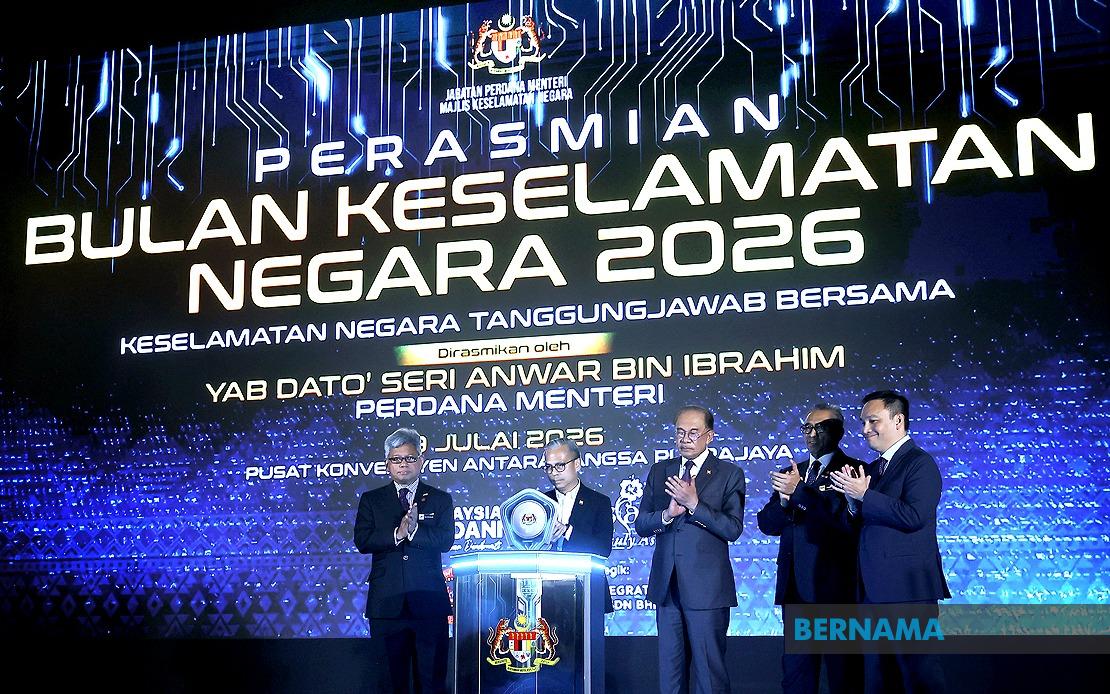
Prime Minister Datuk Seri Anwar Ibrahim has sounded a stark warning about the dangers of allowing identity-based political divisions to persist unchecked, arguing that such fractures threaten national cohesion and expose Malaysia to heightened security vulnerabilities. Speaking at the launch of the National Security Month 2026 programme in Putrajaya, Anwar emphasised that the country faces increasingly sophisticated security challenges that demand unified governmental focus and immediate attention from leadership across all levels.
The Prime Minister's remarks reflected growing frustration with what he characterised as outdated political discourse dominating parliamentary discussions. Rather than grappling with contemporary threats, legislators continue to relitigate familiar grievances rooted in questions of ethnicity, religion, and regional identity. This preoccupation with longstanding communal tensions, Anwar suggested, diverts critical mental and institutional resources away from emergent dangers that could potentially undermine national stability. The implicit message was clear: Malaysia cannot afford the luxury of perpetuating old conflicts when new threats demand full institutional capacity.
Among the security challenges consuming government attention are technological and digital threats that represent an entirely different category of risk from traditional concerns. These modern vulnerabilities demand sophisticated understanding and rapid responses that differ fundamentally from conventional security frameworks. Cyber threats, information warfare, and digital infrastructure vulnerabilities do not distinguish between communities; they threaten the entire nation uniformly. By continuing to frame politics through communal divisions, Malaysian leaders risk fragmenting responses to threats that require integrated, whole-of-nation approaches.
Anwar's comments were delivered before a gathering that included Communications Minister Datuk Fahmi Fadzil, Chief Secretary to the Government Tan Sri Shamsul Azri Abu Bakar, and National Security director-general Datuk Raja Nurshirwan Zainal Abidin. The presence of senior security and communications officials underscored the gravity with which the administration views both the current threat environment and the broader challenge of shifting political culture away from divisive identity narratives. The forum itself functioned as an implicit rebuke to parliamentary practices that continue prioritising identity-based grievances.
The Prime Minister specifically highlighted the responsibility borne by senior leaders across government departments, agencies, and ministries to adopt more anticipatory and forward-thinking approaches. Rather than reacting to crises as they materialise, government institutions must develop capacity to identify emerging threats and implement preventive measures. This requires fundamental shifts in institutional culture, moving away from rigid bureaucratic processes that operate on reactive timelines. Leaders must cultivate deeper understanding of evolving technologies and unconventional security challenges that fall outside traditional domains of defence and law enforcement.
Anwar's intervention carries particular significance for Malaysia's regional standing and domestic stability. Southeast Asia has witnessed increasing cyber attacks, electoral interference operations, and digital disinformation campaigns that exploit communal fault lines. Nations that remain trapped in identity-based political competition become vulnerable to external actors who deliberately amplify divisive messaging to destabilise governance. By warning against persistent communal grievance politics, the Prime Minister was implicitly advocating that Malaysia must present a more unified front to resist such external manipulation.
The emphasis on technological threats reflects broader global trends that have reshaped security thinking among developed and developing nations alike. Traditional military threats, while remaining relevant, no longer dominate strategic planning for most nations. Instead, governments grapple with ransomware attacks on critical infrastructure, data breaches affecting national security systems, and coordinated disinformation campaigns designed to undermine public institutions and democratic processes. Malaysia's vulnerability to such threats arguably increases when political leadership remains fragmented along communal lines and incapable of coordinating unified responses.
Anwar's warning also suggests tension between his administration's vision for a modern, unified Malaysia and the continued salience of communal identity in electoral and parliamentary politics. Despite attempts to move political discourse toward issues of governance, economic performance, and institutional reform, Malaysian politics continues gravitating toward arguments about rights, privileges, and identity. This gap between governmental aspirations and political reality presents an ongoing challenge that extends beyond the immediate security agenda.
The National Security Month 2026 initiative represents an attempt to reorient public and institutional attention toward collective vulnerability and shared interests. By framing security as a unifying concern that transcends communal divisions, the government seeks to establish common ground for political discourse. However, the persistence of identity-based politics suggests that merely declaring security imperatives will prove insufficient without deeper shifts in how political actors are incentivised and rewarded in Malaysian electoral competition.
Looking ahead, the success of such reorientation depends partly on whether Malaysian political elites across party lines adopt similar messaging and prioritise cross-communal cooperation on security matters. The government's role in demonstrating unified commitment to addressing modern threats, combined with visible progress in protecting critical infrastructure and combating digital attacks, could gradually shift political culture. However, without broader buy-in from opposition parties and civil society, communal identity politics will likely continue competing with unified security responses for political attention and resources.

