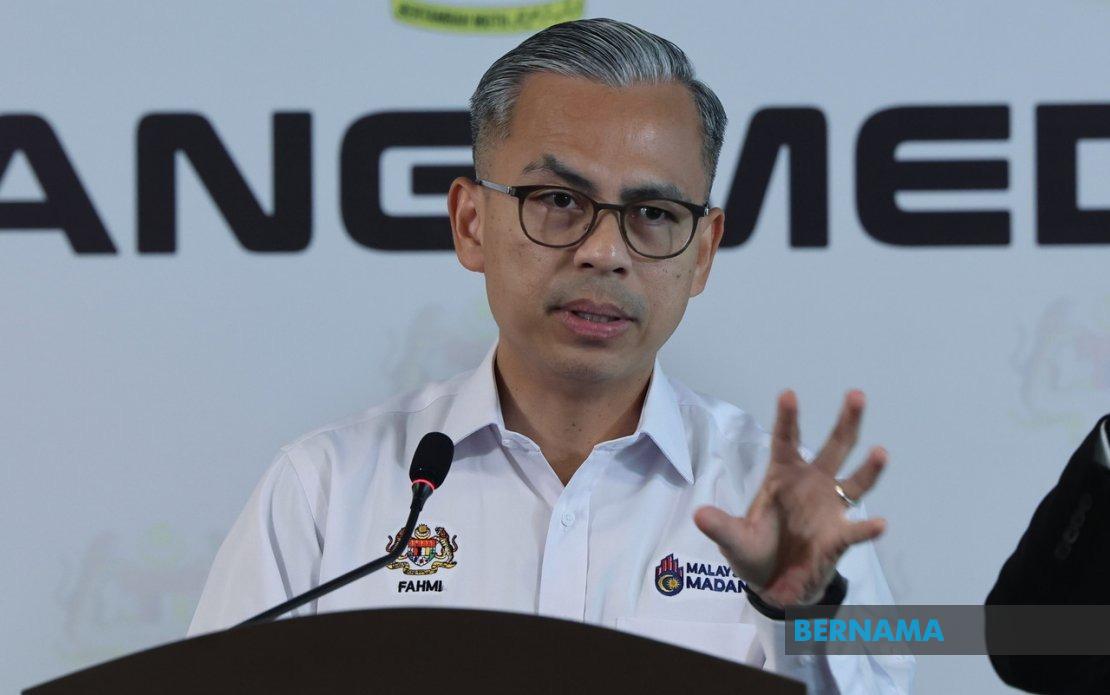
Prime Minister Datuk Seri Anwar Ibrahim has instructed the Ministry of Human Resources (KESUMA) to urgently process 15,000 foreign worker applications as part of efforts to alleviate pressing labour shortages across Malaysia's key economic sectors. Communications Minister Datuk Seri Fahmi Fadzil announced the directive following a Cabinet meeting in Putrajaya on August 5, emphasizing that the expedited processing responds to immediate workforce demands that have constrained business operations and economic activities throughout the country.
The decision represents a significant operational shift in how Malaysia manages its foreign worker intake. By centralizing responsibility and accelerating application processing, the government aims to ensure that critical industries—including manufacturing, construction, agriculture, and hospitality—receive the workforce they require to maintain productivity and competitiveness. The timing of this directive signals growing concern within policymaking circles that labour constraints pose a tangible risk to Malaysia's economic momentum during a period when regional competition for investment remains intense.
Minister Fahmi articulated the government's dual objective: satisfying the concrete labour requirements of affected sectors while simultaneously supporting broader economic activity and growth. This framing underscores how workforce availability functions as a foundational input for Malaysia's continued development, rather than a peripheral administrative matter. When labour shortages persist, businesses face operational inefficiencies, postponed expansion plans, and potential relocation of operations to neighbouring countries with more accessible labour pools—scenarios that directly threaten Malaysia's standing as an investment destination.
Underlying this directive is a structural reorganization implemented by Human Resources Minister Datuk Seri R. Ramanan. The Ministry of Human Resources has assumed comprehensive responsibility for the One-Stop Centre (OSC) for Foreign Worker Management, consolidating foreign worker governance under a single institutional authority. This consolidation took effect immediately following the Cabinet's decision on July 1, representing a deliberate effort to eliminate administrative fragmentation that may have previously slowed approval processes.
The consolidation addresses longstanding concerns about institutional coordination in foreign worker management. Previously, responsibility for foreign worker recruitment and management was dispersed across multiple agencies, creating procedural bottlenecks and inconsistent application processing timelines. By concentrating authority within KESUMA, the government has positioned itself to implement standardized protocols, reduce interagency communication delays, and establish clear accountability for meeting processing targets.
This reorganization was formally decided during the first 2026 Cabinet Committee on Foreign Workers meeting held on June 30, indicating that senior government leadership has prioritized labour supply as a critical economic issue requiring elevated attention and faster resolution mechanisms. The establishment of a dedicated Cabinet committee signals that foreign worker policy is no longer treated as a routine administrative function but rather as a strategic priority demanding regular ministerial oversight and policy adjustment.
For Malaysian businesses, particularly those in labour-intensive sectors, this accelerated processing represents potential relief from recruitment constraints that have limited growth prospects. Manufacturing plants have experienced production delays due to insufficient workforce capacity, while construction companies have faced project timeline extensions. The hospitality and service sectors have similarly struggled to recruit adequate staff, particularly for positions that domestic workers are reluctant to fill. The 15,000-application target, if executed efficiently, could meaningfully address these sectoral bottlenecks within a defined timeframe.
However, the initiative also carries implications for labour standards and enforcement. Rapidly increasing foreign worker numbers requires simultaneous strengthening of oversight mechanisms to prevent exploitation, wage theft, and unsafe working conditions that sometimes characterize sectors with high migrant worker concentrations. The government's consolidation of responsibility under KESUMA suggests awareness of this challenge, though implementation success will depend on whether the ministry receives adequate resources for both processing and monitoring functions.
From a regional perspective, Malaysia's approach reflects broader Southeast Asian competition for foreign workers and investment. Countries throughout the region struggle with demographic shifts and labour shortages, leading to policy races to attract workers from traditional source countries in South Asia and elsewhere. Malaysia's decision to streamline its foreign worker intake processes positions the country as responsive to business needs and potentially more attractive to employers considering regional operations.
The announcement also touches on governance concerns. KESUMA's assumption of full responsibility includes clarifying decision-making authority and eliminating ambiguities about which agency holds final approval power. This institutional clarity facilitates faster processing by removing situations where applications languish awaiting decisions between competing authorities. Applicants and employers gain clarity about timelines and requirements, enabling better workforce planning in affected sectors.
The 15,000-application target provides a measurable benchmark against which the government's commitment to labour supply solutions can be evaluated. Meeting this target within a specified timeframe would signal genuine institutional reform and adequate resource allocation. Conversely, if processing stalls or timelines extend, questions will emerge about whether organizational restructuring alone suffices without complementary investments in personnel and systems capacity.
Longer term, this initiative reflects Malaysia's economic policy direction under the current administration. The government appears committed to addressing supply-side constraints that inhibit growth rather than relying solely on demand management. By facilitating foreign worker access where labour markets cannot be filled through domestic recruitment, policymakers signal confidence in Malaysia's ability to absorb skilled and semi-skilled migrants while maintaining social cohesion and workplace standards.
The directive also occurs within a broader context of Malaysia's post-pandemic economic recovery trajectory. As businesses accelerate expansion plans following pandemic disruptions, labour constraints have emerged as a primary operational impediment. By addressing this impediment through accelerated processing and institutional consolidation, the government removes a significant drag on business investment and economic growth momentum that remains vital for Malaysia's medium-term development objectives.

