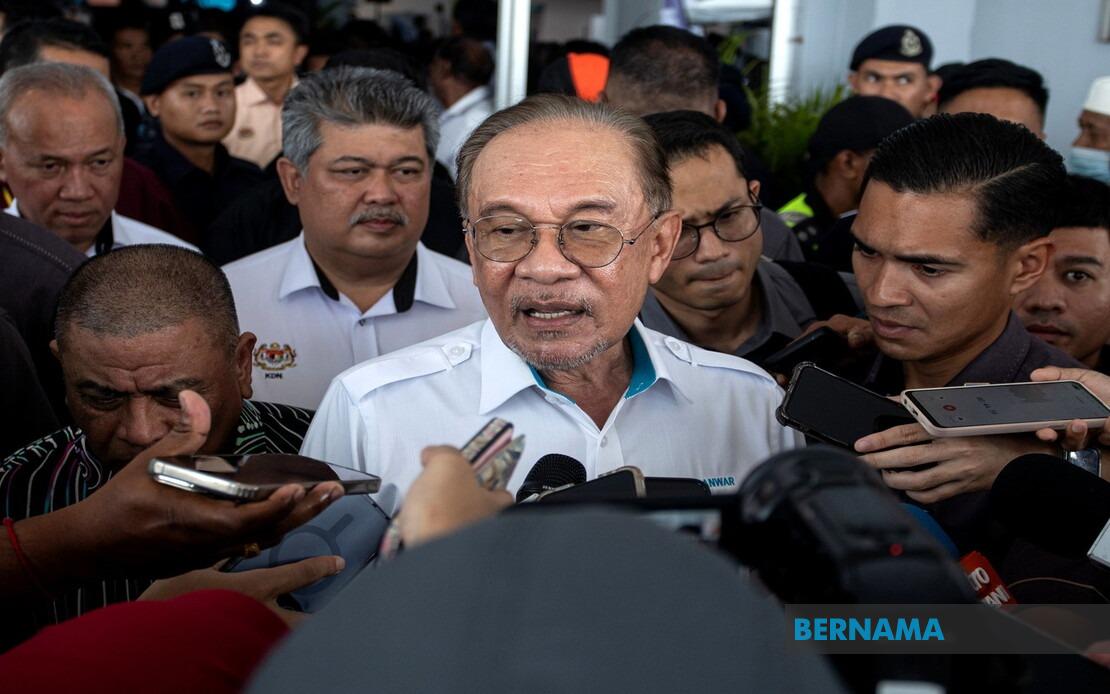
Prime Minister Datuk Seri Anwar Ibrahim has issued a firm directive to all government-linked officials, instructing them to maintain strict discipline and avoid launching attacks against the Federal Government while participating in ongoing state election campaigns. Speaking in Ipoh following the MADANI KITA community engagement programme, Anwar emphasised that public criticism of the coalition framework would damage Malaysia's political landscape and compromise the government's ability to serve citizens effectively. The warning reflects deepening tensions within the Unity Government coalition as component parties compete fiercely in state-level contests while supposedly maintaining federal-level cooperation.
The Prime Minister's intervention underscores a fundamental tension inherent in Malaysia's current political arrangement. The Unity Government comprises multiple parties that operate as coalition partners at the federal level but frequently contest against one another in state elections, creating conflicting incentives and messaging. While Anwar acknowledged this dynamic as normal within democratic systems, he drew a clear line regarding how officials should conduct themselves during campaigns. Those holding ministerial positions, deputy ministerial roles, or leadership of government agencies must choose between campaigning aggressively on state issues and maintaining their federal positions—they cannot do both if it involves undermining coalition partners or attacking federal policies.
Anwar's statement carried an implicit threat of consequences. He stated unequivocally that government officials who violate these discipline guidelines should resign from their posts. This message appears calculated to prevent a repeat of previous instances where ministers have engaged in public disputes with coalition allies, generating headlines and distracting from government priorities. The Prime Minister was careful to distinguish between legitimate state-level campaign activities and attacks on federal governance, granting officials freedom to advocate for their parties' state agendas while prohibiting broader institutional criticism. However, the distinction may prove difficult to enforce in practice, as political rhetoric often blurs the line between state-focused policy advocacy and federal government critique.
The directive had already been communicated to both Deputy Prime Ministers before Anwar's public statement. Datuk Seri Dr Ahmad Zahid Hamidi and Datuk Seri Fadillah Yusof, representing UMNO and PAS respectively, received the guidance directly, suggesting that at least some officials had been testing boundaries or that party leaders had raised concerns. This prior consultation indicates the PM's office had anticipated potential disciplinary issues and sought to establish clarity with senior coalition figures before tensions escalated into full-blown public disputes that would damage government credibility.
Beyond the immediate campaign context, Anwar's remarks reveal anxiety about the Unity Government's stability. Since its formation, the coalition has managed to govern despite internal contradictions—component parties retain distinct identities and often compete vigorously in electoral contests. However, this arrangement requires officials to exercise considerable restraint in public communications. Every attack on coalition partners risks widening rifts, providing ammunition for opposition parties, and suggesting to voters that the government lacks internal coherence. Malaysian citizens may reasonably question why they should support politicians who appear unable to work together, even if that inability is purely circumstantial to state-level competition.
The Prime Minister also reiterated a broader message to all Unity Government partners about maintaining cordial relations across both federal and state levels. Anwar stated that coalition members had been urged to strengthen and preserve their working relationships, framing governmental effectiveness as dependent upon continued cooperation. This framing presents the government's capacity to deliver public services—healthcare, infrastructure, education, and security—as contingent upon political allies restraining their competitive instincts during election seasons. It is a reasonable argument, but one that may not persuade politicians or parties whose survival depends upon winning electoral mandates in their respective states.
The tension between federal coalition discipline and state-level electoral competition is particularly acute in Malaysia because state elections frequently overlap with federal political cycles. As various states hold elections at different times, the country is virtually in a continuous campaign mode, creating perpetual opportunities for coalition partners to attack one another while technically campaigning for state power. This constant competition creates wear and tear on federal relationships, making periodic reminders necessary. Anwar's intervention suggests that such reminders are becoming more frequent, perhaps indicating that unofficial warnings have proven insufficient.
For Malaysian voters and observers, the PM's warning raises important questions about the viability of Malaysia's current political architecture. The Unity Government was presented as necessary to restore stability and prevent political fragmentation following the 2022 general election. Yet its structure—requiring bitter competitors to govern together—creates inherent instability. Officials must constantly manage contradictory loyalties: to their parties, which demand electoral victory; to the federal coalition, which demands restraint; and to voters, who expect coherent governance. When these demands conflict, as they inevitably do, officials face genuine dilemmas.
Regional implications merit consideration as well. Southeast Asia watches Malaysian politics closely, particularly regarding whether diverse coalitions can maintain institutional stability. A government that cannot prevent its own members from publicly attacking one another risks international perceptions of weakness or dysfunction. Investors, development partners, and neighbouring governments all assess political stability when making decisions affecting the region. Anwar's effort to enforce coalition discipline partly reflects recognition that Malaysia's regional standing depends upon projecting governmental coherence, even when underlying political relationships are strained.
The enforcement mechanism remains unclear. While Anwar stated that discipline violators should resign, he has not indicated what immediate consequences would apply to lesser infractions. Would a minister who criticises a coalition partner's state policies face suspension? Would warnings precede removal? The ambiguity itself may deter some officials from testing limits, but others may interpret it as indicating flexible enforcement. Political parties and their members often gamble that public outcry or factional support will protect them from disciplinary action, particularly if removing them would harm the government's coalition mathematics.
Looking forward, the United Government faces a critical period as multiple state elections approach. The PM's intervention represents an attempt to manage coalition tensions through top-down directive, establishing clear expectations before campaign rhetoric escalates further. Whether officials comply will depend partly on how seriously they view resignation threats and partly on whether the electoral stakes in their respective states justify the risk of federal consequences. In Malaysian politics, such calculations ultimately determine whether stated rules actually govern behaviour, making Anwar's warning less binding than it might initially appear to outside observers.
The broader challenge remains structural rather than merely procedural. Coalition governments require ongoing active management, constant renegotiation of terms, and regular reassurance of all partners that their interests are protected. Anwar's statement addresses symptoms—specific instances of officials attacking coalition partners—rather than the underlying disease: a political system requiring competitors to govern together. Until Malaysia resolves that fundamental tension, reminders about campaign discipline will likely remain necessary features of federal governance.

