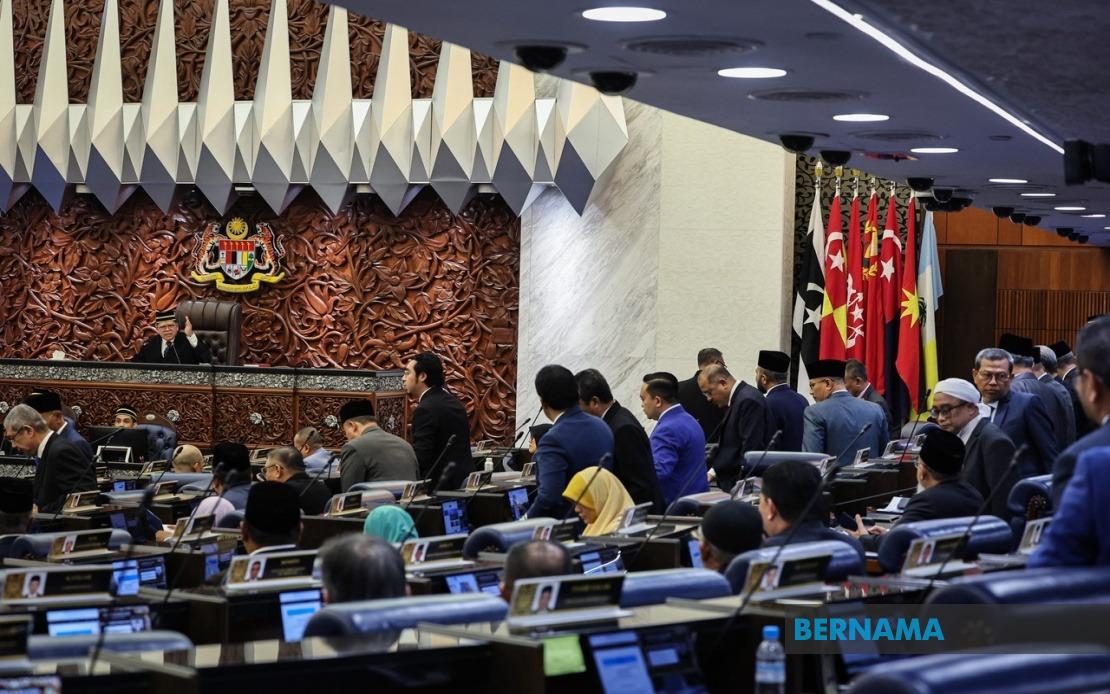
Parliament's special sitting on the Royal Commission of Inquiry report concerning Lembaga Tabung Haji descended into controversy when several opposition MPs abandoned the chamber, prompting sharp criticism from the government's leadership. Tengku Datuk Seri Zafrul Tengku Abdul Aziz, who serves as Senior Political Adviser to the Prime Minister, took to social media to condemn what he characterised as irresponsible parliamentary conduct, particularly given the gravity of the subject matter under examination.
The core of Tengku Zafrul's rebuke centres on a fundamental principle of legislative governance: that the absence of one individual should not justify collective abdication of responsibility. Despite the Prime Minister's non-attendance at the day's sitting, he argued, Members of Parliament retained both their duty and their opportunity to engage substantively with a matter of profound consequence to millions of Malaysian Muslims. His intervention reflects growing frustration within government circles over what officials view as opportunistic walkouts designed primarily for political theatre rather than principled parliamentary opposition.
Tabung Haji represents far more than a routine institutional concern in Malaysia's political landscape. The savings vehicle holds the accumulated deposits of hundreds of thousands of Muslims preparing for the hajj pilgrimage, making it intimately connected to personal religious aspirations and family financial planning across the country. The scale of the institution's importance cannot be overstated—it manages what constitutes one of the most significant repositories of Muslim savings in Malaysia's economic history. When mismanagement or operational failures occur within such an institution, they reverberate through communities well beyond the capital and affect families across virtually every demographic segment of Malaysian society.
The RCI report itself, released publicly on July 29 after government approval, encompasses a comprehensive examination spanning two hundred and eleven pages and covers the tumultuous period from 2014 to 2020. This era witnessed significant turbulence for the institution, with controversies involving investment decisions, governance lapses, and financial irregularities that attracted considerable public attention. The decision to render the report public rather than suppress it represented a significant transparency commitment, yet the substance of Parliament's engagement with its findings appeared compromised by partisan walkouts.
Tengku Zafrul articulated his position with pointed directness: the parliamentary debate concerned Muslim savings, not the Prime Minister's personal reputation or administrative performance. This framing attempts to elevate the discussion beyond partisan calculus by emphasising that at stake were the interests of ordinary Malaysians whose faith and financial prudence had led them to entrust funds to an institution now requiring public scrutiny. He questioned whether the absence of one political figure should extinguish MPs' commitment to examining and debating governance failures that touch millions of citizens' lives.
The opposition MPs who staged the walkout included prominent figures from Perikatan Nasional, notably Opposition Leader Datuk Seri Hamzah Zainudin, PN chief whip Datuk Seri Takiyuddin Hassan, and PN chairman Datuk Seri Dr Samsuri Mokhtar. Their departure appeared coordinated and deliberate, suggesting a structured tactical decision rather than spontaneous individual choice. The government's senior adviser characterised such conduct as beneath parliamentary standards, arguing that regardless of disagreements with government policy or leadership, MPs should avail themselves of the opportunity to question, debate, and scrutinise matters of public importance.
Tengku Zafrul's call for engagement grounded in factual discourse rather than performative absence presents an implicit challenge to opposition discipline and strategy. He outlined what he considers appropriate parliamentary conduct: if MPs believe government actions are incorrect, they should interrogate them with evidence. If they disagree with policy, they should articulate reasoned opposition. If they identify governmental wrongdoing, they should marshal facts to support their challenge. His formulation acknowledges legitimate scope for dissent while rejecting the notion that disagreement justifies refusing to participate in substantive deliberation.
The Minister in the Prime Minister's Department (Religious Affairs), Dr Zulkifli Hasan, tabled the RCI report before Parliament, providing the formal occasion for the special sitting and accompanying debate. His presence and presentation presumably offered an opportunity for parliamentary scrutiny of the report's findings and recommendations, yet that opportunity was deliberately foregone by opposition members. This represents a tactical calculation that political advantage accrues from absence rather than from vigorous questioning and debate.
For Malaysian observers and particularly for the vast Muslim population with direct financial interests in Tabung Haji's future, the parliamentary walkout raises questions about commitment to institutional accountability. The RCI examination presumably identified failures and recommended remedial measures; Parliament's role involves not merely receiving such reports but thoroughly vetting them through debate and questioning. When significant numbers of MPs decline this responsibility, concerns arise about whether public interest in institutional reform and recovery can be adequately served by remaining participants.
Tengku Zafrul's intervention also reflects broader debates within Malaysian politics about the appropriate standards for parliamentary conduct and opposition responsibility. Democratic systems necessarily accommodate vigorous disagreement and principled opposition to government, yet they depend on participants accepting a baseline commitment to engage with matters of genuine public importance. His criticism essentially argues that opposition parties must distinguish between legitimate tactics and irresponsible obstruction, particularly when citizens' savings and religious obligations are implicated.
The Tabung Haji crisis that prompted the RCI originated in controversies that transcended partisan boundaries—the institution's difficulties affected all Malaysians regardless of political affiliation, and the quest for understanding what had gone wrong retained legitimate appeal to parliamentarians across the political spectrum. Against this backdrop, the wholesale walkout by one parliamentary bloc appears less principled dissent and more opportunistic disengagement, a distinction Tengku Zafrul's intervention sought to highlight for public consideration.
Looking forward, the episode raises difficult questions about parliamentary culture and whether Malaysia's legislature can maintain sufficient collegial commitment to substantive deliberation even amid fierce partisan competition. The Tabung Haji matter, with its profound implications for Muslim Malaysians' financial security and religious practice, perhaps deserved better than becoming a vehicle for political point-scoring. Tengku Zafrul's challenge to opposition MPs to return to principles of responsible parliamentary engagement carries weight precisely because it appeals to constituencies whose interests transcend party politics.

