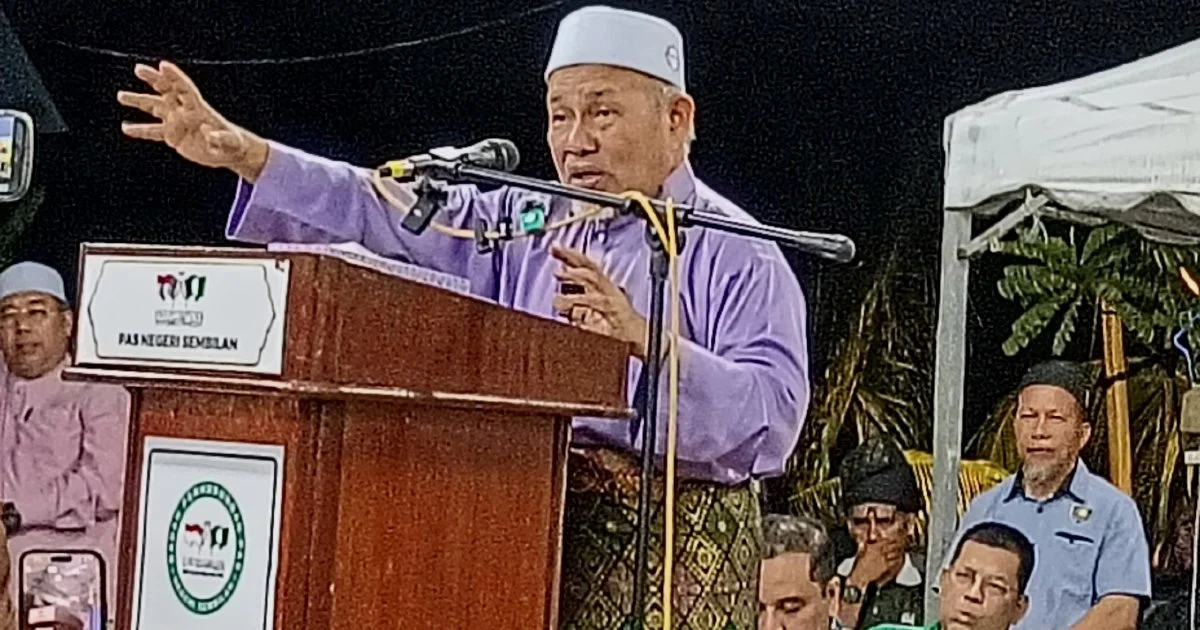
The leadership of Perikatan Nasional has moved to dispel any notion that the opposition coalition is the private domain of any single political organisation, with PAS deputy president Datuk Seri Tuan Ibrahim Tuan Man asserting that the alliance belongs to all its members equally. His statement represents an important clarification regarding the internal dynamics of PN, a grouping that has emerged as a significant political force in Malaysian politics since its formation in 2018 and subsequent evolution through various political realignments.
Tuan Ibrahim's assertion directly addresses ongoing tensions within the coalition regarding leadership structures and decision-making authority. The distinction between collective ownership and singular control carries substantial implications for how PN operates, particularly in matters of policy coordination, candidate selection, and coalition negotiations. By emphasising the plural ownership model, the PAS leader is effectively staking claim to equal standing for his party and other coalition members alongside Bersatu in determining the direction and priorities of the opposition grouping.
The broader context of this dispute reveals deeper anxieties about coalition cohesion in Malaysian politics. Perikatan Nasional comprises multiple parties with distinct organisational cultures, geographical strongholds, and ideological commitments. The question of who holds ultimate authority within such a diverse grouping has proven contentious since the coalition's inception. PAS brings substantial electoral machinery and grassroots networks, particularly in the northern states and among religious-minded voters, while Bersatu contributes significant parliamentary representation and what some perceive as administrative experience from its stint in government between 2020 and 2022.
Tuan Ibrahim's intervention suggests that conversations about coalition governance have reached a point requiring public clarification. In multiparty coalitions, ambiguity about ownership and control often masks power struggles over resource allocation, strategic direction, and candidate deployment. By articulating the principle of collective ownership, the PAS deputy president is effectively setting markers for how internal disputes should be resolved and reminding all parties that decisions affecting the coalition's future should involve meaningful consultation across all component organisations.
The Malaysian political landscape has increasingly relied on coalition arrangements following electoral fragmentation. Unlike single-party dominance systems, coalition politics requires constant negotiation and consensus-building. The experience of Pakatan Harapan during the 2018 to 2020 period demonstrated both the possibilities and pitfalls of multiparty cooperation, with disputes over resource distribution and strategic decisions contributing to eventual coalition breakdown. Tuan Ibrahim's emphasis on collective ownership can be interpreted as an attempt to establish clearer protocols that might prevent similar disintegration within PN.
For PAS specifically, the assertion of equal ownership rights within Perikatan Nasional carries strategic weight. The party has emerged as one of Malaysia's most electorally successful organisations, having significantly expanded its parliamentary presence and consolidated control over several state governments. In this context, accepting a subordinate role within PN would represent a significant retreat from the party's positioning as a major political actor. By insisting on collective ownership, Tuan Ibrahim is implicitly rejecting any power dynamic that would position PAS as subordinate to Bersatu within the coalition framework.
The timing of these remarks also reflects broader uncertainties surrounding Malaysian politics heading toward the next general election. Coalition partners typically seek to establish clear internal agreements before entering electoral campaigns, as confusion about decision-making authority can prove damaging during periods of intense political activity. Tuan Ibrahim's public statement may signal that PN members are engaging in foundational conversations about governance structures to ensure smoother coordination during the campaign period and potential post-election coalition negotiations.
Bersatu's position within the equation deserves particular attention. The party, which originated within the ruling coalition framework and subsequently moved to opposition, brings certain advantages in terms of administrative understanding and previous governmental experience. However, it remains comparatively smaller in terms of parliamentary representation and electoral reach than some coalition partners. The notion that Bersatu might be perceived as attempting to control PN could generate resistance from larger or more electorally successful members, making Tuan Ibrahim's clarification a potential preemptive strike against such perceptions.
The structural reality of Malaysian coalition politics means that sustained cooperation requires ongoing communication about expectations and power-sharing arrangements. Perikatan Nasional's longevity as a political grouping has already exceeded initial expectations, surviving various crises and internal disagreements. The fact that leadership disputes require public clarification indicates both the coalition's maturity as a political entity and the underlying tensions that continue to exist within its membership. Tuan Ibrahim's intervention represents an attempt to establish or reinforce principles that might govern future disputes.
Looking forward, the principle of collective ownership will likely face repeated testing as PN approaches electoral competition and potential scenarios involving coalition negotiations with other political actors. How effectively the coalition's various component parties can translate collective ownership into genuine collaborative decision-making will significantly influence both the coalition's internal stability and its broader political effectiveness. The articulation of these principles now establishes benchmarks against which future internal disputes can be measured and potentially resolved through appeals to established norms.
For Malaysian voters and political analysts, this episode underscores the complex negotiation required to maintain opposition coalitions in the country's competitive political environment. The insistence on collective ownership rather than hierarchical control reflects recognition that such arrangements can only endure through genuine consultation and respect for the contributions of all participating organisations. Whether PN's component parties can maintain this principle consistently will help determine whether the coalition represents a durable force in Malaysian politics or another temporary configuration destined for eventual fragmentation.

