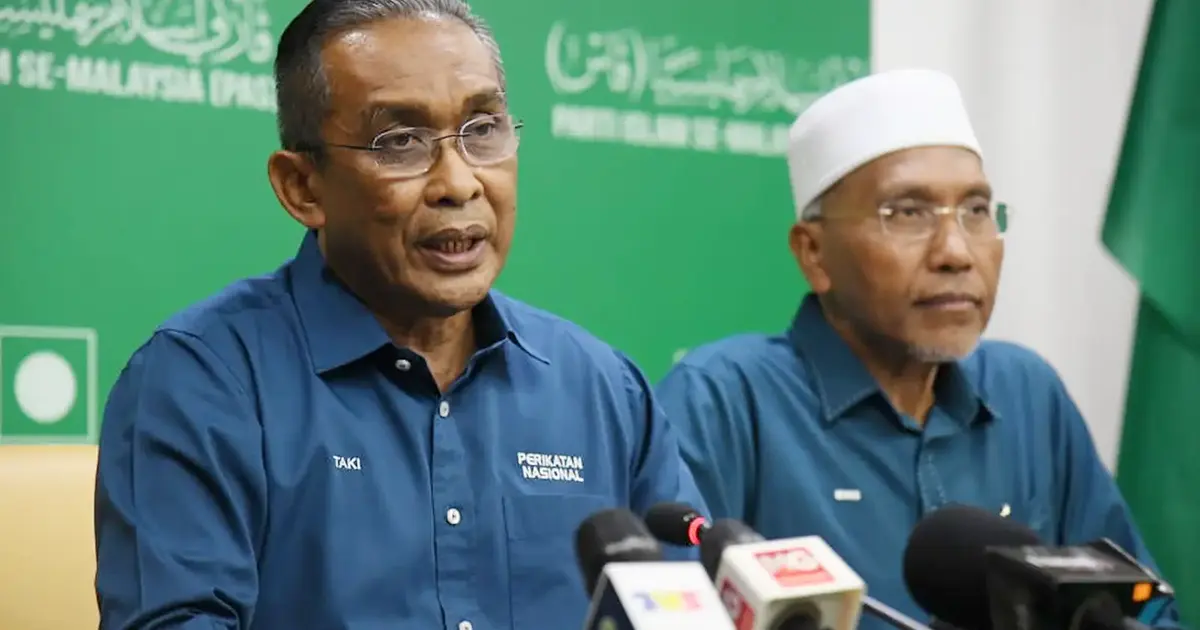
Perikatan Nasional has implemented fresh governance protocols mandating that no meetings or organised events within the coalition may proceed without explicit authorisation from the chairman, according to an announcement by the bloc's secretary-general Takiyuddin Hassan. The directive emerged following reports that Bersatu president Muhyiddin Yassin had made moves to schedule a PN Supreme Council session, triggering what appears to be a procedural clarification from the coalition's administrative leadership.
Takiyuddin's statement underscores the coalition's determination to centralise control over its internal decision-making processes and prevent uncoordinated or autonomous convening of high-level forums. The ruling reflects growing tensions within PN's organisational structure, where component parties maintain considerable autonomy yet operate under an overarching coalition framework. For Malaysian political observers, the episode reveals potential friction between different power centres within the bloc, particularly between Bersatu—the largest component party by parliamentary representation—and the coalition secretariat responsible for co-ordination across member organisations.
The PN coalition, which has served as a significant political force in Malaysia since its formalisation in 2020, comprises Bersatu, PAS, and several smaller parties. The bloc's internal mechanics require careful choreography, given the divergent interests and constituencies represented by its members. Bersatu brings urban and younger voter appeal alongside substantial parliamentary seats, whilst PAS commands influence particularly in the northern and east coast states. Managing these competing dynamics while maintaining coalition cohesion has long represented a practical challenge for leadership structures.
Muhyiddin Yassin's position as Bersatu president grants him substantial authority within his own party and considerable sway within the broader coalition, yet the requirement for chairman's clearance suggests an attempt to prevent any single component party leader from unilaterally initiating coalition-level proceedings. This arrangement reflects a common tension in multi-party coalitions: balancing the autonomy of constituent parties against the need for co-ordinated action at the coalition level. The timing of Takiyuddin's clarification implies that Bersatu may have attempted to escalate internal discussions to the Supreme Council without following what the secretariat views as appropriate protocol.
For Malaysian readers unfamiliar with coalition governance mechanics, understanding these institutional rules proves important for interpreting political developments. Coalition frameworks require formal procedures to prevent deadlock, factional breakdown, or domination by larger members. The Supreme Council typically represents the highest decision-making body within PN, comprising representatives from member parties. Requiring chairman approval before convening such forums suggests an effort to filter or control which matters reach this elevated level, potentially preventing what the chairman's office might view as precipitous or factionally-motivated escalations.
This episode reflects broader questions about PN's long-term viability and cohesion. Since the coalition's formation during a period of political turbulence, it has navigated numerous challenges including internal disagreements over policy direction, electoral calculations, and power-sharing arrangements. The three main components bring different ideological orientations and regional bases, making unified governance perpetually contentious. Bersatu, despite its relative newness, has grown into a formidable political entity, creating potential friction with more-established partners.
Regional and international observers monitoring Malaysian politics frequently note that coalition stability often hinges on whether all component parties perceive themselves as receiving equitable treatment and influence. Centralised control over meeting convocation can be interpreted either as necessary administrative discipline or as a power play by the chairman's office to constrain more ambitious party leaders. The optics of Takiyuddin's directive will depend largely on how PN's constituent parties ultimately receive and respond to the new protocol.
The implications for Malaysia's broader political landscape merit consideration. PN's status as the main opposition bloc means its internal stability and capacity for decisive action directly influences the government's legislative manoeuvrability and the public discourse surrounding governance. A fractious or poorly-co-ordinated opposition potentially strengthens the ruling coalition's hand in parliament, whilst a disciplined alternative bloc enhances competitive political dynamics. From this perspective, Takiyuddin's procedural enforcement might be viewed as an effort to strengthen PN's organisational credibility and operational coherence.
Bersatu's response to this secretariat directive will likely signal whether the party views the restriction as acceptable administrative housekeeping or as an unwelcome constraint on its prerogatives as PN's leading component. Political sources within PN will monitor whether Muhyiddin acquiesces to this protocol or pursues alternative strategies for advancing his agenda within the coalition. Such manoeuvres often occur beneath public view, communicated through careful statements or procedural moves rather than overt confrontation.
The broader significance of this governance clarification extends to how Malaysian political coalitions manage internal competition whilst presenting a united public face. As PN navigates its role in an increasingly fragmented parliamentary landscape, maintaining functional institutional processes becomes critical to preventing implosion or irrelevance. Whether this new protocol proves durable or becomes another chapter in PN's recurring internal tensions remains to be seen as the coalition heads toward future electoral contests and legislative sessions.

