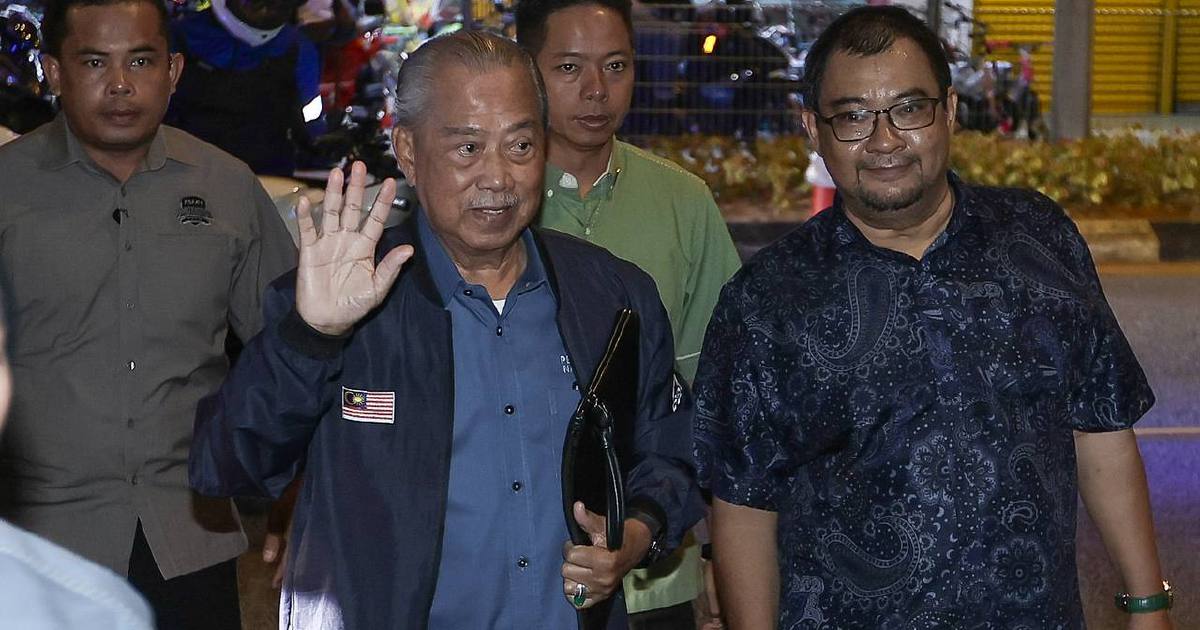
The Perikatan Nasional coalition convened an emergency Supreme Council meeting in Kuala Lumpur that deliberately circumvented the sensitive question of Bersatu's continued membership within the opposition bloc, according to coalition leader Muhyiddin Yassin. Rather than addressing mounting tensions surrounding Bersatu's organisational position, the gathering instead pivoted towards broader strategic and structural matters affecting the entire PN partnership.
The decision to exclude Bersatu's membership from the agenda signals a deliberate attempt to maintain coalition cohesion while sidestepping a potentially divisive internal dispute. By framing the meeting around general coalition business and potential expansion strategies, PN leadership appeared intent on preventing the discussion from devolving into factional disagreements that could weaken the opposition's unified front against the ruling government.
Muhyiddin's clarification that membership discussions did not occur provides insight into the delicate political tightrope the coalition must walk. Bersatu, as a founding member of PN, occupies a significant position within the alliance structure. Any formal debate regarding its standing could trigger broader questions about the coalition's internal governance, decision-making processes, and the balance of power among constituent parties.
The meeting's focus on potential new membership indicates that PN is actively pursuing expansion strategies to strengthen its political presence ahead of future electoral contests. Recruitment of additional parties could reshape the coalition's composition and increase its parliamentary representation, though such moves must be carefully calibrated to avoid alienating existing members or creating perceptions of instability.
For Malaysian political observers, the contrast between what was discussed and what was conspicuously avoided underscores the underlying tensions within PN's ranks. Bersatu has faced criticism from both external opponents and fellow coalition members regarding its direction and leadership, making the party a constant source of internal friction that requires careful management.
The strategic choice to concentrate discussions on forward-looking coalition matters rather than internal disputes reflects a pragmatic understanding of opposition politics in Malaysia. With the government maintaining parliamentary control, PN must project unity and demonstrate effective alternative governance to retain voter confidence and attract defectors from ruling coalition parties.
Muhyiddin's public statement about the meeting's parameters also serves a communication function towards party members and the broader electorate. By emphasizing that discussion remained confined to coalition-wide issues, he attempts to reassure stakeholders that PN leadership maintains strategic focus despite evident internal pressures. This messaging suggests confidence that the coalition's foundational relationships remain intact despite occasional turbulence.
The deliberate sidelining of Bersatu membership questions at such a high-level emergency gathering demonstrates how Malaysian opposition coalitions manage sensitive issues internally. Rather than allowing contentious matters to become public spectacles that might invite government intervention or media criticism, PN opted for compartmentalization—addressing specific topics while deferring others for separate, quieter handling.
Contextually, PN's manoeuvrings must be understood within the broader opposition landscape in Malaysia. The coalition competes for credibility against other opposition groupings while simultaneously confronting a government that controls both legislative and executive apparatus. Any appearance of internal disorder could be weaponized by ruling parties to delegitimize PN's claims to represent a viable governing alternative.
For Malaysian and Southeast Asian observers monitoring opposition dynamics, the meeting exemplifies how modern coalition politics navigates transparency pressures with internal management needs. Muhyiddin's willingness to publicly clarify what the meeting did not address, while remaining silent on what remains unresolved regarding Bersatu, reveals the sophisticated communication strategies that contemporary opposition movements employ.
The implications for Bersatu remain ambiguous. Exclusion from the emergency meeting's agenda could suggest either that the membership question has been temporarily resolved through backroom negotiations, or that it remains sufficiently contentious that coalition leaders determined open discussion would prove counterproductive. Either interpretation raises questions about the sustainability of PN's internal arrangements and whether current structural accommodations will withstand future pressures.
Moving forward, observers should anticipate that PN may adopt a strategy of incremental, undiscussed resolution of internal disputes rather than comprehensive airing of coalition tensions. This approach preserves public unity while allowing flexibility for adjustments without requiring consensus that might prove impossible to achieve in formal settings. For Malaysian politics, such understated management of opposition coalitions represents a critical component of whether PN can effectively challenge government dominance in coming elections.

