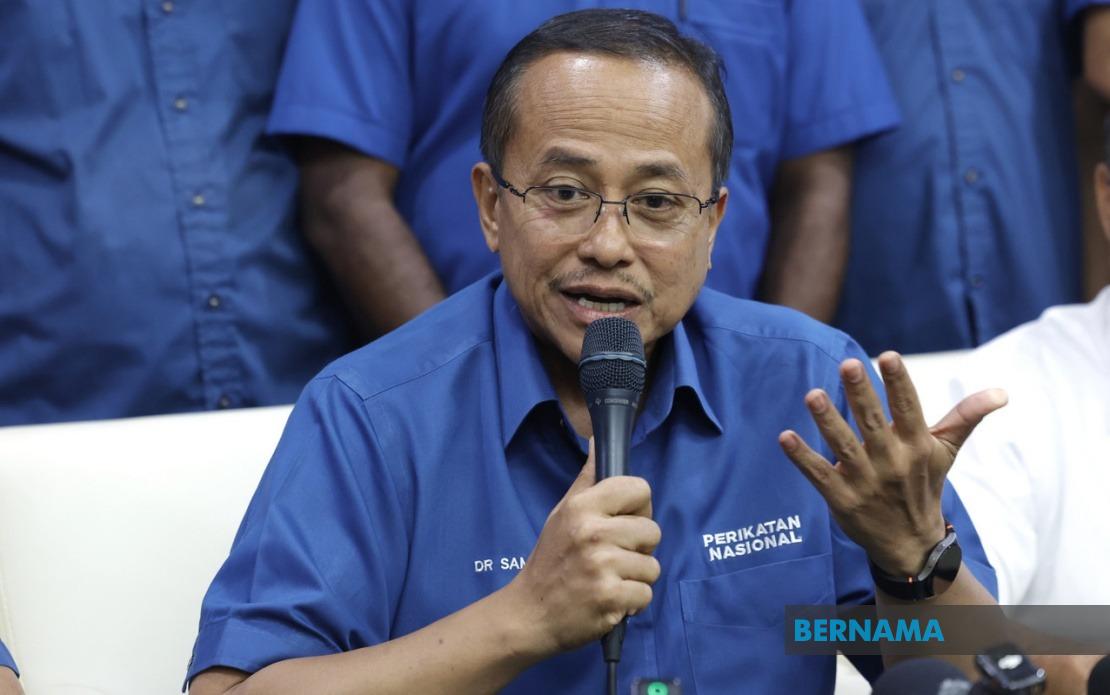
The Perikatan Nasional coalition has formally approved its candidate placements for the 16th Negeri Sembilan state election, settling weeks of internal negotiations among its component parties and establishing a unified electoral strategy across the state. PN chairman Datuk Seri Dr Ahmad Samsuri Mokhtar announced that the coalition's Supreme Council endorsed the arrangement during a special meeting in Seremban on July 16, confirming that all PN-backed contenders will carry the coalition's official logo into the contest.
The seat allocation process involved coordinating between four parties within the PN fold—PAS, Parti Gerakan Rakyat Malaysia, Parti Bumiputera Perkasa Malaysia (operating as Wawasan), and the Malaysian Indian People Party. Such exercises typically generate considerable internal tension as component parties jockey for positioning in winnable constituencies, making the formal approval a significant milestone in PN's preparation for the state-level contest. The decision to project a single, unified identity rather than allowing individual party logos reflects the coalition's emphasis on presenting itself as a cohesive political force to Negeri Sembilan voters.
According to Dr Ahmad Samsuri, the PN's participation in the election carries broader objectives beyond merely securing legislative seats. The coalition positions its candidacy as instrumental to advancing public welfare, accelerating development initiatives in Negeri Sembilan, and reinforcing the state's multicultural fabric. This framing suggests PN hopes to project itself as a guardian of both material progress and social stability, key messaging battlegrounds in Malaysian electoral contests where competing coalitions typically emphasise similar themes.
The PN chairman's statement specifically addressed his role in orchestrating pre-election discussions with other political entities. Dr Ahmad Samsuri clarified that all preliminary negotiations regarding seat distributions and potential cooperation arrangements, including any interactions with Barisan Nasional, proceeded under his direct knowledge and explicit authorisation as party leader. Such clarification, while procedurally routine, implicitly reasserts his authority over PN's strategic decision-making and signals that the coalition's electoral direction enjoys top-level endorsement.
However, the approval announcement comes against a backdrop of internal discord within PN's ranks. Bersatu, which co-founded the Perikatan Nasional coalition in 2020, has found itself excluded from the seat-allocation process. Tan Sri Muhyiddin Yassin, Bersatu's president, publicly stated that his party was not consulted regarding seat distributions or discussions concerning arrangements with Barisan Nasional, the rival coalition that presently controls the Negeri Sembilan state government. This exclusion marks a notable rupture in the coalition's operational unity and reflects deeper factional tensions that have simmered within PN since its formation.
Muhyiddin's response to the exclusion proved unambiguous: Bersatu will field its own slate of candidates under the party's independent logo rather than accepting a subordinate position within the PN framework. This decision effectively fragments the opposition's electoral footprint in Negeri Sembilan, as two nominally allied opposition forces will now compete separately. For Malaysian politics, such splits typically benefit the ruling coalition by dividing opposition votes and reducing the efficiency of anti-government mobilisation across constituencies.
The Bersatu withdrawal underscores the persistent instability within PN since its founding. Originally established as an alternative to both BN and Pakatan Harapan, the coalition has struggled to maintain internal cohesion as member parties pursue distinct electoral and ideological interests. Bersatu's marginalisation from this particular decision-making process suggests that smaller component parties like PAS, Gerakan, Wawasan, and MIPP have either consolidated greater influence within PN's structures or that Bersatu's influence has diminished compared to its position during the coalition's early years.
For Negeri Sembilan voters, the fragmentation presents a altered political landscape than they might have anticipated. What was positioned as a unified opposition alternative now emerges as competing opposition forces, with PN and Bersatu effectively working at cross-purposes. This dynamic raises questions about the viability of opposition consolidation in the state and whether the divisions will permit BN to retain its existing legislative majority through vote-splitting among anti-government parties.
The candidate names and detailed seat allocations were promised for announcement following the July 16 meeting, though the formal PN statement did not immediately divulge this information. These names will ultimately determine whether PN's seat strategy accurately reflects constituent party strength and whether it placates smaller members sufficiently to prevent additional defections. The allocation exercise itself represents a delicate balance, as rewarding any single party disproportionately risks alienating others, yet distributing seats too evenly can squander opportunities in constituencies where one party commands clear grassroots advantage.
Geopolitically, the Negeri Sembilan contest arrives as Malaysian politics navigates broader questions about opposition unity and the sustainability of coalition arrangements. The PN-Bersatu rupture provides cautionary evidence that formal alliance agreements do not automatically translate into operational cooperation, particularly when component parties harbour differing electoral prospects or harbour suspicions about benefit-sharing. Whether this particular state-level friction presages broader PN fragmentation at the national level remains uncertain, but the tensions evident in Negeri Sembilan suggest that PN's internal cohesion cannot be taken as assured.
The election itself will ultimately test whether the PN coalition's unified branding and coordinated candidacy translate into legislative success against an incumbent BN government. If PN performs strongly despite Bersatu's independent participation, the coalition may successfully argue that its organisational approach has proven sound. Conversely, poor performance could invite renewed questions about whether the exclusion of Bersatu represented strategic miscalculation or whether opposition fragmentation itself constitutes the decisive limiting factor on anti-government prospects in the state.

