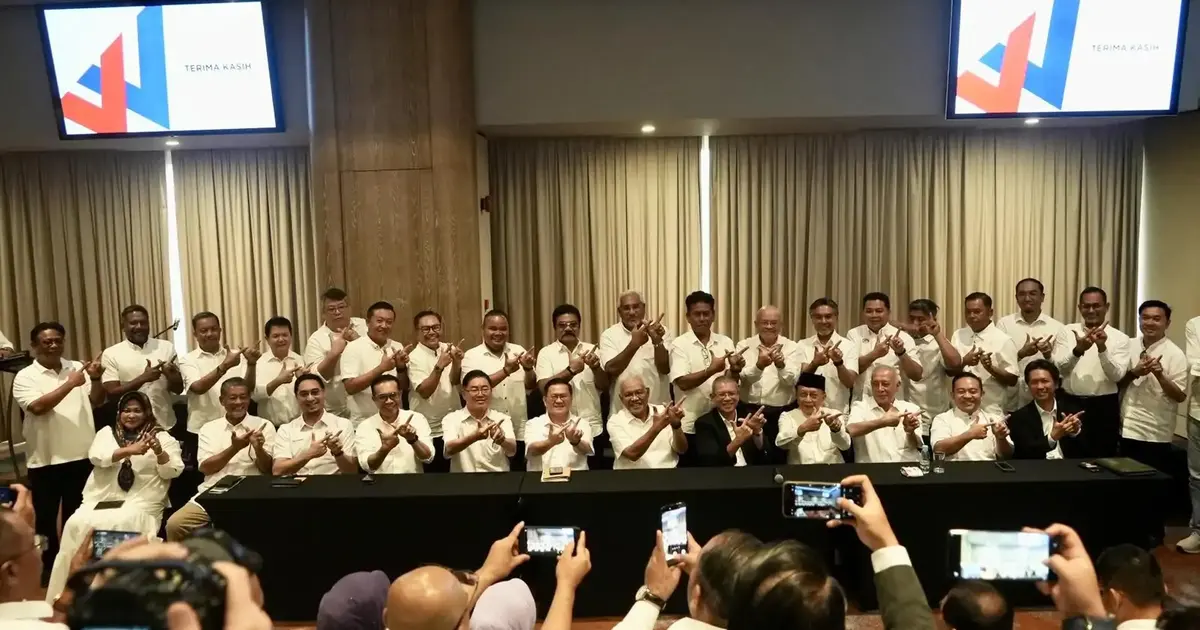
Perikatan Nasional has moved forward with admitting Wawasan into its coalition fold, with the decision finalised through a majority vote at the Supreme Council level, according to PN election director Sanusi. The approval represents a significant coalition expansion but comes amid internal tension, as Bersatu—a key PN component—had formally registered objections to Wawasan's entry during the deliberation process.
Sanusi's public acknowledgment that Bersatu's concerns were "noted" suggests the party's position was heard but ultimately insufficient to block the admission. This dynamic reveals the pecking order within PN's decision-making apparatus, where the Supreme Council's majority carries decisive weight regardless of individual member objections. For observers tracking coalition dynamics in Malaysian politics, the development underscores how larger alliances operate through voting mechanisms that can sideline minority positions, even from significant partners.
The timing of Wawasan's entry carries implications for PN's political strategy ahead of the next electoral cycle. Adding a new member expands the coalition's ostensible breadth and potentially broadens its electoral footprint, though the move simultaneously raises questions about internal cohesion. Coalition mathematics in Malaysian politics often hinge on whether constituent parties maintain unified messaging and resource-sharing arrangements. Bersatu's public objection signals that not all partners view Wawasan as a compatible fit, which could complicate coordinated campaign efforts.
Wawasan's profile in Malaysian politics has been mixed. The party's previous trajectory and contemporary positioning have made it a contested addition within PN circles. That Bersatu chose to formally object rather than abstain or remain silent suggests the party viewed Wawasan's admission as substantive enough to warrant active resistance. Bersatu's willingness to be publicly associated with opposition to the move, despite losing the vote, indicates the party prioritises transparency about internal disagreements over maintaining a facade of unanimity.
From a regional perspective, PN's expansion strategy reflects broader Southeast Asian patterns where opposition coalitions pursue inclusive membership policies to accumulate electoral muscle. However, such enlargement carries inherent risks of diluting ideological coherence and creating governance challenges should the coalition contest federal power. Malaysia's political system, where coalition management directly affects ministerial allocation and policy direction, makes coalition composition decisions unusually consequential.
The Supreme Council mechanism that enabled this outcome functions as PN's apex decision-making body, comprising representatives from member parties weighted by size and influence. That the vote yielded a majority in Wawasan's favour indicates sufficient support from larger or strategically positioned PN components. Understanding which parties backed Wawasan's admission would illuminate the coalition's internal power dynamics, though such voting details typically remain private.
Bersatu's position warrants examination within the context of its broader relationship with PN. As a party that defected from Pakatan Harapan to help form PN, Bersatu has navigated complicated coalition relationships. The party's objection to Wawasan suggests it maintains capacity to challenge decisions it opposes, rather than deferring automatically to larger partners. This agency, even when outvoted, strengthens Bersatu's claim to meaningful membership status rather than subordinate positioning.
For Malaysian voters evaluating PN's electoral credibility, coalition admissions like this warrant scrutiny. Voters increasingly assess coalitions not merely on stated policy platforms but on whether member parties appear genuinely aligned or merely transactional. Wawasan's admission through majority override could reinforce perceptions of PN as a convenience coalition prioritising electoral advantage over ideological or operational unity, a narrative potentially disadvantageous for voter outreach.
The Supreme Council's majority vote mechanism also reflects PN's structural pragmatism. By formalising decisions through voting rather than consensus-seeking, PN establishes clarity about which positions carry authority. Bersatu's ability to formally object and have that objection recorded in official proceedings provides documentary evidence of dissent, which matters for internal accountability and member party autonomy. However, the ultimate outcome—Wawasan's admission regardless—confirms that objections alone cannot halt leadership decisions when majority support exists.
Looking forward, Wawasan's integration into PN structures will test the coalition's capacity to manage diverse interests cohesively. Resource allocation, candidate selection processes, and campaign coordination will reveal whether Wawasan fits constructively into existing arrangements or generates friction points. Bersatu's documented reservation creates space for the party to revisit the issue should problems emerge, potentially positioning it as having warned other PN members about integration risks.
The admission also reflects Malaysian coalition politics' evolution toward more fluid party configurations. Where previous generations of opposition coalitions sometimes remained static once formed, contemporary coalitions like PN demonstrate flexibility in membership. This adaptability can attract politicians seeking coalition homes and provide electoral options to voters, though sustainability hinges on maintaining adequate internal consensus around core positions. Wawasan's entry adds another variable to coalition chemistry that will become clearer through electoral performance and policy coordination tests in coming months.

