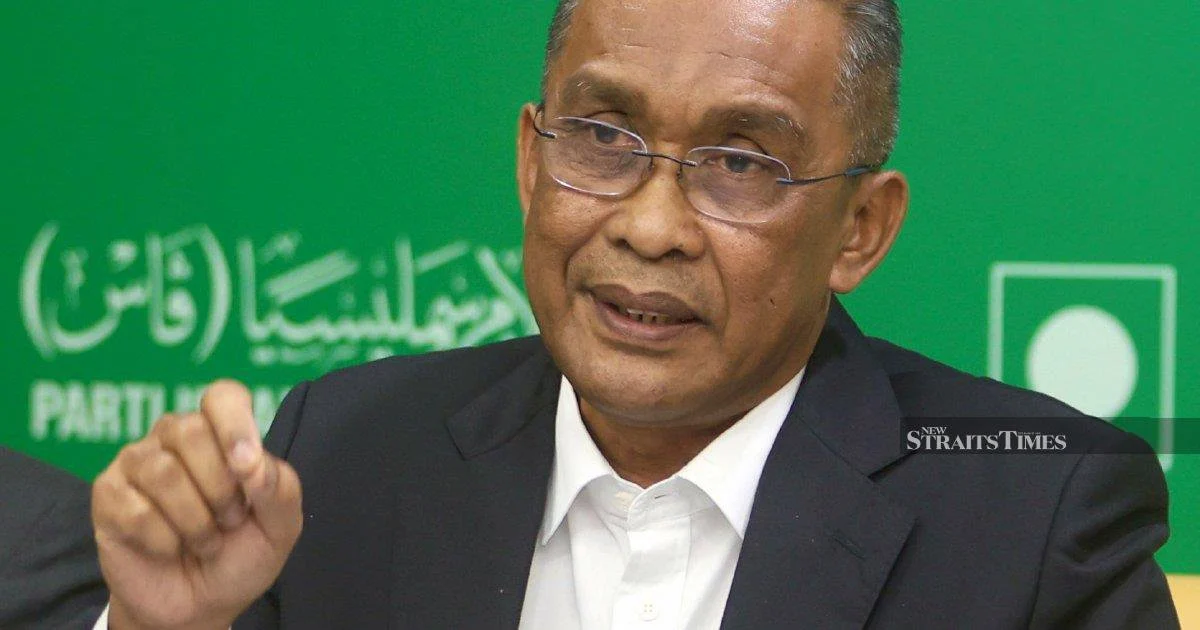
The Registrar of Societies (RoS) has formally confirmed the transition of leadership within Perikatan Nasional (PN), cementing Datuk Seri Dr Ahmad Samsuri Mokhtar's position as the coalition's chairman with comprehensive control over party operations. This official recognition marks a significant moment in PN's governance structure, establishing clear hierarchical authority that governs how Malaysia's third major political coalition conducts its internal affairs and external engagements.
Under the formal confirmation, all activities undertaken by PN—whether internal meetings, public events, strategic initiatives, or formal party business—must now receive explicit consent from the newly installed chairman. This represents a consolidation of power that extends beyond ceremonial duties, giving Ahmad Samsuri Mokhtar substantive control over the direction and implementation of the coalition's political agenda. The requirement for chairmanial approval creates a centralised decision-making process that should streamline operations, though it also concentrates significant authority in a single office.
The timing of this formal recognition by the RoS reflects the importance of establishing clear institutional legitimacy following any leadership transition within Malaysian political organisations. Rather than operating under ambiguity, where multiple individuals might claim authority or where decision-making processes remain unclear, the statutory acknowledgement from the RoS provides unambiguous documentation of the new command structure. This clarity becomes essential for a coalition as diverse and complex as PN, which comprises multiple political parties with distinct interests and constituencies.
For Malaysian political observers, the formalisation of Ahmad Samsuri Mokhtar's chairmanship signals stability at a crucial juncture for PN's political positioning. As an alternative to both Barisan Nasional and Pakatan Harapan, PN has positioned itself as a third force in Malaysian politics, and the consolidation of leadership authority may enhance its ability to negotiate and mobilise effectively in parliamentary circumstances where no coalition commands an overwhelming majority. The chairman's enhanced powers provide the institutional framework necessary for the coalition to present a unified public face while managing internal disagreements.
The requirement that all party activities obtain chairmanial approval carries implications that extend throughout PN's member parties. Pas, Bersatu, Perikatan Sabah, and other constituent organisations must now navigate this centralised approval mechanism when undertaking activities under the PN banner. This arrangement occasionally creates tension between local party autonomy and coalition-level coordination, though many political scientists argue that such centralisation can prevent member parties from pursuing contradictory strategies that undermine collective messaging.
From a constitutional and regulatory perspective, the RoS confirmation provides legal standing for Ahmad Samsuri Mokhtar's authority. Should disputes arise regarding the legitimacy of party decisions or the interpretation of PN's constitutional framework, this formal recognition would carry significant weight in any legal proceedings. Organisations that fail to maintain clear governance documentation face vulnerabilities in dispute resolution, making this formalisation a prudent administrative step regardless of the political considerations.
The approval requirement also functions as a quality control mechanism, theoretically preventing member parties or affiliated groups from making statements or undertaking initiatives that contradict PN's official positions or embarrass the coalition publicly. In Malaysia's competitive political environment, where parties frequently compete for media attention and public perception, this coordination function serves a protective purpose. However, it also raises questions about whether such centralised control might suppress legitimate internal debate or constrain the autonomy of member parties with distinct ideological positions.
This leadership confirmation occurs within a broader context of Malaysian coalition politics, where structural authority and institutional clarity have become increasingly important. Previous transitions within both BN and PH demonstrated that unclear succession arrangements can generate prolonged instability, internal conflicts, and loss of public confidence. By contrast, PN's formal recognition of Ahmad Samsuri Mokhtar's authority through the RoS mechanism follows established institutional practices and should theoretically reduce such risks.
Looking forward, the formalisation of Ahmad Samsuri Mokhtar's chairmanship establishes the governance foundation upon which PN's medium-term strategy will develop. Whether PN can effectively leverage this clarity to expand its political influence, challenge incumbent coalitions, or simply maintain its current parliamentary footprint will depend on factors extending beyond structural authority—including the political performance of member parties, the effectiveness of coalition messaging, and the broader preferences of Malaysian voters. The RoS confirmation provides organisational coherence, but it represents a necessary rather than sufficient condition for political success.

