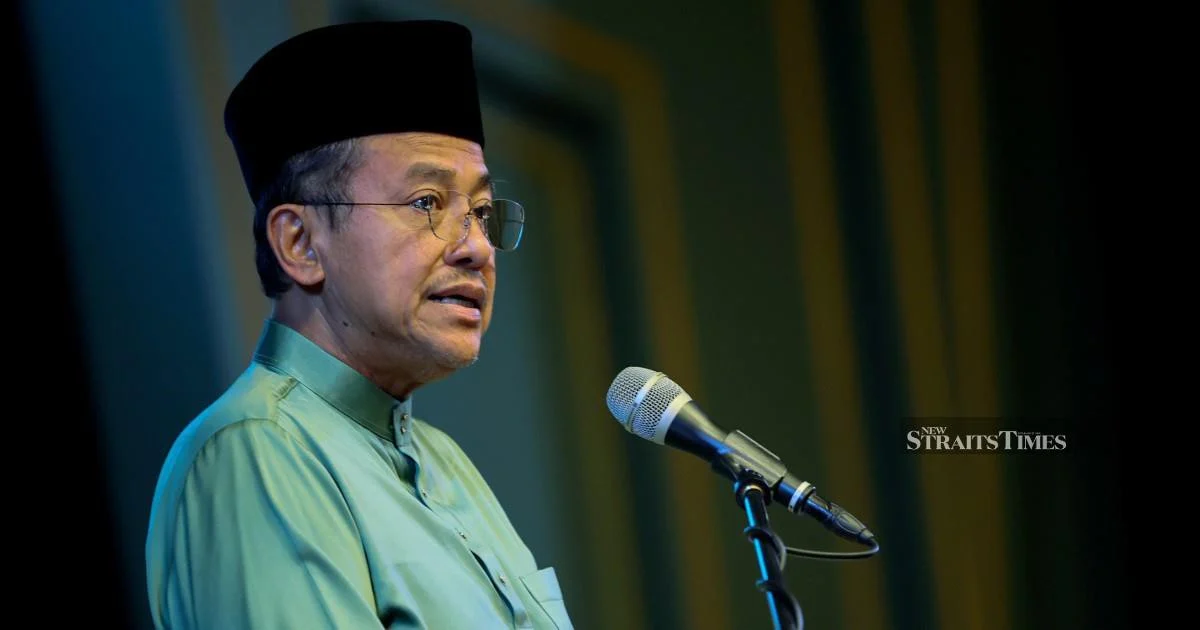
The Perikatan Nasional leadership council will reconvene tomorrow to examine and determine Bersatu's standing within Malaysia's opposition coalition, according to PAS vice-president Datuk Seri Dr Ahmad Samsuri Mokhtar. The announcement, made in Temerloh, signals that senior figures across PN's member parties will scrutinise the party's continued participation and influence at the highest levels of the multi-party bloc.
The scheduled discussion reflects ongoing deliberations within PN about the strategic direction and internal composition of the coalition that has formed the government in Perak and maintains significant influence across several Malaysian states. Bersatu's position has become a subject of internal coalition focus, suggesting potential tensions or disagreements about the party's role, representation, or contributions to the bloc's collective agenda and electoral strategy.
PAS, as one of PN's dominant components, plays a central mediating role in such discussions given its large parliamentary representation and organisational presence. Dr Ahmad Samsuri's public confirmation of the agenda item indicates that the deliberation is formal and significant enough to warrant transparency with the media and public, rather than being confined to back-channel negotiations or informal communications among party leaders.
The timing of this reassessment comes amid the broader political landscape in Malaysia, where coalition configurations remain fluid and subject to regular adjustment. Opposition blocs frequently evaluate member party contributions, ideological alignment, and electoral viability as they prepare for potential electoral contests or respond to shifts in political circumstances. Such meetings serve both practical functions—allocating resources, coordinating messaging, and planning electoral strategy—and symbolic functions by reaffirming the coalition's cohesion and shared purpose.
Bersatu, which emerged from UMNO's internal divisions and has established itself as a significant political force in certain regions, brings particular dynamics to PN. The party's relationship with other coalition members, particularly PAS and Amanah, has evolved considerably since PN's formal establishment. Questions about organisational capacity, electoral reach, and ideological consistency may underpin tomorrow's discussion, as coalition partners assess whether member parties strengthen or complicate the bloc's overall positioning.
For Malaysian political observers and stakeholders, such high-level coalition meetings carry implications that extend beyond internal management. The health and stability of opposition arrangements directly influence the competitive dynamics facing the government, the viability of alternative governance scenarios, and the likelihood of successful coordination during future electoral cycles. Malaysia's political system hinges substantially on coalition management, making internal discussions about member party roles consequential for the broader democratic landscape.
The leadership council's composition typically includes the most senior figures from each PN member party, suggesting that decisions reached tomorrow will carry considerable weight and represent genuine consensus-building among principal actors. Such forums provide opportunities to address grievances, clarify expectations, and recommit to collective objectives, or conversely, to signal shifts in partnership dynamics when interests diverge significantly.
In the Malaysian context, where party-hopping and coalition flux have characterised recent political developments, any formal reassessment of a member party's position carries particular significance. The public announcement of tomorrow's discussion itself serves as a signal to Bersatu, to other coalition members, and to the broader political community about the seriousness with which PN leadership treats questions of internal alignment and strategic fit.
The outcomes of tomorrow's meeting remain to be seen, but the convening itself demonstrates that PN continues to operate as a functioning political entity capable of internal deliberation and decision-making. Whether the discussion results in strengthened commitment, adjusted terms, or more substantial changes to PN's composition will likely become apparent in coming weeks through statements from senior leaders and observable shifts in coalition behaviour and coordination on policy matters.
For regional observers and international stakeholders following Malaysian politics, PN's internal dynamics matter insofar as they shape the trajectory of opposition politics and influence the competitive environment for governance alternatives. The coalition's capacity to maintain coherence while accommodating member parties with sometimes divergent interests remains a key test of its viability as a sustained political force in the Malaysian system.

