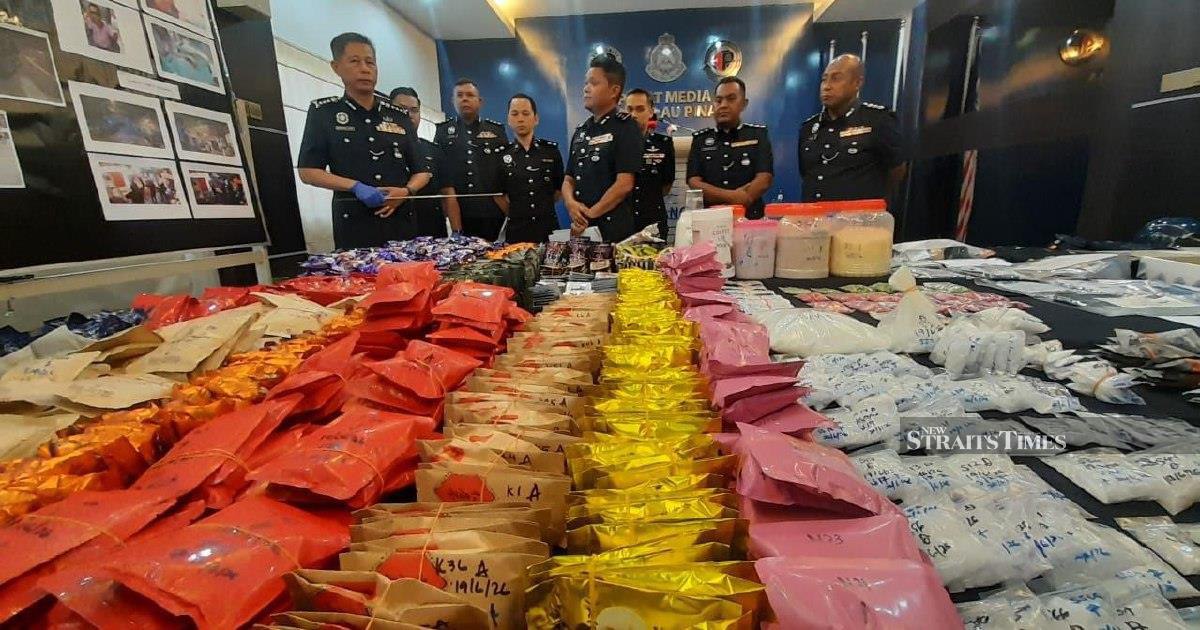
A major narcotics operation has been dismantled in Penang following a joint enforcement effort by state police, who arrested a romantic couple and recovered drugs valued at RM9.7 million from a high-rise residential unit in Butterworth. The discovery represents a substantial blow to drug trafficking networks operating in the northern region and highlights ongoing police success in disrupting large-scale manufacturing and distribution channels that supply controlled substances across Malaysia.
The operation unfolded as part of intensified investigations into suspected criminal activity within the condominium complex. Police surveillance and intelligence gathering had identified the residential unit as a suspected centre for illicit pharmaceutical processing, prompting coordinated enforcement action. When officers executed the warrant, they discovered evidence of sophisticated drug production and stockpiling activities that suggested substantial distribution capabilities extending beyond the immediate locality.
The seizure encompasses multiple classifications of controlled substances, with quantities indicating manufacturing for commercial purposes rather than personal consumption. The recovery of this scale of narcotics at a single location demonstrates how urban residential spaces, particularly in accessible high-rise developments, have become preferred venues for criminals seeking to operate relatively inconspicuously within densely populated neighbourhoods. The Butterworth location, situated strategically across the Penang strait from Georgetown and with convenient access to major transportation networks, offers logistical advantages for distribution operations.
Both suspects arrested remain in police custody pending investigation under the Dangerous Drugs Act. Authorities are examining the operational structure of their network, including supply sources, manufacturing techniques, and distribution channels. The scale of the recovery suggests connections to larger regional trafficking organisations, and investigators are likely pursuing leads regarding how raw precursor chemicals were sourced and where finished products were being directed for sale.
This operation underscores the continued threat posed by drug manufacturing within residential settings. Unlike traditional clandestine laboratories in industrial areas or rural locations, apartment-based operations present distinct law enforcement challenges whilst offering traffickers certain operational advantages, including proximity to urban consumer markets and reduced visibility compared to more isolated facilities. The apparent sophistication of the manufacturing setup indicates a degree of technical knowledge and resources consistent with organised crime involvement.
Penang has witnessed fluctuating drug enforcement activity over recent years, with the state's geographic position—as a maritime gateway and transportation hub connecting central and northern Malaysia—rendering it strategically important for trafficking networks. Port facilities in Penang and George Town remain persistent vulnerabilities for drug smuggling, though terrestrial distribution networks operating from residential zones represent an equally pressing concern for law enforcement agencies.
The arrest of the couple provides police with potential intelligence regarding broader criminal networks. Investigators typically focus on extracting information about supplier relationships, customer bases, financial arrangements, and connections to other operating groups. The gender composition of the arrested pair may indicate a family or intimate operation, which often involves tighter operational security and lower profile activity compared to larger gang-structured arrangements.
The recovery magnitude places this incident among significant recent drugs seizures in Malaysia. Narcotics worth nearly RM10 million represent substantial street value and suggest the operation had been functioning for some period before detection. The value calculation typically reflects wholesale or intermediate-level pricing rather than retail street value, indicating authorities have disrupted the supply chain at a meaningful distribution tier rather than merely addressing street-level dealing.
For residents across Penang condominium complexes, this discovery raises awareness regarding potential criminal activity in neighbouring units. Management companies and security personnel face inherent difficulties in monitoring for illicit manufacturing, particularly when operations employ sound insulation and ventilation measures designed to minimise external indicators. The operation's undetection until police action suggests perpetrators exercised operational discipline in avoiding obvious warning signs.
Law enforcement responses to residential drug manufacturing have evolved to incorporate intelligence-led approaches prioritising investigations into larger trafficking organisations rather than exclusively reactive raid operations. This bust reflects that strategic shift, with authorities evidently conducting preliminary investigation work before enforcement action, suggesting intelligence development rather than tip-based reactivity.
The Penang police operation demonstrates continued capacity for large-scale narcotics investigations despite ongoing resource demands across multiple law enforcement domains. Successful disruption of manufacturing operations carries significance beyond simple drug removal, as such facilities represent critical infrastructure for trafficking organisations, and their destruction forces operational restructuring and increases overhead costs for criminal networks.
As Penang navigates increased developmental pressures and rising population density, residential drug manufacturing likely represents an enduring enforcement challenge. The condominium sector's continued expansion provides traffickers with expanding opportunity pools, necessitating sustained police vigilance and community awareness regarding suspicious residential activity indicators.

