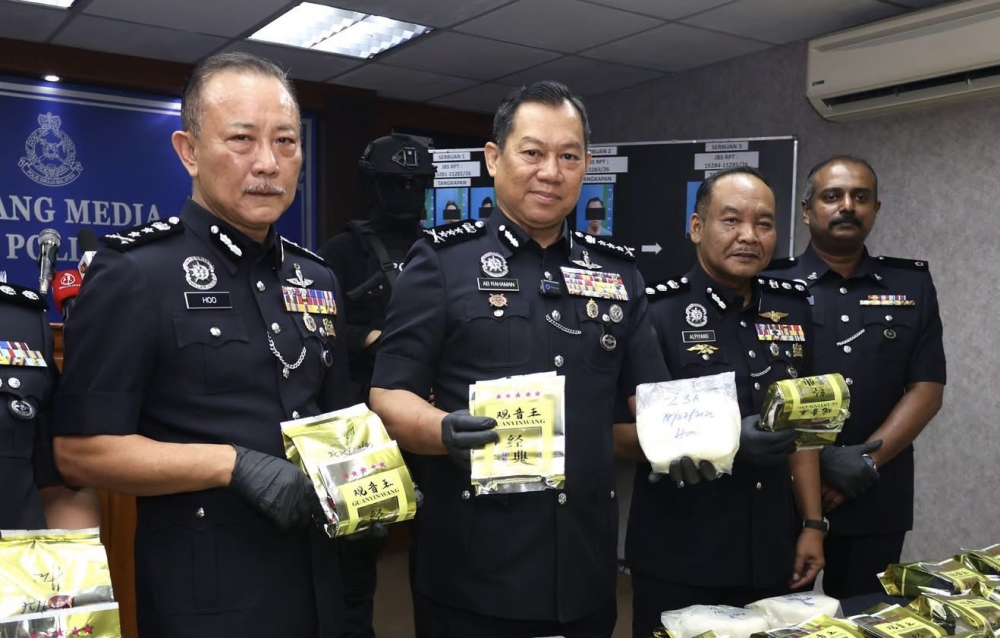
Police in Johor Bahru have successfully dismantled an organised synthetic drug distribution network following coordinated raids across the city, resulting in the arrest of eight individuals across multiple age groups. The operation uncovered a troubling trend of youth involvement in drug trafficking, with one of the detained individuals being just 16 years old. The teenager's alleged method of operation—utilising his grandfather's vehicle as a mobile storage and distribution point—exemplifies the increasingly sophisticated yet deeply concerning tactics employed by drug syndicates attempting to evade law enforcement detection.
The raids, conducted in Johor Bahru on July 22, represent part of intensifying police efforts to combat the synthetic drug trade that has plagued Malaysian cities in recent years. Synthetic drugs, particularly those manufactured in clandestine laboratories, remain a significant challenge for regional law enforcement due to their high profitability, relative ease of production, and devastating health effects on users. The dismantling of this particular network signals police success in intelligence gathering and operational coordination, yet the youth participation in the scheme raises broader questions about drug trafficking recruitment patterns in urban Malaysia.
The decision to exploit a family member's vehicle demonstrates how modern drug operations blend family relationships with criminal enterprise. By converting the grandfather's car into a mobile drug store, the network apparently sought to circumvent static surveillance of locations and reduce detection risk. This mobile distribution model has emerged across Southeast Asia as traffickers adapt to enhanced monitoring of traditional fixed drug houses and dealing points. The use of family vehicles, in particular, exploits the lower suspicion typically accorded to ordinary family transportation, allowing operatives to move product with minimal apparent risk.
The involvement of a 16-year-old in the network underscores a troubling recruitment pattern targeting youth in Malaysia's urban areas. Young people are often preferred by traffickers for their perceived lower criminal penalties, reduced likelihood of suspicion from authority figures, and psychological vulnerability to coercion or financial incentive. In this case, the teenager's family connection to a vehicle owner suggests he may have been ensnared through proximity and family dynamics rather than traditional street-level recruitment. This familial dimension to youth drug involvement presents additional complications for parents, schools, and community intervention programmes.
Synthetic drugs have become an increasingly critical focus for Malaysian law enforcement and regional security agencies. Unlike traditional narcotics requiring cultivation or extraction, synthetic drugs can be manufactured in small, mobile laboratories using precursor chemicals often diverted from legitimate pharmaceutical or industrial supply chains. Their potency, variability, and propensity for rapid addiction make them particularly damaging from public health and social stability perspectives. The proliferation of such networks across Malaysia's major urban centres, including Johor Bahru, reflects both the profitability of the trade and the challenge of managing precursor chemical smuggling across regional borders.
Johor Bahru, as Malaysia's second-largest city and a major economic hub, represents a significant strategic location for drug distribution networks. Its proximity to Singapore—a wealthy market with high drug prices and strict enforcement—creates powerful incentives for traffickers to establish bases in Malaysian territory while supplying cross-border demand. Additionally, Johor Bahru's role as a major transportation junction connecting Malaysia's south to central regions and Thailand makes it an ideal logistics hub for drug syndicate operations. This geographic advantage has historically made the city a focal point for both trafficking activity and police counter-narcotics operations.
The arrest of eight individuals suggests a network of meaningful operational scale, likely involving distinct roles in procurement, production, distribution, and retail. Such multi-tiered structures allow syndicates to insulate senior organisers from direct law enforcement exposure whilst maintaining operational control through subordinate layers. The presence of a teenager within this hierarchy indicates the network's willingness to accept high-risk personnel assignments, suggesting either desperation within the organisation or cynical confidence in the adolescent's relative immunity from serious penalties.
Malaysian authorities have progressively strengthened their capacity to dismantle drug networks through enhanced inter-agency coordination between federal and state police forces, customs services, and intelligence agencies. This operation reflects those evolving capabilities, though the continued emergence of new networks suggests that supply-side enforcement must be sustained and escalated. The intersection of youth recruitment, family exploitation, and mobile distribution tactics indicates that traffickers continuously adapt their methods to circumvent law enforcement responses.
For Malaysian communities, particularly parents and educators, this case illustrates the vulnerability of young people to drug network involvement even when perceived family protections exist. The grandfather's car—presumably trusted family property—became an instrument of illegal activity involving his own grandchild, suggesting that vigilance regarding sudden changes in youth behaviour, suspicious vehicle usage patterns, and unexplained access to cash remains essential. Community reporting and parental awareness serve as crucial supplements to formal law enforcement in disrupting trafficking networks at their recruitment and operational stages.
The successful operation in Johor Bahru contributes to ongoing police efforts to reduce synthetic drug availability, though experts emphasise that sustained disruption requires complementary strategies addressing demand through treatment services, youth intervention programmes, and international cooperation on precursor chemical smuggling. The continued emergence of youth-involved trafficking networks underscores the necessity of such comprehensive approaches, as enforcement alone cannot address the underlying vulnerabilities that make drug involvement attractive to younger Malaysians facing economic uncertainty or family instability.

