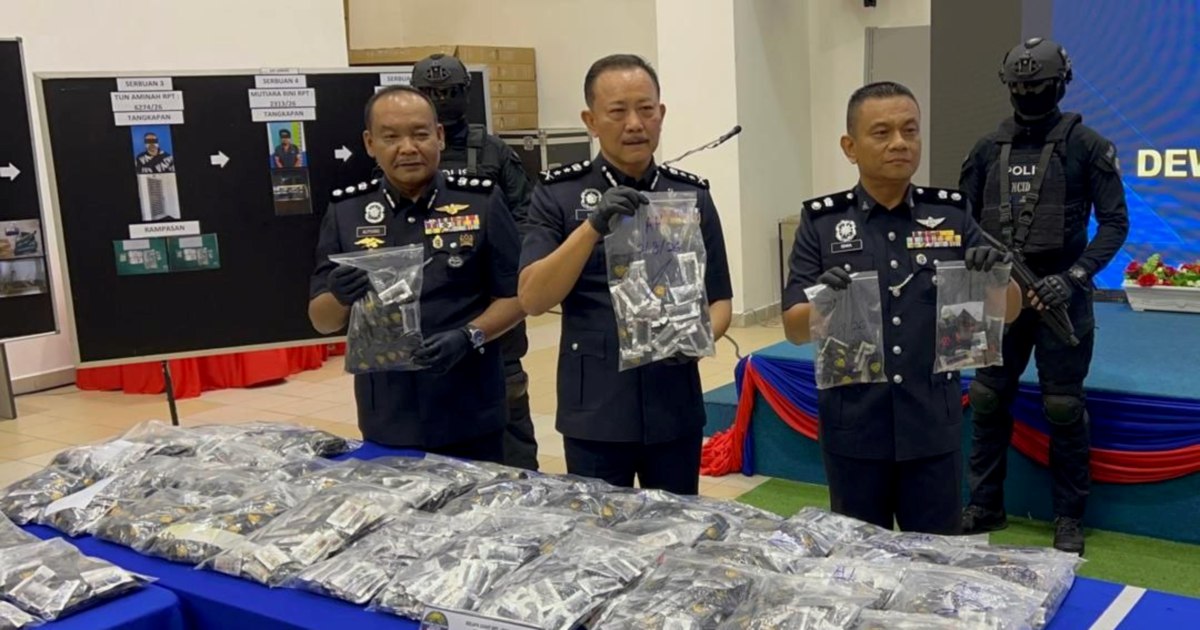
A sophisticated illegal operation producing and trafficking drug-laden vape cartridges across Johor has been dismantled after law enforcement launched a series of coordinated raids on Sunday, resulting in seven arrests and the seizure of contraband valued at RM10.68 million. The breakthrough represents a significant victory against what authorities characterize as a well-organised distribution network exploiting the growing popularity of vaping devices among younger demographics in Malaysia.
The operation unfolded across five separate locations throughout Johor in what officers describe as simultaneous enforcement action designed to prevent suspects from destroying evidence or fleeing. This tactical approach has become standard practice for narcotics teams confronting sophisticated syndicates that maintain multiple operational sites and employ counter-surveillance measures. The timing and coordination of such raids underscore how drug manufacturing and distribution networks have evolved to compartmentalise operations, making detection increasingly challenging for authorities.
The cartridges seized during the operations contained controlled substances, though police statements did not immediately specify which narcotics had been infused into the vaping products. The methodology of concealing drugs within vaping equipment represents an emerging concern for enforcement agencies across Southeast Asia, as these devices offer portability, reduced detectability, and easier distribution channels compared to traditional drug formats. The cartridges' appearance as ordinary vaping products allows traffickers to move merchandise through retail networks, online platforms, and direct sales with minimal suspicion from casual observers or untrained personnel.
The RM10.68 million valuation reflects the street value of seized inventory, suggesting the operation had achieved substantial scale and market penetration before intervention. Such assessments typically account for wholesale and retail pricing structures within underground markets, indicating that this particular syndicate had likely been operating for an extended period and had cultivated established supply routes. The financial magnitude alone demonstrates that drug trafficking through vaping products has transitioned from marginal criminal enterprise to a significant revenue generator for organised criminal groups.
Vaping devices have emerged as an increasingly preferred medium for drug distribution globally, particularly in urban centres where they blend seamlessly into legitimate vaping communities. The dual-use nature of vaping equipment—legitimate retail products that can be repurposed for drug delivery—creates enforcement complications. Authorities must distinguish between lawful vaping enthusiasts and criminal operators, a challenge exacerbated by rapid technological evolution in device design and the proliferation of online sales channels operating across borders.
For Malaysian enforcement agencies, this seizure highlights the interconnection between substance trafficking and consumer product manipulation. The targeting of vape distribution networks suggests that drug syndicates have identified receptive markets among youth populations, particularly in urban Johor where consumption patterns and purchasing power align with syndicate objectives. The relative newness of this distribution method means prevention campaigns and public awareness initiatives remain underdeveloped compared to traditional narcotics education efforts.
The case also underscores regional dimensions of drug trafficking that transcend national boundaries. Johor's geographic position adjacent to Singapore, combined with its proximity to major transportation corridors linking Malaysia to Thailand and beyond, makes the state particularly vulnerable to cross-border trafficking operations. Syndicates exploiting these geographical advantages have developed sophisticated logistics networks capable of moving product rapidly across multiple jurisdictions, complicating law enforcement coordination and prosecution efforts.
Police investigation outcomes will determine whether the seven arrested individuals face charges under the Dangerous Drugs Act or related legislation. Depending on detected substance quantities and roles within the operation, penalties could range significantly, with manufacturing and trafficking convictions carrying substantial prison sentences and financial penalties. The breakdown of suspect identities and operational hierarchies will provide insights into syndicate structure, supplier networks, and downstream distribution channels that fed product into Malaysian consumer markets.
This interdiction carries implications for ongoing drug control strategies in Malaysia and the broader region. As traditional trafficking routes face increased enforcement pressure, criminal organisations continuously innovate delivery mechanisms and target new consumer demographics. The emergence of drug-infused vaping products reflects this adaptive pattern, transforming seemingly benign consumer technology into vehicles for narcotics distribution. Regulatory gaps permitting unrestricted vaping device imports and sales have inadvertently facilitated this problem, creating enforcement blind spots that criminal elements have successfully exploited.
Moving forward, the seizure justifies enhanced regulatory frameworks governing vaping product importation, manufacturing, and retail distribution. Coordination between customs authorities, narcotics enforcement, and consumer protection agencies could establish checkpoints preventing blank cartridges, filling equipment, and precursor chemicals from reaching syndicate manufacturing facilities. Intelligence sharing with neighbouring countries facing identical challenges may identify common supplier networks and refine cross-border enforcement cooperation.
The successful operation demonstrates investigative capability and operational proficiency within Johor police forces, yet the subsequent emergence of similar syndicates will require sustained commitment to intelligence gathering, surveillance, and enforcement action. Community reporting mechanisms and public awareness campaigns specific to drug-infused vaping products could enhance early detection of distribution networks before they achieve the scale apparently reached by this dismantled operation.

