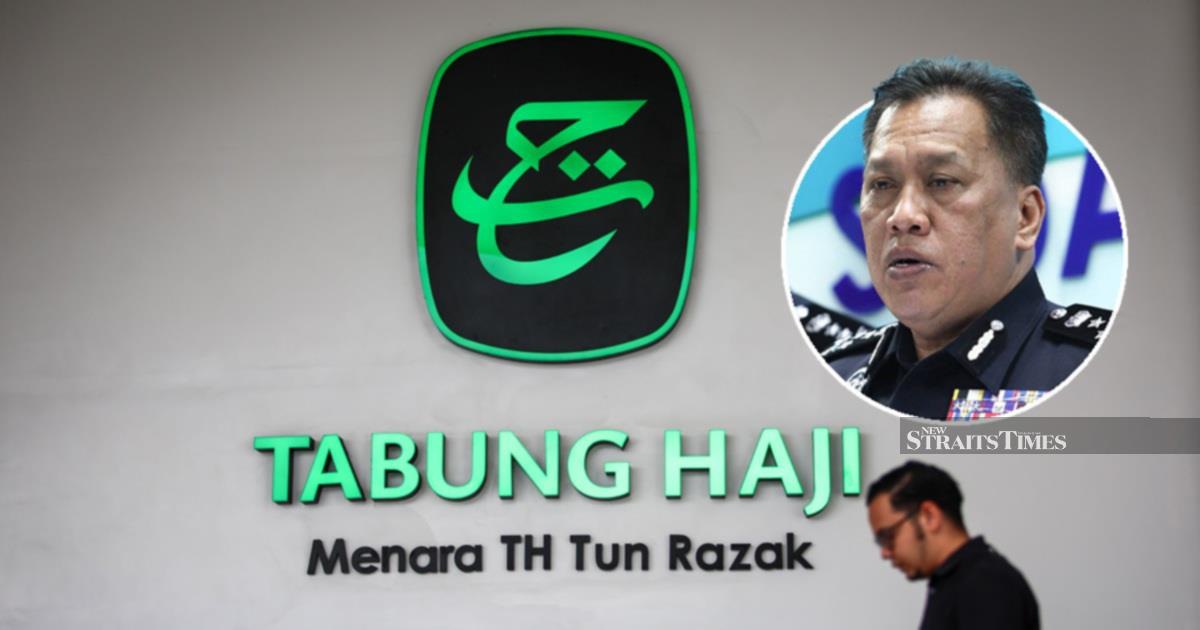
The Royal Malaysian Police have expanded their inquiry into the Lembaga Tabung Haji (TH) scandal by recording statements from 134 witnesses, marking a significant escalation in investigative efforts following the Royal Commission of Inquiry report. The latest phase of the probe includes 10 newly summoned witnesses, suggesting investigators are continuing to uncover fresh angles and potential leads in what has become one of Malaysia's most closely watched financial investigations in recent years.
Tabung Haji, which manages pilgrimage savings and religious endowment funds for approximately 8.8 million Malaysian Muslim account holders, faced intense scrutiny after the RCI revealed widespread governance failures, investment losses, and questionable management decisions that collectively endangered billions of ringgit in public funds. The breadth of witness interviews—spanning 134 individuals—reflects the complexity and multi-faceted nature of the alleged misconduct uncovered during the inquiry, which implicated numerous officials, board members, and related parties across different administrative levels.
The RCI's findings triggered considerable concern among Malaysian Muslims who viewed Tabung Haji as a trusted institution entrusted with their savings and charitable contributions. The inquiry documented problematic real estate acquisitions, underperforming investments, and organizational decisions that critics argued prioritized expansion over prudent financial management. These revelations forced difficult questions about institutional accountability and oversight mechanisms within Malaysia's Islamic financial sector, an area traditionally insulated from the same level of public scrutiny applied to conventional banking and investment institutions.
Police involvement in the investigation represents a critical transition from the RCI's fact-finding mandate to potential criminal prosecution. By systematically recording detailed witness statements, investigators aim to establish chains of responsibility and determine whether specific individuals or entities acted with criminal intent or gross negligence. This methodical approach is essential in complex financial cases where proving culpability requires comprehensive documentation of decisions, communications, and the knowledge available to key decision-makers at crucial moments.
The identification of 10 recently called witnesses suggests that the investigation remains dynamic and continues to develop as new information emerges. These individuals may possess critical knowledge about specific transactions, communications between senior officials, or procedural breaches that occurred during periods when substantial losses accumulated. The police strategy of rolling witness calls rather than conducting all interviews simultaneously allows investigators to follow leads, corroborate testimony, and adjust their focus based on emerging evidence.
For Malaysian investors and account holders at Tabung Haji, the ongoing investigation provides some reassurance that authorities are pursuing comprehensive accountability. However, the length and complexity of the process also raises questions about the timeline for resolution and potential restitution. Months of witness interviews and statement analysis typically precede any formal charges, meaning the organization's reputation may remain under a cloud for an extended period. This protracted investigation period can create uncertainty for current account holders and discourage new participants from utilizing the institution's services.
The scope of witness interviews extends beyond senior management to include board members, investment advisors, administrative staff, and potentially external parties such as property consultants or financial intermediaries involved in significant transactions. This comprehensive approach is methodologically sound for financial crime investigations, as misconduct often requires collaboration across organizational boundaries and reliance on external service providers who may themselves become unwitting participants or deliberately complicit in problematic schemes.
Investigators will be scrutinizing documents, decision-making processes, and communications to determine whether officials exercised sufficient due diligence before committing substantial resources to major projects. A critical line of inquiry likely involves understanding why certain investments proceeded despite apparent warning signs or contrary professional advice, and whether pressure from leadership suppressed dissenting voices within the organization. Such institutional dynamics often prove crucial in white-collar investigations, as they establish whether failures resulted from incompetence, negligence, or deliberate circumvention of established procedures.
The investigation's implications extend beyond Tabung Haji itself to Malaysia's broader institutional governance framework. The RCI's findings prompted discussions about strengthening oversight mechanisms, improving transparency requirements, and establishing clearer accountability structures for organizations managing public funds or assets held in trust. Regulatory bodies have been called upon to review their monitoring capabilities and enforcement powers, particularly regarding large financial institutions with access to substantial customer deposits.
For the Malaysian Muslim community, the Tabung Haji controversy has prompted broader reflection on fiduciary responsibility and institutional trust. Religious and community leaders have increasingly emphasized the need for governance standards that align with Islamic principles of transparency and accountability, termed as part of Shariah compliance beyond merely structuring products according to Islamic law. This broader conversation about what genuine institutional integrity means has relevance across Malaysia's entire Islamic financial sector.
The investigation's eventual outcome will likely influence future regulatory approaches to similar institutions managing community savings and endowment funds. Depending on investigative findings and any subsequent prosecutions, policymakers may implement stricter board appointment procedures, mandatory external audits, or whistleblower protection mechanisms designed to prevent similar scandals. These potential reforms could reshape governance standards across multiple sectors beyond Islamic finance.
As police continue their witness interviews and evidence gathering, the case serves as a sobering reminder of the consequences when institutional oversight lapses or accountability mechanisms prove insufficient. The 134 witness statements being compiled represent not merely procedural documentation but the voices of individuals with knowledge of how a major national institution departed from its fiduciary obligations, a record that will inform both legal proceedings and lessons about preventing future institutional failures.

