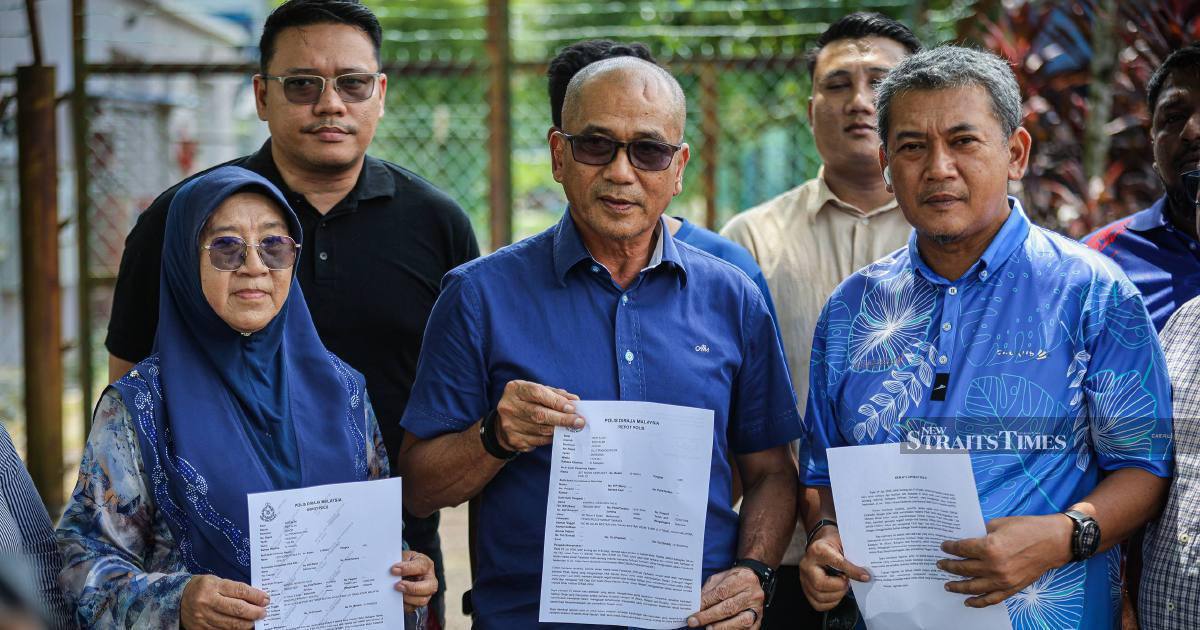
Political tensions in Johor have intensified following the lodging of several police reports against Datuk Dr Mohd Puad Zarkashi, a prominent former Umno figure, by members of the Johor Barisan Nasional coalition. The complaints emerged after the veteran politician made public allegations linking the Johor palace to developments within the state branch of Umno, signalling fresh discord within the ruling party's structures at the state level.
The decision by Johor BN members to pursue formal police action represents an escalation in internal party dynamics and reflects broader sensitivities surrounding the intersection of institutional monarchy and partisan politics in Malaysia. Such moves highlight the delicate balance that political actors must maintain when discussing the role of royal institutions in governance matters. The controversy underscores how quickly disputes within Malaysia's dominant political coalition can transform into official investigations, even when central figures remain within the same political ecosystem.
Datuk Dr Mohd Puad Zarkashi's previous positions within Umno's highest decision-making bodies would ordinarily grant him considerable standing within party circles. His willingness to make public allegations suggests he believes the issues at stake warrant attention beyond internal party channels. However, the response from Johor BN members indicates that many colleagues view his statements as crossing important professional and institutional boundaries, particularly regarding commentary on the palace's involvement in state political affairs.
The timing of these police reports carries significance within Malaysia's political calendar and internal Umno dynamics. Johor remains a crucial state for Barisan Nasional's political dominance, and any suggestion of instability or internal friction could have ramifications for the coalition's electoral prospects and governance legitimacy. Tensions within state-level party structures, especially those involving prominent figures and sensitive institutional matters, can quickly escalate from private disagreements into matters of national political consequence.
In the Malaysian political context, allegations concerning palace involvement in partisan matters are particularly sensitive. The constitutional role of the monarchy is carefully circumscribed, and public suggestions that royal institutions are influencing party politics can be perceived as threatening to the established order. This sensitivity likely explains the swift and formal response from Johor BN members, who may view the need to distance themselves from such allegations as politically necessary for maintaining legitimacy.
The nature of Datuk Dr Mohd Puad Zarkashi's allegations remains central to understanding the broader implications of this dispute. By making claims about palace influence on state Umno affairs, he touched upon questions about the boundary between institutional monarchy and political partisanship that Malaysian leaders generally avoid publicly. Such boundary questions, though rarely discussed openly, remain relevant to how Malaysia's political system actually functions at the state level, particularly in states with particularly active and engaged royal households.
For observers of Malaysian politics, this incident illustrates how internal disagreements within Barisan Nasional can rapidly acquire a legal dimension. What might elsewhere be managed through quiet diplomacy or internal party processes instead moves into the formal complaint system. This pattern reflects both the serious nature of allegations touching on royal institutions and the difficulty of managing internal dissent within Malaysia's largest political coalition without resorting to official channels.
The response from Johor BN members also signals something about the distribution of power and influence within the state party apparatus. By filing police reports rather than handling matters through party disciplinary mechanisms, they effectively brought external authorities into an internal dispute. This approach suggests that concerns about Datuk Dr Mohd Puad Zarkashi's statements extend beyond normal party disagreements into territory requiring formal investigation.
For Johor politics specifically, this controversy emerges at a moment when state-level BN structures remain important to the national party's overall strategic positioning. Any perception of instability or serious internal conflict in Johor threatens to undermine Barisan Nasional's broader political narrative about capable and united governance. The decision to pursue police action, while perhaps necessary from the perspective of those filing reports, carries reputational costs for state-level party cohesion.
The incident also raises questions about internal Umno communication and conflict resolution mechanisms. Traditionally, disputes within Malaysia's largest political party have been managed through established hierarchies and internal processes. The movement toward formal police reporting suggests that such internal mechanisms may have proven inadequate for addressing disagreements of this magnitude and sensitivity.
Looking ahead, the police investigation into the allegations will likely influence both the substance of political debate within Johor and perceptions of internal Umno unity more broadly. Depending on outcomes, the matter could either be contained as an isolated incident or develop into something with wider implications for state and national BN dynamics. The involvement of formal investigative authorities means the matter has transitioned beyond something the party alone can easily manage or resolve.
This controversy ultimately reflects deeper structural questions about managing internal dissent within dominant political coalitions, the relationship between Malaysia's political parties and its royal institutions, and the extent to which formal legal mechanisms have become the default response to serious internal party disagreements. As Johor continues navigating these tensions, broader lessons about political communication and institutional relationships within Malaysia's system will likely emerge.

