A fatal police encounter in Madison, Wisconsin's capital city, has ignited fresh demonstrations and renewed scrutiny of law enforcement conduct in the United States. The shooting occurred after an armed individual engaged officers in a physical altercation, resulting in his death at hospital. Madison Police Chief John Patterson confirmed that the officer involved opened fire after the suspect pulled a knife and wounded one of the responding officers during the struggle, underscoring the volatile circumstances that preceded the lethal force.
The sequence of events, which unfolded during what authorities described as a lawful arrest, has become a focal point for examining police tactics and accountability. According to Patterson's account relayed through media outlets, the incident began when officers attempted to take the suspect into custody. The situation escalated dramatically when the man drew a weapon and inflicted an injury on one of the officers present, creating what law enforcement characterised as an immediate threat requiring defensive action. Three shots were ultimately discharged at close range, resulting in injuries that proved fatal when the individual reached medical facilities.
What distinguishes this case from countless other police confrontations is the existence of bystander-recorded video documentation. The footage captures multiple officers engaged in physical restraint of the suspect, including one officer employing a taser device that temporarily incapacitated the individual. The video then shows another officer delivering kicks to the prone suspect while a colleague applies pressure with his knee—tactical approaches increasingly scrutinised by civil liberties advocates and community organisations. The final moments show a fourth officer firing multiple rounds from a close distance, with three distinct gunshots audible in the recording.
The emergence of visual evidence has historically transformed public discourse surrounding police incidents in America. Body cameras, increasingly standard equipment for law enforcement agencies nationwide, can serve as objective records of confrontations that might otherwise depend entirely on official accounts. Notably, Madison Police Chief Patterson acknowledged that none of the four officers involved in this incident were equipped with body cameras during the arrest. This absence means the bystander video represents the primary independent documentation of the encounter, placing considerable weight on the civilian recording as other investigations proceed.
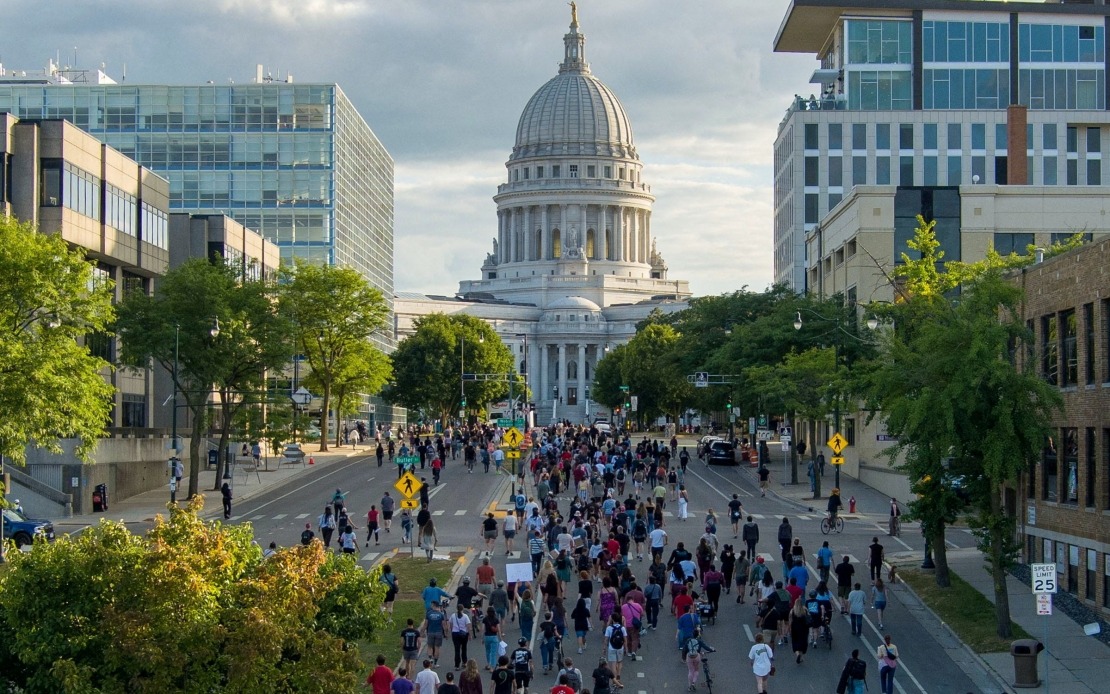
The incident triggered immediate public demonstrations in Madison on Wednesday, reflecting broader national tensions surrounding police use of force and accountability mechanisms. Community members and civil rights advocates have repeatedly questioned whether alternatives to lethal force existed in such situations, particularly when suspects are armed but officers maintain numerical and tactical advantages. The shooting raises enduring questions about de-escalation training, the appropriateness of multiple officers applying simultaneous physical force before lethal measures, and whether comprehensive protocols existed to manage the confrontation through non-fatal means.
State authorities have initiated an investigation into the shooting, a standard procedural response in officer-involved fatality cases across America. The four officers directly involved have been placed on administrative leave pending the investigation's completion—another routine administrative step that critics argue can insulate officers from meaningful accountability. This investigation will likely examine whether the shooting met legal thresholds for justifiable use of deadly force, departmental policy compliance, and whether tactical alternatives were feasible.
For Malaysian readers and Southeast Asian observers, this incident reflects systemic challenges within American policing that extend beyond any single department. The absence of body camera footage in a major state capital's police force raises questions about equipment funding, policy implementation, and enforcement culture. In Malaysia, where the Royal Malaysia Police operates under different legal frameworks and training standards, such incidents provide comparative context for understanding how different societies approach police accountability and public safety.
The psychological and social reverberations of police shootings continue extending through affected communities long after formal investigations conclude. Public confidence in law enforcement, already strained by numerous high-profile incidents, faces further erosion when visual evidence contradicts official explanations or when systematic safeguards like body cameras remain absent. Madison residents now confront questions about whether their police department prioritises community protection in ways that command public trust.
The knife-wielding suspect's actions clearly created a dangerous situation for responding officers, a fact that investigations must consider carefully. However, the existence of bystander video documentation enables scrutiny of whether the officers' combined response—including the taser, physical restraint techniques, and ultimately lethal force—represented proportionate and necessary measures. The tension between officer safety and civilian protection remains among the most challenging aspects of policing that no procedural reform easily resolves.
Looking forward, this Wisconsin shooting will likely contribute to broader policy discussions about police training, equipment standards, and the legal standards governing use of force. Whether Madison will mandate body cameras for all officers, implement stricter de-escalation protocols, or modify tactical response procedures remains uncertain. Community demands for systemic reform will inevitably intersect with law enforcement arguments about operational practicality and officer safety, a dynamic familiar across democratic societies wrestling with police legitimacy.

