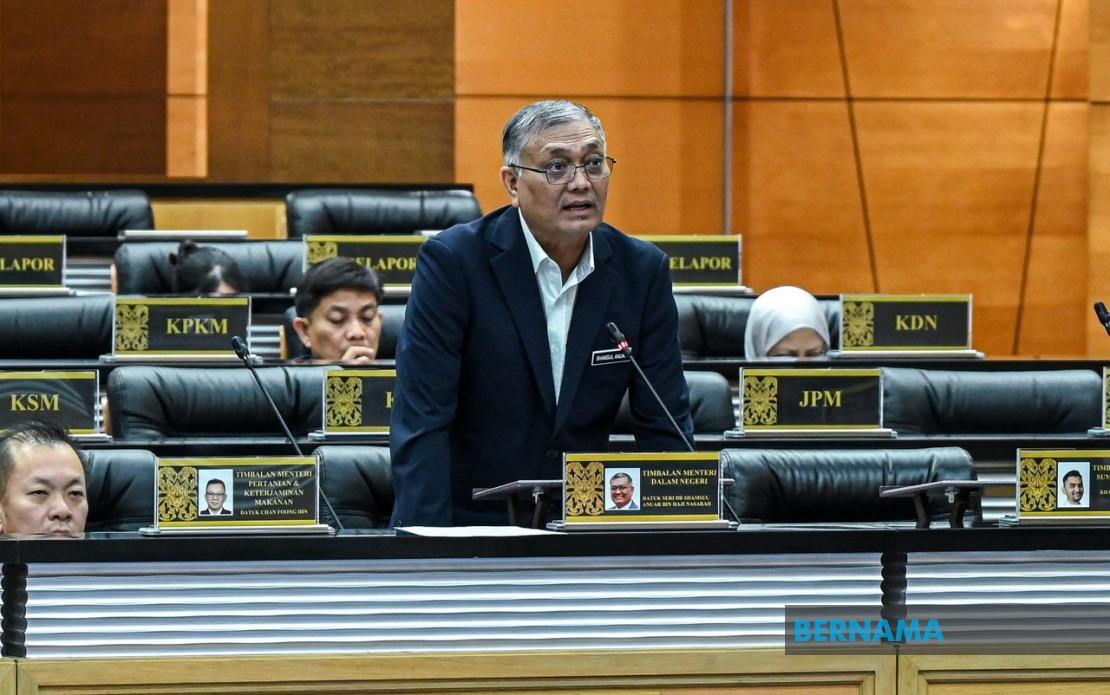
Deputy Home Minister Datuk Seri Dr Shamsul Anuar Nasarah has underscored the Royal Malaysia Police's commitment to investigating high-profile cases without favoritism or political consideration. Speaking in Parliament on July 15, Shamsul Anuar stated categorically that the police do not shield any individual from scrutiny, regardless of their social standing or political connections. This declaration carries particular weight given the intense public interest surrounding several sensitive investigations currently underway.
One of the most significant ongoing probes concerns an intimate video recording that spread across social media platforms in 2019, which became associated with a former member of the Cabinet. The Deputy Home Minister revealed that investigators continue to work toward locating the original footage, while simultaneously tracing all devices and technological equipment involved in its creation and distribution. The investigation remains active after several years, suggesting the complexity involved in gathering digital evidence and establishing the chain of custody.
The police approach to this sensitive matter operates under multiple legal frameworks. Shamsul Anuar outlined that the investigation draws on Section 292, Section 377B, and Section 504 of the Penal Code, alongside Section 233 of the Communications and Multimedia Act 1998. This multi-layered legal approach reflects the seriousness with which authorities are treating the matter, as these provisions address distinct offences ranging from obscenity to harassment and defamation. The invocation of communications law particularly demonstrates recognition that digital-age crimes require modern statutory tools.
The Deputy Home Minister's remarks came in response to a parliamentary question from Datuk Wan Saifulruddin Wan Jan, an elected representative from Tasek Gelugor on the Perikatan Nasional ticket, who sought updates on the progress of multiple sensitive investigations. This exchange highlights ongoing parliamentary scrutiny of the police's handling of cases that touch on politics and public figures, an area where impartiality and transparency become especially crucial to public confidence in institutions.
In a separate matter, Shamsul Anuar addressed an investigation involving the son-in-law of former Prime Minister Tan Sri Muhyiddin Yassin. He clarified that this case falls outside police jurisdiction, instead being pursued by the Malaysian Anti-Corruption Commission. The MACC has already issued an arrest warrant for the individual, signalling that the anti-corruption agency views the evidence sufficiently compelling to proceed with formal action. However, Shamsul Anuar declined to elaborate further, respecting the ongoing investigative process and the legal principle that commentary during investigations can prejudice proceedings.
The separation of this matter from police purview and its placement under MACC authority is significant. It demonstrates institutional division of responsibilities, whereby different agencies handle cases according to their specialised mandates. The MACC's issuance of an arrest warrant indicates that preliminary investigations have met the legal threshold for such action, though the eventual outcome will depend on subsequent judicial proceedings. For Malaysian readers, this underscores how different government bodies play distinct roles in upholding the rule of law.
Shamsul Anuar also addressed broader questions about Malaysia's extradition capabilities, an issue increasingly relevant as cross-border investigations become more common in an interconnected world. He explained that Malaysia's extradition framework is governed by the Extradition Act 1992 and bilateral or multilateral treaties established with foreign governments. The nation currently maintains formal extradition arrangements with eleven countries, providing mechanisms through which individuals accused of crimes can be returned to face justice in their home jurisdictions.
Beyond existing treaties, Malaysia has already signed the ASEAN Extradition Treaty, positioning the country within a regional framework for judicial cooperation. This multilateral approach reflects the government's recognition that criminal activity increasingly transcends borders, and that effective law enforcement requires seamless collaboration with neighbouring and distant nations alike. The Deputy Home Minister indicated Malaysia's readiness to pursue additional bilateral negotiations with other countries, suggesting an active agenda to expand the nation's extradition network and strengthen international cooperation on serious criminal matters.
The government's emphasis on procedural integrity and institutional independence speaks to broader anxieties about political interference in law enforcement. High-profile investigations frequently generate accusations that powerful individuals receive preferential treatment or that investigations are selectively deployed against political rivals. By publicly restating that neither position nor political affiliation influences police conduct, Shamsul Anuar sought to reinforce institutional credibility at a time when public trust in such processes remains fragile in many societies, including Malaysia.
For Southeast Asian observers and international partners, these statements carry implications for Malaysia's standing as a jurisdiction committed to rule of law principles. The ability to investigate prominent figures impartially while respecting institutional boundaries—as exemplified by allowing MACC to handle corruption matters—suggests a maturing system of institutional checks. Yet, persistent public scepticism about whether such principles operate uniformly underscores the gap between formal commitment and consistent implementation that many developing democracies continue to navigate.
The multi-year duration of the 2019 video investigation also raises questions about investigative resources and technological capacity. Digital evidence recovery in sensitive cases requires specialised expertise and often involves international cooperation with technology companies and foreign law enforcement. The ongoing nature of these probes, combined with efforts to expand extradition frameworks, reflects Malaysia's evolving response to contemporary criminal challenges that demand sophisticated technical capabilities and cross-border coordination.

