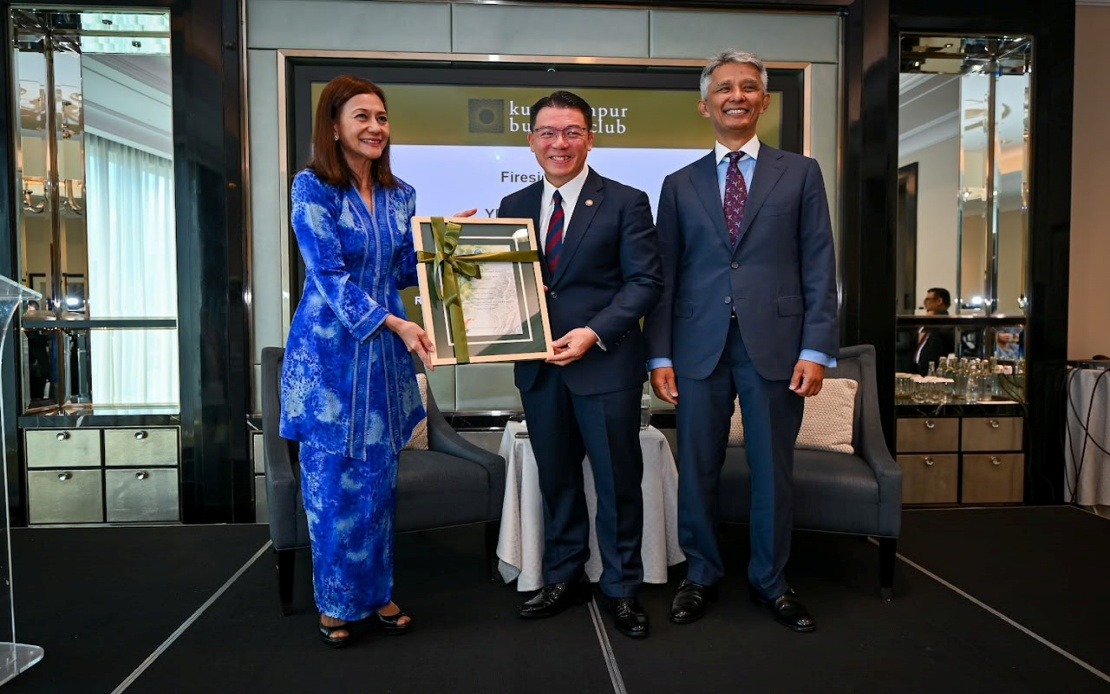
Housing and Local Government Minister Nga Kor Ming has underscored the critical importance of maintaining consistent policy direction under the MADANI framework as Malaysia pursues its economic transformation agenda. Speaking after a fireside chat organised by the Kuala Lumpur Business Club, Nga emphasised that without sustained continuity in governance and reform initiatives, the gains already achieved risk being diluted, and future growth prospects could be jeopardised. He stressed that keeping investors reassured about Malaysia's commitment to structural reform requires unwavering dedication to the government's strategic direction and institutional modernisation efforts.
Nga's remarks came during a high-level discussion themed "Future Cities, Future Growth: How MADANI Reforms Are Reshaping Malaysia's Urban Economy", which convened prominent business figures and stakeholders to explore Malaysia's development trajectory. The Housing Minister articulated that a second term in office would furnish the government with the temporal and political capital to deepen reforms across sectors, strengthen the institutional backbone necessary for implementing complex policy changes, and fulfil the long-term economic transformation initiatives already in motion. This framing positions policy continuity not merely as an administrative preference but as a prerequisite for translating reform rhetoric into tangible economic benefits.
The MADANI government, led by Prime Minister Datuk Seri Anwar Ibrahim, has achieved several measurable outcomes that Nga highlighted as validation of its reform-oriented approach. Improvements in governance standards, enhanced economic management practices, and expanded international engagement have collectively bolstered Malaysia's attractiveness as an investment destination. These developments have contributed to restoring confidence among foreign and domestic investors who had previously expressed concerns about Malaysia's economic direction and institutional credibility. Nga's emphasis on measurable progress suggests the government is keen to establish a track record that transcends political cycles and demonstrates institutionalised commitment to reform.
Malaysia's standing as a preferred investment location reflects the compound effect of multiple policy initiatives. Clear investment frameworks, sound macroeconomic fundamentals, and visible political stability have converged to create an environment that multinational corporations and institutional investors view favourably. In a region where regulatory uncertainty and political volatility can deter capital flows, Malaysia's relative institutional predictability under the MADANI administration has become a competitive asset. Nga's articulation of this advantage underscores how governance quality directly translates into economic opportunity and employment generation.
Trade resilience has emerged as another cornerstone of Malaysia's economic performance under the current administration. Despite global economic headwinds, including supply chain disruptions, inflation pressures, and geopolitical tensions, Malaysia's export-oriented economy has demonstrated surprising robustness. This resilience reflects not only favourable market conditions but also the effectiveness of policies designed to enhance competitiveness, diversify trading partnerships, and modernise productive capacity. For a country historically reliant on commodity exports and manufacturing, this diversification and adaptive capacity represents a significant strategic achievement.
Improvements in Malaysia's Corruption Perceptions Index ranking signal that reform efforts have extended beyond economic policy to encompass institutional integrity. Higher CPI rankings enhance Malaysia's international reputation, making it easier for the government to attract development finance, secure participation in multilateral initiatives, and recruit top talent to its bureaucracy. Nga's reference to CPI improvements indicates that anti-corruption efforts are being leveraged not just as moral imperatives but as strategic economic assets that improve the country's competitive positioning.
Enhanced international credit ratings reflect external validation of Malaysia's fiscal discipline and economic management. When international rating agencies upgrade their assessments of Malaysia's creditworthiness, the cost of government borrowing declines, freeing resources for productive investments in infrastructure, education, and healthcare. These rating improvements also signal to private sector investors that the government's balance sheet is strengthening and that macroeconomic stability is being maintained despite global uncertainties. For Malaysian households and businesses, improved credit ratings translate into lower borrowing costs and improved access to capital for productive ventures.
Malaysia's diplomatic assertiveness has opened new commercial avenues previously untapped or underdeveloped. The RM52.73 billion strategic partnership with Turkmenistan and long-term energy collaboration initiatives with Russia exemplify how foreign policy activism can generate tangible economic returns. These partnerships diversify Malaysia's sources of energy security, create opportunities for Malaysian companies in new markets, and strengthen the country's geopolitical positioning in an increasingly multipolar world. For a middle-income country navigating great power competition, such strategic partnerships provide additional leverage and negotiating space.
The emphasis on shared prosperity as a cornerstone of Malaysia's foreign policy represents a departure from transactional diplomacy towards partnership-building rooted in mutual benefit. This approach appeals to potential partners seeking alternatives to extractive arrangements and resonates with Malaysia's own development philosophy. By positioning itself as a reliable partner committed to equitable collaboration, Malaysia can attract high-quality foreign direct investment and establish deeper economic relationships with major regional and global actors.
Nga's argument that sustained policy continuity is necessary to translate reforms into lasting gains reflects a sophisticated understanding of economic governance. Structural economic transformation typically requires five to ten years to fully manifest in productivity improvements, wage growth, and living standards enhancement. Premature policy shifts or loss of institutional momentum can undermine years of reform work. This extended timeframe underscores why political stability and government mandate are essential prerequisites for ambitious economic transformation programmes.
For Malaysian stakeholders, Nga's message carries implications beyond the immediate political context. Businesses planning long-term investments depend on clarity about regulatory direction and government commitment to institutional reforms. Workers and consumers benefit when economic growth is sustained rather than episodic, as this creates stable employment and income opportunities. The broader Southeast Asian region watches Malaysia's trajectory closely, as Malaysia's success or failure in implementing sustained reforms influences regional economic dynamism and investment flows within ASEAN.
The challenge facing the government is translating its articulation of reform necessity into concrete legislative and administrative action that demonstrably improves ordinary Malaysians' economic circumstances. While investor confidence and international recognition are important, the durability of the MADANI government's mandate ultimately depends on whether its reforms produce tangible improvements in employment quality, wage levels, cost of living, and access to essential services. Sustained policy continuity proves valuable only if the policies themselves are delivering measurable gains to the broader population.

