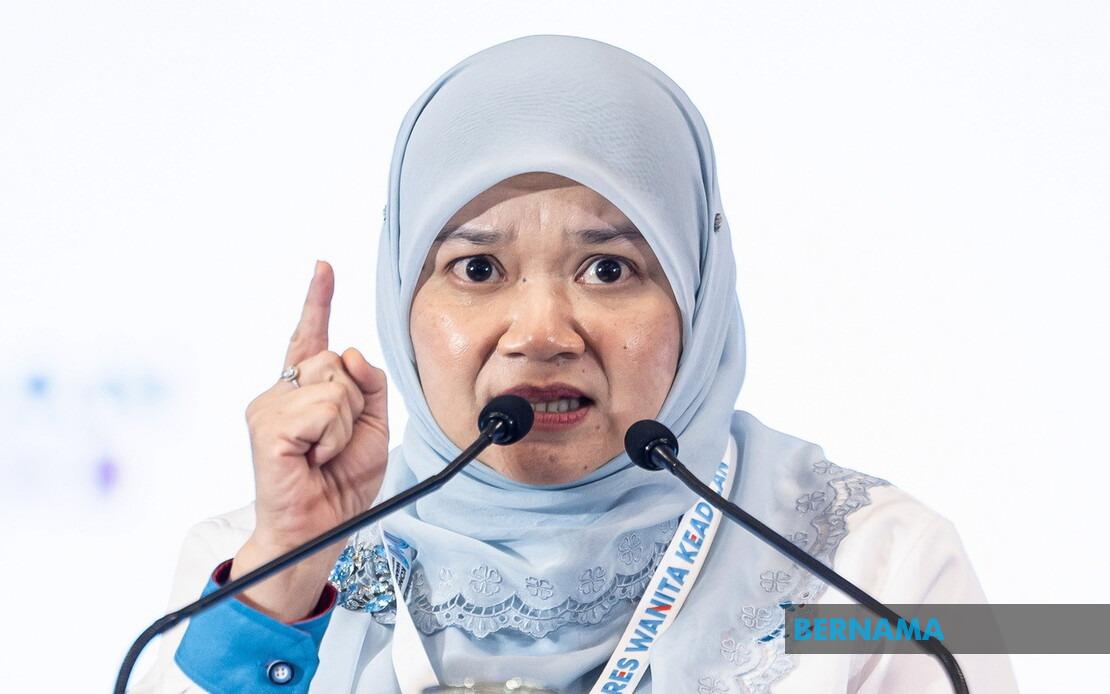
The weaponisation of religion in Malaysian politics requires a fundamental shift in how parties approach electoral competition, according to Wanita PKR chief Fadhlina Sidek, who made her case during the party's national congress in Melaka this week. Speaking at the 2026 Wanita PKR National Congress held at the Melaka International Trade Centre in Ayer Keroh, Fadhlina articulated a vision for Malaysian politics that privileges substantive policy debate over the cultivation of religious grievance, a persistent feature of the nation's political landscape that continues to shape electoral outcomes across the peninsula.
Fadhlina's intervention arrives at a moment when religious rhetoric has become increasingly prevalent in Malaysian political discourse, with various parties leveraging faith-based messaging to mobilise voters ahead of upcoming electoral cycles. Her remarks implicitly critique this trend without naming specific parties, instead calling for a deliberate recalibration of how political competition unfolds in the country. The PKR leader contended that parties should instead channel their energy into demonstrating superior governance capacity and policy innovation, positioning themselves as better stewards of public resources and architects of practical solutions to everyday challenges facing ordinary Malaysians.
The distinction Fadhlina draws between legitimate political competition and the exploitation of religious sentiment carries particular weight in Malaysia's multiconfessional context, where Islam's constitutional position as the federation's official religion intersects with deep-rooted concerns about religious freedom and minority protections. By explicitly warning against the arbitrary deployment of religious messaging for electoral purposes, she signals PKR's determination to establish a different political baseline—one in which parties differentiate themselves through competing visions of economic development, education policy, healthcare delivery, and infrastructure investment rather than through appeals to sectarian anxieties.
The concept of broadening political competition around ideas and concepts rather than disparagement reflects a sophisticated understanding of how Malaysian voters respond to political messaging. Fadhlina's emphasis on offering superior solutions acknowledges that while religious appeals may generate short-term mobilisation, sustainable political legitimacy requires demonstrating competence in translating campaign promises into tangible improvements in voters' material conditions. This approach suggests PKR's leadership recognises that the party's long-term viability depends on establishing itself as a credible alternative capable of delivering governance improvements, not merely offering a religious perspective different from competitors.
Particularly significant within Fadhlina's remarks is her insistence that religious matters themselves demand respect and protection from political instrumentalisation. This framing treats faith as something deserving of deference precisely because it occupies a profound place in citizens' lives, distinct from and above the temporary contestation of electoral politics. By presenting religious respect and political competition as mutually reinforcing rather than contradictory, Fadhlina articulates a position that could potentially appeal beyond PKR's existing base to voters across Malaysia's demographic spectrum who share concerns about religion being reduced to a tool for partisan advantage.
Beyond the ideological terrain of political campaigning, Fadhlina also addressed the organisational imperatives facing PKR as it prepares for the 2026 electoral cycle. She directed party leaders and members to deepen their engagement with grassroots communities through sustained relationship-building and direct responsiveness to neighbourhood needs. This emphasis on reconnecting with the grassroots reflects an understanding that political relevance ultimately depends on demonstrable presence and responsiveness at the community level, where voters experience government's impact most directly. Fadhlina's call for leaders to examine the circumstances of their neighbours and extend practical assistance suggests PKR intends to differentiate itself not merely through rhetorical appeals but through visible engagement with local needs.
The demand for sensitivity to community circumstances and readiness to assist those facing hardship positions PKR as a service-oriented political force rather than purely a rhetorical or ideological one. This orientation carries implications for how the party structures its grassroots machinery and allocates its resources in the lead-up to elections. By emphasising that community understanding and direct engagement must form the foundation of the party's relationship with voters, Fadhlina articulates a theory of political competition in which sustained local presence and responsiveness ultimately determine electoral success more decisively than spectacular campaign rhetoric or religious messaging.
Fadhlina's address also conveyed messages of party unity and internal discipline at a moment when PKR, like other Malaysian political organisations, faces periodic questions about internal cohesion and member loyalty. Her emphasis on remaining steadfast despite trials and challenges carries implicit recognition that PKR members encounter sustained pressure from competitors and that maintaining commitment requires conscious reinforcement from party leadership. By framing the party's strength as dependent on the collective effort of its machinery across all organisational levels, Fadhlina invoked a vision of PKR as a disciplined force capable of sustained political competition across multiple electoral cycles.
The implications of Fadhlina's position extend beyond PKR itself to the broader trajectory of Malaysian politics. Her explicit rejection of religion-based political competition suggests at least one major political party believes the electorate may be receptive to alternative models of political engagement, and that the persistent recourse to religious messaging by competitors may represent a vulnerability rather than an insurmountable advantage. Whether other parties adopt similar framings, and whether Malaysian voters genuinely prefer ideas-focused competition to religious appeals, will emerge from how elections unfold in coming years. For now, Fadhlina's remarks position PKR within an evolving conversation about what Malaysian politics could become if political leaders collectively elevated the quality and substance of their engagement with voters.

