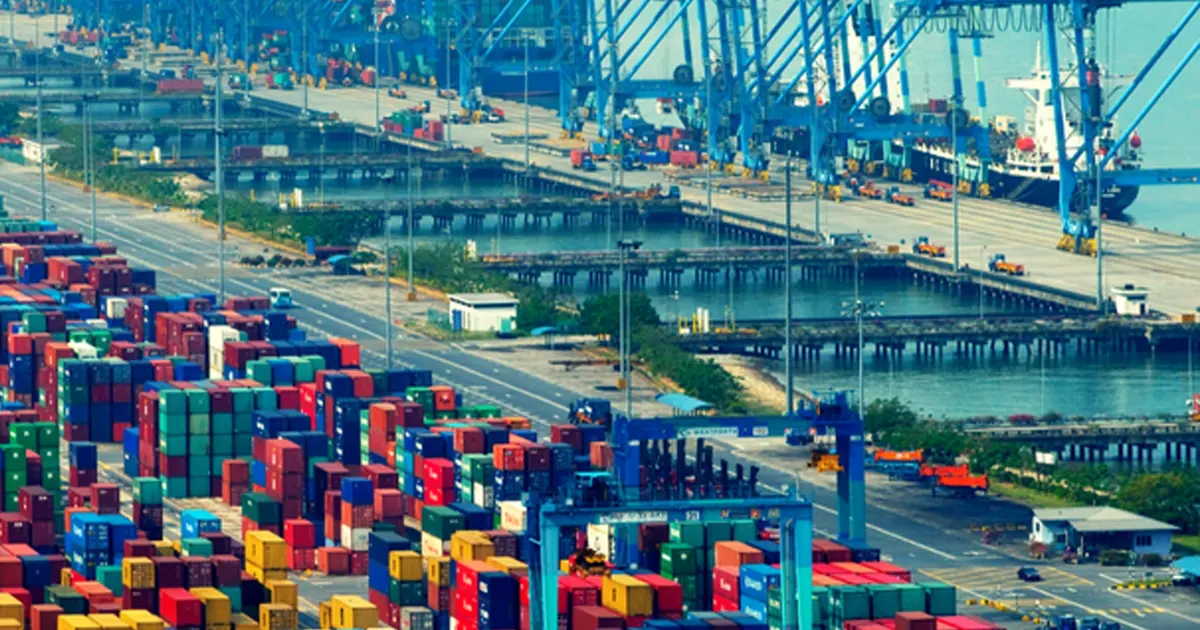
Port Klang Free Zone has achieved RM108 million in revenue generation as its reactivation programme approaches completion at 86 percent, marking a significant recovery milestone for the troubled facility. Transport Minister Loke Siew Fook disclosed the figures, emphasising that the free zone has experienced consistent and encouraging expansion throughout the past year and a half, a turnaround that carries implications for Malaysia's role as a regional logistics and trade hub.
The PKFZ, one of Southeast Asia's largest free trade zones, had faced severe operational challenges and financial difficulties in previous years, necessitating comprehensive restructuring efforts. The current reactivation drive represents a concerted ministerial effort to restore the facility to operational efficiency and commercial viability, addressing longstanding concerns about underutilisation and financial underperformance. The achievement of 86 percent reactivation progress suggests that systematic rehabilitation measures are bearing fruit, with operations resuming at a pace that outpaces earlier expectations.
The RM108 million revenue figure demonstrates that tenants and trading partners have renewed confidence in the facility's capacity to support their logistics and distribution operations. This revenue stream originates from rental income, services provision, and value-added activities conducted within the free zone's boundaries. The consistency of this revenue generation over an 18-month period indicates that the facility is not merely experiencing a temporary uptick but rather establishing sustainable operational foundations.
For Malaysian exporters and multinational enterprises utilising regional distribution networks, the PKFZ's recovery is strategically significant. The facility's proximity to Port Klang, Malaysia's busiest container port, creates synergies that enhance competitiveness for companies managing intra-regional supply chains. The reactivation progress suggests that businesses can increasingly rely on the free zone to provide integrated warehousing, consolidation, and re-export services without the bottlenecks and uncertainties that characterised previous operational periods.
Loke's emphasis on steady growth rather than explosive expansion reflects a measured approach to the facility's rehabilitation. Rather than pursuing aggressive targets that might prove unsustainable, the ministry appears focused on building durable operational capacity and attracting quality tenants committed to long-term occupancy. This philosophy contrasts with earlier periods when rapid expansion targets sometimes preceded operational difficulties. The focus on consolidation suggests officials have learned from historical challenges and are prioritising sustainable business models.
The reactivation milestone carries broader implications for Malaysia's competitiveness as a logistics destination within Southeast Asia. With Singapore's role as the dominant port and free trade hub, Malaysia must differentiate its offerings through efficiency, cost-effectiveness, and service quality. The PKFZ's recovery demonstrates commitment to developing world-class logistics infrastructure that can attract regional supply chain investments, particularly from manufacturing operations seeking warehouse and distribution capabilities.
Operational improvements underpinning the revenue growth likely encompass enhanced port connectivity, streamlined customs procedures, upgraded information systems, and improved tenant service standards. These infrastructure and procedural enhancements make the free zone more attractive to international traders and logistics providers evaluating regional facility options. The 86 percent reactivation achievement suggests that most planned improvements have been implemented or are in advanced stages, positioning the facility for accelerated growth in subsequent periods.
The timing of this recovery coincides with strengthening regional trade flows and supply chain relocation patterns following years of disruption. Many multinational enterprises are diversifying their logistics operations across multiple Southeast Asian hubs to reduce concentration risk. The PKFZ's improved reliability and operational capacity enable it to capture portion of this redistribution activity, supporting both tenant growth and government revenue objectives.
However, sustaining this momentum requires continued investment in infrastructure maintenance, technological capabilities, and workforce training. Competition from other regional free zones and modern logistics facilities in Thailand, Vietnam, and Indonesia remains intense, with these rivals continuously upgrading their offerings. The Malaysian facility must avoid complacency and continue enhancing its value proposition to retain existing tenants and attract new operations seeking warehouse and distribution capabilities in the region.
The ministry's public disclosure of these figures signals confidence in the reactivation trajectory and willingness to maintain transparency regarding the facility's performance. This accountability approach may reassure stakeholders, including corporate tenants and financial institutions, regarding the robustness of recovery efforts. For potential investors and international trading partners evaluating regional logistics options, the documented progress provides confidence in the facility's operational direction and long-term viability.
Looking forward, the critical challenge involves converting the 14 percent of incomplete reactivation into fully operational capacity while simultaneously capturing growing demand from regional trade flows. Achievement of the 86 percent milestone demonstrates that the facility possesses the operational foundation and management capacity to complete remaining activities. The consistency of revenue generation suggests that marketing efforts and tenant acquisition initiatives are resonating with target customers seeking logistics solutions within Malaysia.

