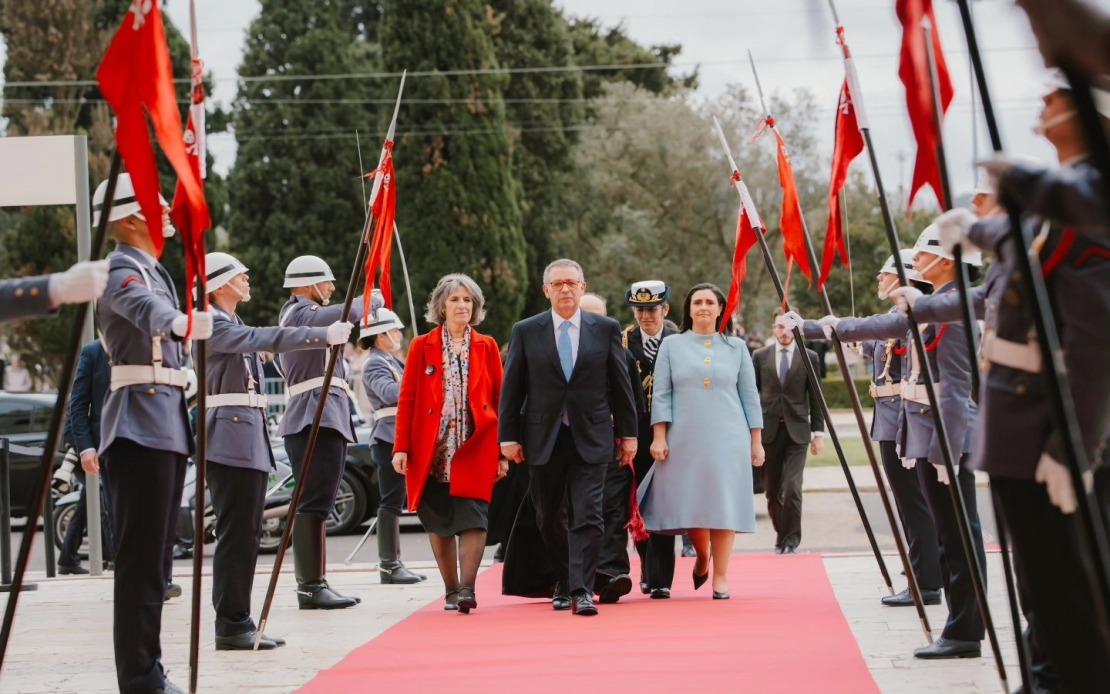
Portugal has joined a growing list of European democracies implementing restrictions on face coverings in public following President Antonio Jose Seguro's approval of the measure on Tuesday. The legislation, which originated from the right-wing Chega party, represents a significant policy shift in the Iberian nation and reflects broader continental tensions over religious expression, social integration, and public safety.
The presidential office at Belem Palace framed the decision within a context of balancing competing societal values. Seguro maintained that his approval was informed by parliamentary amendments that addressed his initial concerns, suggesting that negotiations between different political factions ultimately shaped a version of the law he deemed acceptable. His reasoning extended beyond simple security considerations, encompassing what he characterised as fundamental principles underlying Portuguese democracy and social cohesion.
The President's public statement articulated a philosophy grounded in facial recognition as an essential component of interpersonal trust and community interaction. According to the presidential position, uncovered faces represent a structural element enabling the mutual recognition that underpins peaceful coexistence in Portuguese society. This framing moves beyond conventional security arguments to position face visibility as intrinsic to the functioning of democratic institutions and civic participation.
A particularly striking dimension of the government's justification centres on gender equality concerns. The presidential statement explicitly highlighted the asymmetry it perceives in expecting only women to conceal their faces, arguing that such a requirement contradicts the principles of parity and equal dignity that characterise modern European democracies. This reasoning suggests the administration views the restriction as protective of women's interests rather than limiting them, a characterisation that remains contentious among rights advocates.
The Portuguese government also invoked precedent from the European Court of Human Rights when articulating its legal justification. By referencing the court's existing jurisprudence on face coverings, officials attempted to position Portugal's legislation within an established European legal framework rather than as a novel or exceptional measure. The administration suggested that European human rights doctrine itself recognises legitimate grounds for regulating facial concealment in public settings, though this interpretation remains disputed among legal scholars.
However, the measure has drawn sharp condemnation from international human rights organisations. Amnesty International Portugal issued a formal statement characterising the law as discriminatory and expressing particular concern for Muslim women who wear face coverings as a matter of religious observance and personal choice. The human rights group contends that the legislation threatens fundamental freedoms of religious expression and bodily autonomy, even as the government frames it as protective.
Portugal's move reflects a pattern now encompassing multiple European Union member states and affiliated nations. France, Belgium, Austria, Denmark, and the Netherlands have all implemented full or partial restrictions on facial concealment in public spaces, though the scope and enforcement mechanisms vary considerably across jurisdictions. This convergence suggests a broader European policy consensus, even as significant debate persists regarding the proportionality and necessity of such measures.
For Malaysia and other Southeast Asian nations observing these developments, Portugal's decision carries particular relevance given the region's substantial Muslim populations and longstanding traditions of diverse religious observance. The Portuguese approach stands in sharp contrast to Southeast Asian models that typically protect religious expression and accommodate various forms of dress within pluralistic frameworks. Malaysian policymakers and civil society have historically emphasised accommodation of diverse religious practices as essential to multiethnic stability.
The tension between public security objectives and religious freedom protections evident in the Portuguese case reflects ongoing debates across democratic societies about integration, identity, and the proper boundaries of state regulation. The Portuguese framing emphasises social integration and unity, yet critics argue that such restrictions may paradoxically increase marginalisation of minority communities rather than facilitating their incorporation into broader society. This paradox underscores the complexity of crafting policies that satisfy both security imperatives and rights protections.
The Portuguese legislation will likely continue generating controversy as implementation proceeds and affected communities respond through legal challenges and advocacy. The law's constitutionality may face scrutiny in Portuguese courts and potentially before the European Court of Human Rights itself, creating an important test case for how European jurisprudence balances state interests against religious and gender-based freedoms. Regional observers, particularly in countries with significant Muslim populations, will monitor how Portugal's courts interpret and apply these contested principles in individual cases.

