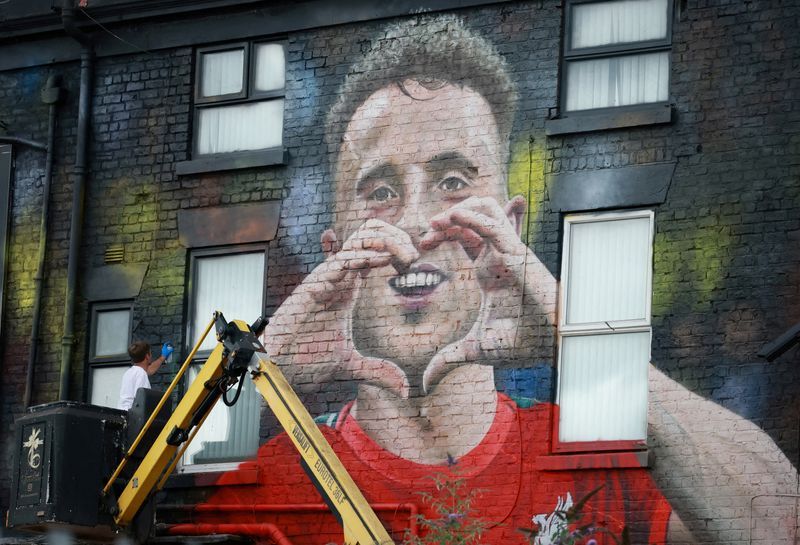
Portugal steps onto the field to face Croatia in the World Cup knockout round on Thursday, but the timing carries profound significance beyond the beautiful game. When the match kicks off in Toronto, it will already be July 3 back in Portugal—exactly one year since the tragic death of Diogo Jota, the Liverpool forward whose untimely passing sent shockwaves through the football world and left a void in the national team.
Jota, aged 28, and his brother Andre Silva died in a car accident in northwestern Spain when their Lamborghini veered off the road and caught fire. The loss devastated not only his family and club, but also the Portuguese football community, which had come to regard him as one of their most exceptional talents. His combination of skill, clinical finishing, and unwavering commitment to the national cause had made him an indispensable figure in Portugal's bid to remain among Europe's footballing elite.
The national team has made deliberate efforts to ensure Jota's presence remains palpable throughout their World Cup campaign. Manager Roberto Martinez, who has spoken of Jota as "our light," took the symbolic step of naming him as an honorary member of the squad competing in Canada. This decision reflects not merely sentiment, but recognition of the profound influence Jota's spirit continues to exert on his former teammates and the entire organisation.
Midfielder Ruben Neves, a close friend of Jota's, has chosen to wear his late teammate's number 21 during the tournament—a poignant gesture that keeps Jota's memory visible on the pitch with every touch of the ball. The Portuguese government has also contributed to these commemorations, with Prime Minister Luís Montenegro presenting the players with wristbands inscribed with Jota's name, turning personal grief into collective remembrance.
The emotional weight of this anniversary was evident when Jota's parents, Isabel and Joaquim Silva, attended Portugal's opening World Cup match against DR Congo in Houston. Their presence in the stands, marked by visible tears during tributes, underscored how the national team has become a vessel for a grieving family's continued connection to their son's legacy. For the players, the knowledge that Jota's parents are watching adds another layer of responsibility and motivation.
Defender Vitinha articulated the complex emotions driving Portugal's squad when he reflected on the approaching anniversary. Beyond the standard competitive desire to advance in the tournament, Vitinha identified a deeper motivation rooted in honouring Jota's memory and the national pride he represented. The match has transcended its status as a routine World Cup fixture to become something approaching a memorial, where victory would serve as the ultimate tribute to a fallen teammate.
The impact of Jota's loss extended beyond Portugal's borders. In Scotland's World Cup contingent, captain Andy Robertson, Jota's teammate at Liverpool and a genuine friend, was profoundly affected by the news when Scotland qualified for the finals in November. Jota's widow, Rute Cardoso, reached out to Robertson with a deeply moving message as the tournament commenced, expressing gratitude that he would carry her husband's memory onto the pitch. Her words—urging Robertson to transform the pain of loss into strength and something beautiful—captured the sentiment that has unified much of the football community around this tragedy.
From a statistical perspective, Jota's absence from this World Cup represents a genuine loss for Portugal's attacking options. The 49-capped international had scored 14 goals for his country and would almost certainly have featured prominently in the squad had circumstances been different. His unavailability due to a calf injury in 2018 meant he missed that World Cup; his death precludes any future tournament participation, making this tournament a ghostly reminder of his unrealised potential.
The passage of a year has done surprisingly little to diminish the emotional resonance of Jota's absence. In Toronto's Little Portugal neighbourhood, Miguel De Silva, the Portuguese-Canadian proprietor of Amigos da Dundas Sports Bar, reflected on what Jota's memory represents for the community gathered to watch the match. He recognised that the anniversary will galvanise Portuguese supporters and players alike, transforming personal grief into collective motivation. For the players taking the pitch, Jota's spirit becomes not a source of distraction, but rather an additional reason to pursue victory.
The match against Croatia, therefore, transcends typical World Cup significance. It represents a moment when sport intersects with genuine human tragedy and collective mourning. As Portugal prepares to compete, they do so not only for national pride or tournament progression, but also to honour a teammate whose legacy continues to define their campaign. The anniversary timing ensures that every action, every goal, and every defensive stand will carry meaning beyond the ninety minutes.

