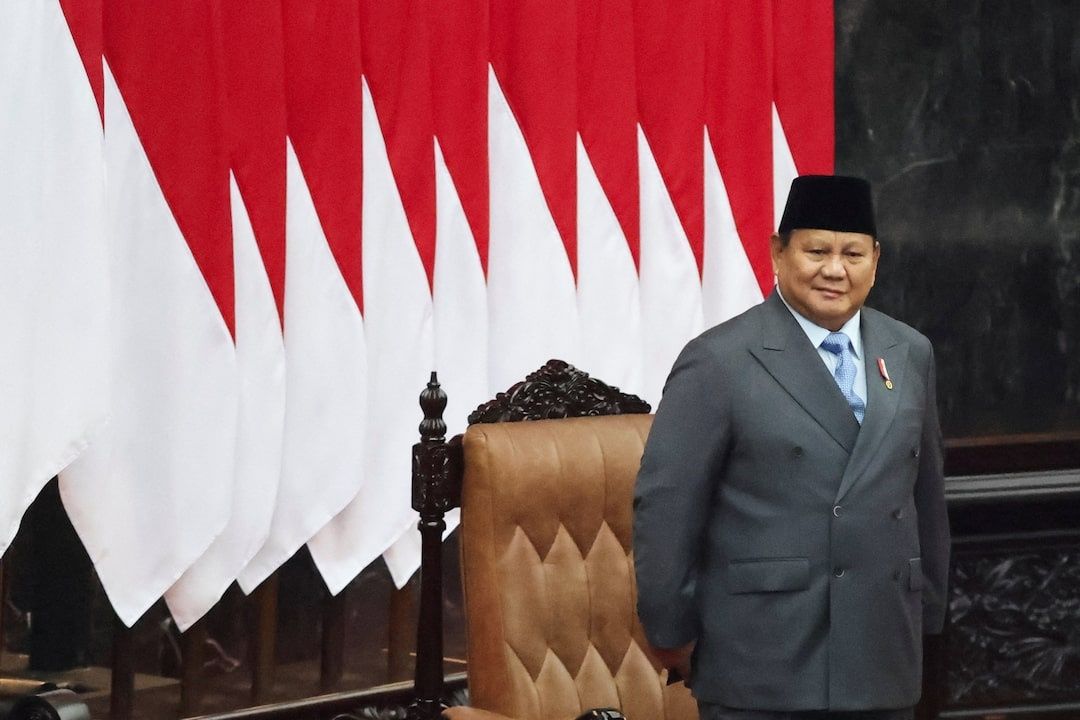
Indonesian President Prabowo Subianto is presenting his 2027 budget proposal on Friday amid deepening economic headwinds and rapidly eroding public confidence in his administration, marking what economists view as a critical moment for restoring investor faith in the country's economic direction and policy credibility.
The former military commander, who took office in October 2024 riding a wave of electoral enthusiasm, promised Indonesians he would stamp out corruption, accelerate gross domestic product growth from 5 per cent to 8 per cent, and implement a sweeping free meal programme benefiting millions of schoolchildren. Those pledges resonated deeply in a nation seeking stronger governance and improved living standards. However, his first year in power has proven considerably more challenging than the campaign narrative suggested, with domestic and international observers now questioning whether the administration can deliver on its ambitious agenda.
The economic picture facing Prabowo has deteriorated markedly since he took office. The rupiah has weakened significantly against the US dollar, reflecting a broader loss of investor confidence in Indonesian assets. The stock market has underperformed expectations, and fiscal concerns have mounted as the government struggles to balance spending pressures with revenue constraints. Adding to the administration's difficulties is ongoing anxiety about whether the central bank possesses sufficient autonomy to conduct independent monetary policy—a foundational concern for global investors evaluating Indonesia's macroeconomic framework.
Perhaps nowhere has the gap between campaign promises and on-the-ground reality become more visible than in the free meals initiative, Prabowo's signature social programme. The scheme has already encountered budget constraints forcing reductions in scope, while allegations of implementation failures and mismanagement have dimmed early enthusiasm. For a policy designed to demonstrate the government's commitment to ordinary Indonesians, such setbacks carry symbolic weight beyond their immediate fiscal impact.
Prabowo's approval rating has undergone a dramatic collapse, plummeting 30 percentage points over eight months to just 51 per cent, according to recent polling data. Analysts attribute this steep decline primarily to deteriorating economic conditions and public dissatisfaction with law enforcement outcomes—suggesting that Indonesians, while initially sympathetic to the new president's reform agenda, are now demanding tangible improvements in their material circumstances and personal security. This represents a serious political vulnerability heading into Friday's presentation.
The budget presentation itself will unfold across two components: a morning address marking Indonesia's Independence Day, where Prabowo is expected to outline broader policy directions, followed by an afternoon session dedicated to the detailed 2027 budget figures. This dual format underscores the government's effort to frame fiscal planning within a larger narrative about national development, though the specific numbers will ultimately determine whether investors believe the administration's economic strategy is sustainable.
Economists at major Indonesian financial institutions view Friday's budget as a pivotal credibility test. Irman Faiz of Bank Danamon has characterised the 2027 budget as exceptionally important precisely because global markets have endured two consecutive years of policy surprises and unexpected announcements from Jakarta that have whipsawed investor portfolios and forecasts. The tolerance for uncertainty appears to have worn thin. Indonesia's fiscal deficit, currently tracking at approximately 2.8 per cent of GDP, is moving toward the constitutional ceiling of 3 per cent—leaving the government with limited room for additional spending initiatives without breaching legal constraints or prompting credit rating downgrades.
A central source of investor anxiety remains the Danantara Sumberdaya Indonesia initiative, which Prabowo unveiled in May as a bombshell announcement that rippled through global commodity markets. The proposal originally suggested that this new state-run entity would assume direct control over exports of all critical natural resources, a move that alarmed international traders and resource companies betting on Indonesian minerals, metals, and agricultural products. The scope of such centralisation, if implemented as initially described, would represent an unprecedented intervention in Indonesia's commodity sector and fundamentally alter supply chains relied upon by global industries.
Since that May announcement, however, interpretations have shifted considerably within the administration. Various officials have suggested that Danantara Sumberdaya Indonesia might function primarily as a supervisory entity rather than assuming full operational control of exports. This ambiguity has created an information vacuum that leaves commodity traders, multinational corporations, and investors uncertain about the actual regulatory framework they will face. Yose Rizal Damuri, executive director of the Centre for Strategic and International Studies, has noted that market participants will be listening intently on Friday for clarification about the entity's precise mandate and operational scope, hoping for language that reduces policy uncertainty.
For commodity markets specifically, the stakes are substantial. Global palm oil traders, metal exporters, and mining companies all maintain significant operations in Indonesia or depend on Indonesian supply chains. Any announcement providing greater clarity about export controls and commodity governance could materially affect trading positions and investment decisions across Southeast Asia and beyond. The agricultural trading house analysts monitoring this portfolio are acutely aware that ambiguous policy signals can be more damaging than clear restrictions, as uncertainty prevents businesses from confidently allocating capital.
Arya Fernandes, heading the politics and social change division at CSIS, has emphasised that Prabowo faces an extraordinarily difficult balancing act on Friday. The president must address persistent economic doubts while simultaneously defending and justifying his priority programmes—including both the free meals initiative and the broader commodity export strategy. Yet the current political and economic environment offers little margin for messaging error. With public approval ratings substantially eroded and investor patience visibly depleted, Prabowo cannot afford another announcement that generates fresh surprises or fails to answer the specific questions that matter most to his audience.
For Malaysia and other Southeast Asian economies, the Indonesian budget presentation carries indirect but meaningful implications. Indonesia is the region's largest economy and a crucial component of broader supply chains, commodity markets, and investment flows that affect every neighbouring nation. A budget that convincingly restores investor confidence could stabilise currency markets and regional asset prices that Malaysian investors and businesses depend upon. Conversely, a presentation that deepens doubts about Indonesia's economic trajectory could trigger capital outflows affecting the entire region's financial stability and growth prospects.

