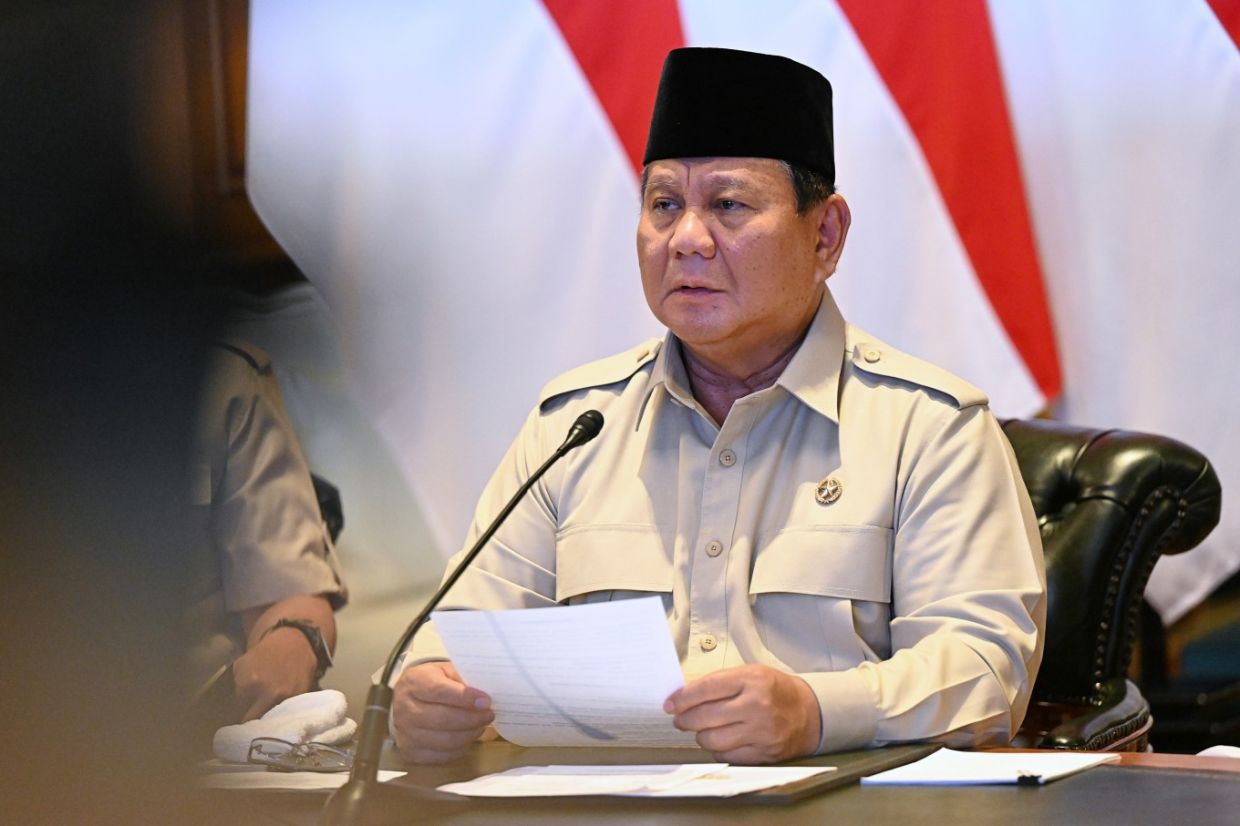
Indonesia's President Prabowo Subianto has experienced a dramatic reversal in public support, with his approval rating plummeting to 51.1 percent in July 2026 from a robust 81.2 percent recorded just nine months earlier in November 2025. This sharp 30-point decline marks the end of what political analysts describe as one of the longest and most resilient honeymoon periods in recent Southeast Asian political history, suggesting that ordinary Indonesians have begun to judge the Prabowo administration not by its rhetoric but by tangible outcomes in their daily lives.
The trajectory of Prabowo's popularity stands in marked contrast to his predecessors and international counterparts. When Joko "Jokowi" Widodo took office, he began at a similar approval level but suffered an immediate and severe collapse following an unpopular fuel subsidy reduction, plummeting to 41 percent within weeks. Prabowo's much longer plateau in the 70-80 percent range through 2025 represented a genuinely unusual political achievement, sustained not merely by residual electoral goodwill but actively reinforced by substantial social spending initiatives. His free nutritious meal programme, launched in January 2025, appeared sufficiently popular and visible to extend the reservoir of public goodwill well beyond the typical honeymoon window. For comparison, Jokowi never achieved approval ratings above 81.7 percent until the fifth year of his tenure, when he had already navigated multiple economic storms.
The latest data comes from two independently conducted surveys that paint a consistent picture of eroding confidence. Saiful Mujani Research and Consulting (SMRC) conducted its July 2026 survey across 749 respondents between July 5 and 19, recording not only the drop in satisfaction but a corresponding rise in dissatisfaction, which nearly tripled from approximately 16 percent to 46.9 percent over the nine-month period. Critically, a second polling organisation, Indikator Politik Indonesia, surveying a considerably larger sample of 4,250 respondents over July 14-24, corroborated these findings with a satisfaction reading of 49.5 percent, itself down from 68 percent in April 2026 and 81 percent in December 2025. The convergence of two independently operated polling firms on broadly similar trajectories substantially undermines arguments that methodological bias or political motivation can explain the decline.
Behind the headline numbers lie three specific areas where public perceptions have deteriorated markedly. Economic sentiment, according to SMRC's decomposition of the data, stands at only 15.7 percent positive in July 2026, reflecting deep concern about the health of Indonesia's economic performance. Political perceptions have collapsed even more dramatically, falling from 35.8 percent positive in November 2025 to merely 13.5 percent in July 2026, suggesting that Indonesians view the political environment as increasingly troubled. Law enforcement perceptions remain somewhat more stable at 26.4 percent positive, though still reflecting minority satisfaction with this critical institution. These three dimensions together encompass the fundamental governance domains that voters assess when forming their overall judgement of presidential performance.
Underlying this shift are concrete economic difficulties that have begun to bite into household welfare across the archipelago. The rupiah has weakened considerably, the stock market has underperformed, and public anxiety about state spending and central bank independence has risen. Prabowo had pledged during his campaign to accelerate Indonesia's growth from 5 percent to 8 percent annually while simultaneously tackling corruption, ambitious targets that are now being tested against observable economic headwinds. The gap between campaign promises and demonstrable delivery, a phenomenon that SMRC executive director Deni Irvani identified as the primary driver of satisfaction decline, constitutes the centrepiece of how democratic publics ordinarily reassess their leaders.
The President has not been a passive observer of his declining fortunes. Prabowo maintains an exceptionally visible public profile, delivering frequent televised addresses and maintaining a comprehensive communications apparatus designed to keep him prominently before the electorate. He has demonstrated a willingness to directly confront critics and journalists, a combative rhetorical approach that proved effective when underlying economic conditions remained sufficiently favourable for persuasive messaging to bridge the gap between lived experience and official narrative. However, the July data suggest that this communications strategy has hit a ceiling. No amount of presidential visibility can indefinitely compensate for the economic realities that shape public perception: exchange rates, prices at the market, employment prospects, and whether programmes like the free meal initiative deliver on schedule ultimately constitute the terrain on which popular judgement crystallises.
It is worth noting that Saiful Mujani himself, the founding director of SMRC, has become known for expressing public criticism of the Prabowo administration, a fact that some Gerindra Party officials have not hesitated to highlight. This represents a legitimate caveat for those interpreting SMRC's findings. However, critiquing a pollster's personal politics does not constitute evidence of flawed methodology, and SMRC's historical track record demonstrates years of credible polling, including periods when its numbers reflected favourably on the Jokowi government. The existence of independent corroboration from Indikator, an unrelated organisation with no apparent axe to grind, substantially undermines any suggestion that partisan bias explains the decline.
Historically speaking, a decline in approval ratings approximately eighteen months into a presidential term represents normal democratic functioning rather than crisis. Most elected leaders experience similar reassessment as campaign promises encounter implementation reality and as voters transition from evaluating potential to assessing actual delivered performance. Presidents across numerous democracies have recovered from steeper approval declines than Prabowo currently faces, suggesting that the current trajectory, while significant, does not represent an irretrievable political situation. The operative question is not whether recovery remains possible but rather whether the Prabowo administration can generate improved performance in the three areas where public sentiment has deteriorated most sharply.
Government officials familiar with internal deliberations at the Presidential Palace report that Prabowo has convened the National Economic Council to examine ways to strengthen economic policymaking, recognising that public satisfaction in this domain has fallen most precipitously. The administration reportedly plans to expand social assistance programmes further, while simultaneously grappling with forecasts of El Niño weather patterns that could disrupt agricultural production, raise food prices, and compress household purchasing power further. Officials cite these climate-related concerns as the rationale for maintaining fuel prices at current levels, a decision that reflects concern about triggering additional economic turbulence through price adjustments.
Beyond these macro-level policy adjustments, Prabowo's close advisers have begun consulting with the pollsters who engineered his successful 2024 presidential campaign. These consultants are reportedly urging the President to substantially elevate his public communication strategy while conducting a thorough reassessment of government programmes that have experienced implementation difficulties. The free nutritious meal programme and the Red and White Cooperatives initiative, both flagship initiatives meant to demonstrate Prabowo's commitment to social improvement, have apparently encountered operational challenges that have undercut their political utility. One pollster engaged in these discussions observed that public approval could recover if improvements are implemented within the President's immediate circle of advisers and policymakers.
For Malaysian observers and wider Southeast Asian analysts, the Prabowo case study offers several instructive lessons about the limits of political goodwill and the centrality of economic performance in determining popular support. Indonesia's experience suggests that even exceptionally generous initial approval ratings cannot indefinitely withstand the cumulative effect of economic disappointment and programme implementation failures. The regional context matters considerably here: as Malaysia, Thailand, and the Philippines all navigate their own growth challenges and inflation concerns, the experience of Prabowo's rapid decline serves as a reminder that social spending initiatives, while politically valuable, ultimately derive their legitimacy from demonstrable delivery and from the broader economic environment in which they operate. Whether Prabowo can stabilise his position and begin recovery depends less on rhetorical flourishes than on whether ordinary Indonesians experience tangible improvement in their economic circumstances and in the functioning of their government.

