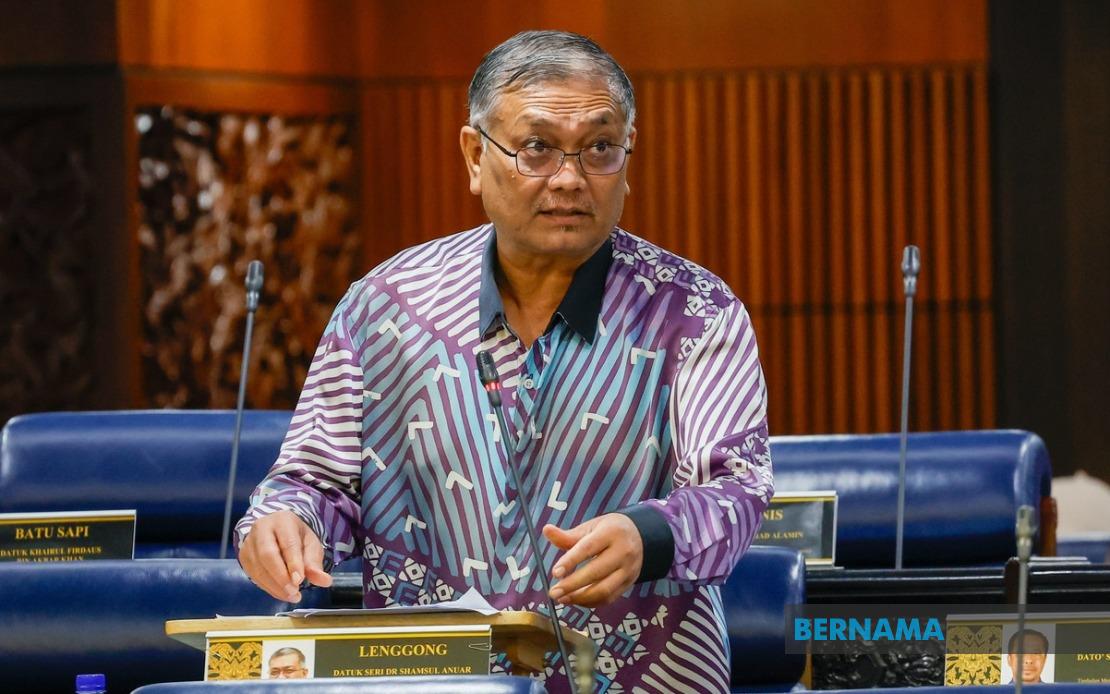
Legislation designed to modernise Malaysia's prison system and strengthen rehabilitation efforts has been shelved pending further review by parliamentary oversight bodies. The Prisons (Amendment) Bill 2026 was deferred on June 25 after its initial parliamentary debate, with the government committing to submit it for examination by two specialised Parliamentary Special Select Committees. The measure, which encompasses provisions for electronic monitoring technology and the incorporation of volunteer workers into rehabilitation initiatives, will now face more intensive scrutiny before any decision on its passage.
Deputy Home Minister Datuk Seri Dr Shamsul Anuar Nasarah explained the decision to postpone the bill's progress through Parliament, indicating that significant matters had emerged during floor discussion that warranted deeper consideration. The legislation will be forwarded to the Parliamentary Special Select Committee on Security and the Parliamentary Special Select Committee on Human Rights and Institutional Reform, reflecting the dual dimensions of the proposed amendments. This referral signals recognition that the bill touches on sensitive issues spanning security infrastructure, human rights protections, and the broader framework of Malaysia's criminal justice system.
The decision to defer the bill demonstrates a more deliberative approach to prison reform, a sector that has periodically attracted public and civil society scrutiny regarding conditions, management standards, and inmate treatment. Electronic monitoring technology represents a significant shift in how Malaysia could manage sentences, offering potential alternatives to incarceration for certain categories of offenders and providing the prison service with additional tools for supervision and rehabilitation tracking. The use of such systems requires careful calibration to balance public safety imperatives with individual privacy rights and data protection considerations.
The involvement of volunteers in rehabilitation programmes constitutes another substantive element of the proposed amendments. Prison rehabilitation across Southeast Asia remains a challenging mandate, with overcrowding, resource constraints, and staff shortages limiting what traditional institutional approaches can achieve. Community participation through volunteer engagement potentially broadens the range of educational, vocational, and psychological support services available to detainees, though it also necessitates clear protocols, training frameworks, and accountability mechanisms to ensure consistency and safeguard both volunteers and prisoners.
Shamsul Anuar indicated that the Home Ministry had carefully noted concerns articulated during parliamentary debate and was genuinely considering the perspectives offered by lawmakers from various party backgrounds. This openness to feedback suggests that the parliamentary discussion had surfaced substantive objections or questions rather than merely procedural concerns. In a Malaysian parliamentary context, the deferral of a government-backed bill to parliamentary select committees often reflects either legitimate policy complexity or, in some instances, the existence of political sensitivity requiring additional time to build consensus.
The Parliamentary Special Select Committee on Security would naturally focus on whether the electronic monitoring provisions enhance the prison service's operational capacity and public safety outcomes. This committee would assess technical readiness, cost implications, and whether the proposed framework aligns with Malaysia's existing security infrastructure and international best practices. Questions likely surround implementation timelines, infrastructure investment requirements, and how the system would integrate with existing prison management protocols.
The Parliamentary Special Select Committee on Human Rights and Institutional Reform brings a complementary lens, examining whether the amendments adequately protect detainee welfare and comply with Malaysia's obligations under international human rights conventions. The use of electronic monitoring, while potentially reducing incarceration periods for some offenders, raises questions about surveillance, data security, and the possibility of misuse. Additionally, the volunteer recruitment framework requires evaluation to ensure it does not exploit goodwill while simultaneously delivering genuine benefits to the prison population.
Malaysia's prison system currently holds approximately 40,000 inmates across facilities nationwide, with recidivism rates and rehabilitation outcomes representing ongoing policy challenges. The impetus behind the 2026 amendments reflects broader regional trends toward reforming punitive-focused systems toward more rehabilitative models that reduce reoffending and facilitate offender reintegration. Countries including Singapore and Thailand have experimented with electronic monitoring and community-based rehabilitation elements with mixed results, providing lessons for Malaysia's policymakers.
The deferral affords all stakeholders—the prison service, civil society organisations, human rights advocates, and academic experts—an opportunity to submit evidence and recommendations to the select committees. This consultative approach, while extending the legislative timeline, potentially yields more robust final legislation that commands broader parliamentary and public acceptance. The committees' eventual reports will shape the final wording of the bill before it returns to the full parliament for final voting.
For Malaysian citizens, the stakes involve how the nation balances its commitment to public security with its duty to treat detainees humanely and facilitate their eventual return to society as reformed individuals. The transparency of the parliamentary committees' deliberations and their final recommendations will be closely watched by civil society and international observers monitoring Malaysia's human rights progress. The bill's eventual form will signal whether the government prioritises technology-driven management solutions, rehabilitation investment, or some combination thereof in confronting systemic prison challenges.

