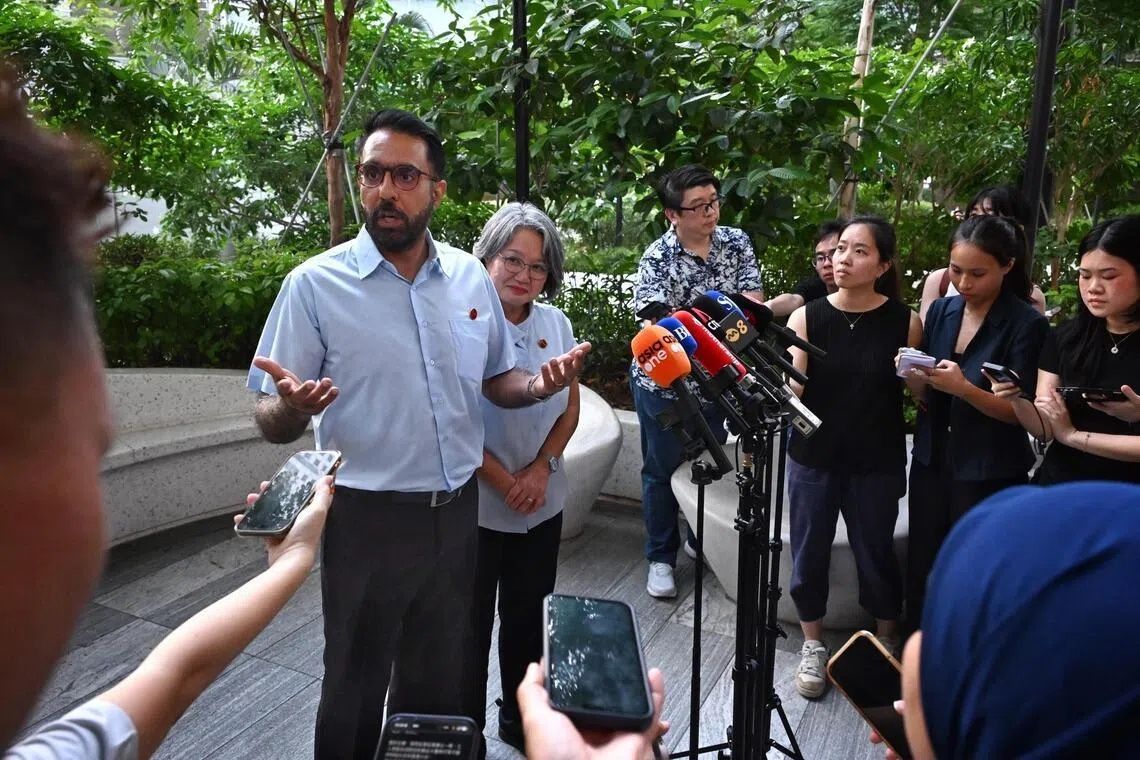
Pritam Singh has consolidated his position as head of Singapore's largest opposition party following his unopposed re-election on June 28, decisively moving past an internal rebellion that sought to remove him from office. The Workers' Party chief's victory came after a secret ballot earlier the same day rejected calls for his resignation from a faction of 25 dissatisfied party cadres. The outcome marks a significant stabilisation for the party following years of turbulence connected to former parliamentarian Raeesah Khan's dishonesty before the legislature in 2021, a scandal that exposed critical failings in oversight and accountability at the party's highest levels.
The groundswell of internal opposition, formalised through a December 2025 letter from unhappy cadres, reflected broader anxieties about Pritam's fitness to lead following his legal entanglement. The special cadres conference that convened on June 28 laid out three distinct demands: that Pritam account for his conduct preceding his court conviction, that he voluntarily step aside, and that party members hold a secret ballot on his continued leadership if he refused to go. The framing of these escalating requests revealed the depth of concern among party activists, though the outcome ultimately vindicated Pritam's judgment and authority.
The secret ballot produced an emphatic endorsement. While Pritam declined to disclose precise figures publicly, party insiders confirmed he received approximately eighty percent support from the party's inner circle of roughly 120 members. Gerald Giam, the Aljunied GRC MP who chaired the crucial meeting, characterised the backing as "well in excess of a supermajority," indicating that Pritam had secured not merely a comfortable majority but decisive backing that would make future challenges substantially more difficult. The architecture of this endorsement proved crucial—a secret ballot guaranteed that cadres could vote their conscience without fear of retribution, lending legitimacy to the outcome.
Critical to Pritam's survival was the public reaffirmation of support from Low Thia Khiang, his predecessor as party chief. In the lead-up to the vote, speculation had swirled about whether Low, the Workers' Party's most revered figure and architect of its parliamentary breakthrough, would distance himself from Pritam. The dissident faction had reportedly sought a credible challenger, and Low's potential withdrawal of endorsement could have provided decisive impetus. Instead, Low moved to extinguish such rumours by explicitly declaring his continued backing as he arrived for the proceedings, an intervention that likely shifted momentum decisively in Pritam's favour.
The party's handling of internal dissent reflected its commitment to democratic process, according to participants. The meeting permitted cadres to articulate their grievances and hear Pritam's response, with Giam emphasising that a "robust and civil discussion" occurred across a single round of voting. This transparent architecture mattered politically because it allowed the Workers' Party to argue that it possessed internal mechanisms for accountability and renewal, distinguishing it from authoritarian structures that suppress internal critique. Pritam himself framed the episode as validation of the party's values, suggesting that respectful disagreement and democratic resolution were core to organisational identity.
Pritam's legal troubles provided the substantive basis for the challenge. The High Court in December 2025 upheld his conviction for providing misleading information to a parliamentary committee regarding his handling of Khan's initial deception. The courts found that Pritam had effectively guided Khan in sustaining her lie across several months, constituting a serious breach of parliamentary standards. Subsequently, Parliament's Committee of Privileges declared him unsuitable for the role of Leader of the Opposition, a determination affirmed in January 2026 when Prime Minister Lawrence Wong removed him from that position. These reversals represented genuine stains on his record that could not be dismissed or glossed over.
Yet the cadres' confidence in Pritam's continuing fitness to lead the party itself—as distinct from parliamentary roles—rested on alternative grounds. Senior Counsel Harpreet Singh, newly elected to the central executive committee, articulated this distinction in his post-election statement, arguing that voters had assessed Pritam's "full history" rather than engaging in "blind loyalty." Singh highlighted Pritam's steadiness under sustained political pressure and the organisational milestones he had orchestrated, suggesting that character evaluation required temporal depth rather than snapshot judgments. This framing acknowledged the conviction's gravity while insisting that isolated failures need not disqualify leaders from continued stewardship of their organisations.
The broader significance of these elections extended beyond Pritam's personal fate. The Workers' Party's ability to manage internal dissent through democratic mechanisms while maintaining party unity carried real implications for Singapore's opposition landscape. The party had previously weathered the Khan scandal, which threatened organisational credibility. Now it demonstrated that internal critics could mobilise through formal channels, present substantive challenges to leadership, and accept adverse outcomes without fracturing organisational cohesion. Such resilience matters in Singapore's constrained political environment, where opposition parties require durable institutional structures to survive institutional pressure.
Sylvia Lim was simultaneously returned as party chair, a position she has occupied since 2003, extending her tenure. The central executive committee was reconstituted with twelve elected members, most retained from the previous iteration. Four members elected to this top decision-making body—Low Thia Khiang, Faisal Manap, Tan Kong Soon, and the newly co-opted Harpreet Singh—are not current MPs, providing the party with experienced strategists unconstrained by parliamentary duties. The party retains capacity to co-opt seven additional members to the CEC, a process that typically unfolds within a month, allowing flexibility in committee composition.
The composition of the elected CEC reflected both continuity and selective renewal. Harpreet Singh's elevation, as a senior counsel who contested in the May 2025 general election as part of the Punggol GRC slate, signalled the party's intention to cultivate legal talent and broaden expertise. His appointment also satisfied demands for fresh perspectives without displacing long-serving members whose institutional knowledge remained valuable. This balance between stability and regeneration represents the kind of disciplined succession planning that strong organisations require.
For Malaysian observers, the Workers' Party's management of internal crisis offers instructive parallels and contrasts. Opposition parties across Southeast Asia frequently struggle with personality-driven leadership and difficulty transitioning authority without fracture. The Workers' Party's capacity to subordinate personal loyalty to institutional procedures, even when challenging its own chief, demonstrates the possibilities when democratic norms penetrate party operations. Conversely, the legal vulnerabilities that Pritam encountered—potential parliamentary breaches creating liability for party leaders—highlight risks that Malaysian opposition figures also face in regulatory environments where government majorities control investigative mechanisms.
The June 28 elections essentially closed one chapter while opening another. Pritam Singh had successfully defended his leadership and retained authority over Singapore's principal opposition force. The party had demonstrated its capacity to tolerate internal disagreement and process challenges through established rules. Yet the underlying legal and reputational damage from the Khan affair remained embedded in public consciousness, constraining Pritam's ability to expand the party's parliamentary footprint in any near-term electoral contest. The Workers' Party had chosen to retain him as organisational leader while accepting his exclusion from the parliamentary role of Leader of the Opposition, a practical accommodation that permitted both institutional stability and acknowledgment of his legal vulnerability.

