Datuk Yusof Haslam, the producer behind the highly anticipated Gerak Khas 2.0 police drama, has made the decisive move to expunge an actress from the production after she was apprehended and found to be in possession of three types of drugs during a police operation. The decision underscores a broader tension within Malaysia's entertainment industry between maintaining professional standards and managing reputational risks when cast members face legal troubles.
The incident occurred on July 7 when officers from the Dang Wangi district police headquarters conducted a raid during which the actress tested positive for drug possession. The timing proved particularly awkward for the production since the series had only recently premiered to public audiences, meaning the removal was not a quiet behind-the-scenes adjustment but rather a visible course correction following the story's emergence into the public domain.
Yusof revealed that Skop Production had already advanced to a mature stage of post-production, with approximately 90% of the 26-episode drama completed. Only around two weeks of actual filming remained outstanding when the decision to remove the actress was made. The actress in question, who portrayed a police inspector character, still had scenes scheduled across Episodes 23 and 24. Rather than attempt to salvage those sequences through creative editing or recasting with alternate footage, the production team opted to delete all of her remaining appearances entirely.
The producer's rationale centered on protecting what he termed the integrity of both the drama itself and its connection to the Royal Malaysia Police. By conducting a complete excision of the actress's remaining work, Skop Production sought to distance the finished product from the negative publicity surrounding her arrest. This approach, while incurring some production inefficiency, provided a clean break that allowed the series to move forward without the distraction of her presence in later episodes.
Yusof made clear that this outcome was entirely preventable had the actress's situation been known earlier in the casting process. He emphasized that when Skop Production originally selected this performer, no such concerns existed. She had worked on previous company productions without incident. However, once the arrest became public knowledge, the die was cast and there was no meaningful path to redemption within this particular project. The producer adopted a notably stern posture in declining any subsequent pleas or justifications from the actress, reportedly telling her that "it's too late" and suggesting she should accept the consequences as a life lesson.
Beyond the individual circumstances, Yusof positioned this incident as a broader cautionary tale for the entire entertainment ecosystem. He stressed that throughout production, he had repeatedly emphasized to cast and crew the paramount importance of maintaining personal discipline and steering clear of activities that could potentially compromise either their own reputations or that of the drama. In his view, the actress's choices represented not merely a personal misstep but a violation of an explicit understanding established from the project's inception.
His comments regarding the conduct expected of cast members carried an undertone of frustration at the limits of what a producer can reasonably control or predict. He drew an analogy to parenthood, noting that even vigilant oversight cannot guarantee that every individual will make sound decisions. Women in particular, Yusof observed, face heightened social scrutiny and judgment, making their personal conduct subject to more intense public examination. The expectation, he suggested, ought to be that established artists understand these realities and adjust their behavior accordingly, particularly when appearing in projects with significant institutional partnerships.
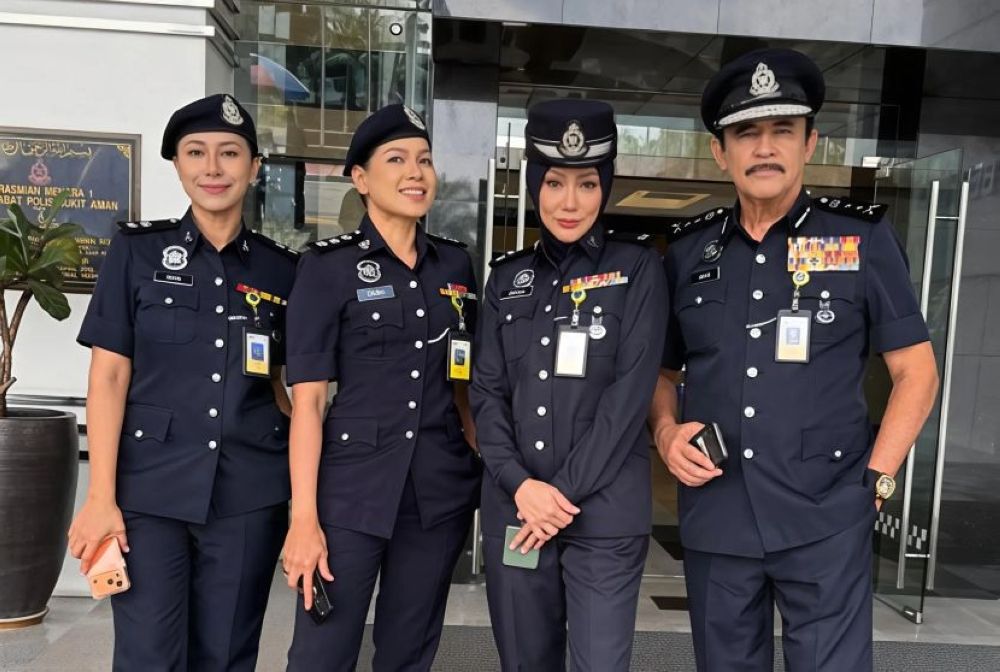
The Gerak Khas 2.0 cast extends well beyond the affected actress and includes established names such as Hans Isaac, Erra Fazira, C. Kumaresan and Salina Saibi. Multiple actresses portray police inspector roles, including Tisha Shamsir, Nabiha Aimi and Emily Elizabeth alongside the now-removed performer. The series represents a revival of the original Gerak Khas franchise, which holds considerable cultural significance within Malaysian television history as a pioneering police procedural drama.
This situation illuminates the commercial vulnerabilities that production companies face when cast members encounter legal problems mid-project. With the drama at such an advanced stage, Skop Production lacked the luxury of stopping production or restarting from an earlier point. The decision to simply eliminate remaining scenes represented a pragmatic compromise that preserved the substantial investment already made while severing ties with the problematic cast member. The approach signals to other industry participants that even established actors cannot expect project continuity once they become embroiled in criminal matters.
The incident also reflects broader societal conversations about accountability in Malaysia's entertainment sector, where the industry has increasingly sought to police itself rather than rely solely on government regulation. By taking swift action, Yusof and Skop Production demonstrated that the sector possesses internal mechanisms for responding to conduct deemed incompatible with professional standards. Whether such self-regulation proves adequate or whether more formalized industry standards emerge remains an open question as Malaysian entertainment continues to professionalize.

