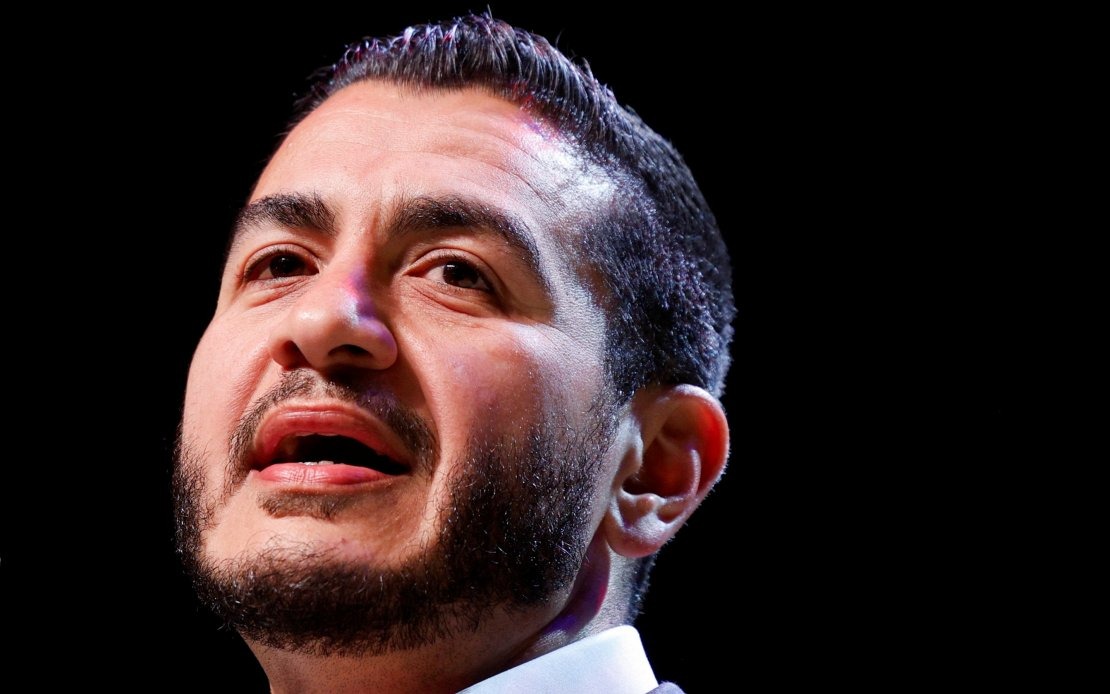
The Democratic Senate race in Michigan remains too close to call early Wednesday, though progressive candidate Abdul El-Sayed has established a slim advantage over establishment-backed US Representative Haley Stevens with more than 90 per cent of ballots counted. The contest has become a defining battle within the party between its centrist and left-leaning wings, with implications for how Democrats will position themselves on divisive foreign policy issues heading into the general election. The victor will eventually compete against Republican Mike Rogers for the seat currently held by retiring Democratic Senator Gary Peters, setting up one of the nation's most competitive races in November's midterm elections.
El-Sayed's campaign drew significant backing from prominent progressive Democrats, including Senator Bernie Sanders and Representatives Alexandria Ocasio-Cortez and Rashida Tlaib. By contrast, Stevens benefited from endorsements by party establishment figures and the retiring Peters himself, reflecting the deeper ideological divisions within Michigan's Democratic coalition. The race underscored how US support for Israel and its military operations in Gaza have become central to Democratic primary contests, energising younger and more progressive voters while creating challenges for establishment candidates seeking to maintain party unity.
Michigan was not alone in holding consequential primary elections. Five states—Kansas, Michigan, Missouri, Virginia and Washington—conducted nomination contests that will shape competitive races across the country. The scale of simultaneous voting demonstrated the intensifying focus on November's midterm elections, which will determine control of Congress and numerous state offices. For observers in Southeast Asia monitoring American political dynamics, these elections illustrate how domestic polarisation affects the policy directions that major parties will pursue in international affairs, including diplomatic approaches to Asia-Pacific nations.
Republican incumbents generally performed strongly across Michigan's congressional races. Jack Bergman secured his party's nomination in the 1st District with 74.3 per cent of the vote, while Bill Huizenga won decisively in the 4th District, capturing 85 per cent against challenger Philip Tanis. Huizenga will advance to face Democrat Sean McCann, who claimed his party's nomination in the same district. These results suggest Republicans maintain significant strength in their Michigan strongholds, though general election outcomes remain unpredictable.
Kansas held its own contentious primary contests with Trump-aligned candidates advancing. Republican Senator Roger Marshall overwhelmed challenger Pond Naramore with nearly 80 per cent of the vote, positioning himself for a general election matchup against Democrat Adam Hamilton. In the gubernatorial race, Republican Ty Masterson won the crowded Republican field largely through Trump's endorsement, earning the chance to face Democrat Cindy Holscher for the right to succeed term-limited Governor Laura Kelly. Trump's continued influence over Republican nominations remained evident across multiple states, shaping candidate selections that will define the party's 2024 positioning.
Missouri's primary elections took place under recently redrawn congressional maps that Republican state lawmakers engineered with Trump's backing, specifically designed to strengthen the party's House majority prospects. In the 1st Congressional District, Democrat Wesley Bell defeated four opponents, most notably ousting former Representative Cori Bush in a significant upset that highlighted generational and ideological tensions within the party. Bell's victory suggested that voters in some Democratic strongholds may be moving away from the progressive flank that Bush represented, though the implications for broader party strategy remain contested among political analysts.
Virginia's election calendar featured several competitive races, particularly in congressional districts that Republicans hoped to flip. Democrat Mark Warner ran unopposed for Senate renomination, reflecting his strong standing within the party, while Republican Bert Mizusawa secured his party's nomination to challenge the incumbent. In the 1st District, Shannon Taylor won the Democratic nomination with 53.1 per cent of the vote, positioning herself to challenge Republican Rob Wittman, a long-serving incumbent seeking his tenth full term. Meanwhile, former Representative Elaine Luria won the Democratic nomination in the 2nd District with commanding support, setting up a clash with Republican Representative Jen Kiggans.
Virginia's 7th District presented another significant contest, with Republican Doug Ollivart securing his party's nomination to face first-term Democratic Representative Eugene Vindman, who retained his seat unopposed. These Virginia races reflect the state's status as a perennial electoral battleground, with multiple districts potentially shifting hands depending on voter turnout and campaign effectiveness in the general election. The focus on Virginia underscores how a relatively small number of competitive districts nationwide will determine congressional control and thus influence policy directions on critical issues.
Washington's primary system, which allows all candidates regardless of party affiliation to appear on the same ballot, produced different dynamics from winner-take-all contests elsewhere. Democratic Representative Suzan DelBene and Republican Mary Silva both advanced to November in the 1st Congressional District, while Democratic Representative Marie Gluesenkamp Perez will face Republican John Braun, who benefited from Trump's endorsement. In the 6th District, Democrat Emily Randall advanced to compete against Republican Teresa Fox. Washington's blanket primary system potentially allows for greater competition but also reduces the determinative power of party activists.
The results across these five states reveal a Republican party largely unified behind Trump-endorsed candidates, while Democrats grapple with the tension between establishment and progressive factions. El-Sayed's performance in Michigan suggests that progressive causes, particularly those emphasising Palestinian rights, retain mobilising power within Democratic electorates. However, Wesley Bell's defeat of Cori Bush in Missouri indicates that establishment-aligned candidates can still prevail when they connect effectively with voters on economic and local concerns. These mixed signals will complicate Democratic messaging strategies as campaigns intensify toward November.
For Malaysian policymakers and observers, these American primary elections carry significance beyond domestic political theatre. The ideological divisions within the Democratic party regarding international relations and support for allies like Israel will shape American foreign policy if the party retains congressional control. Similarly, Republican consolidation around Trump may signal continuity in nationalist-oriented foreign policy approaches that could affect trade negotiations, security arrangements, and diplomatic engagement across Southeast Asia. The November elections will ultimately determine which of these competing visions gains implementation authority.

