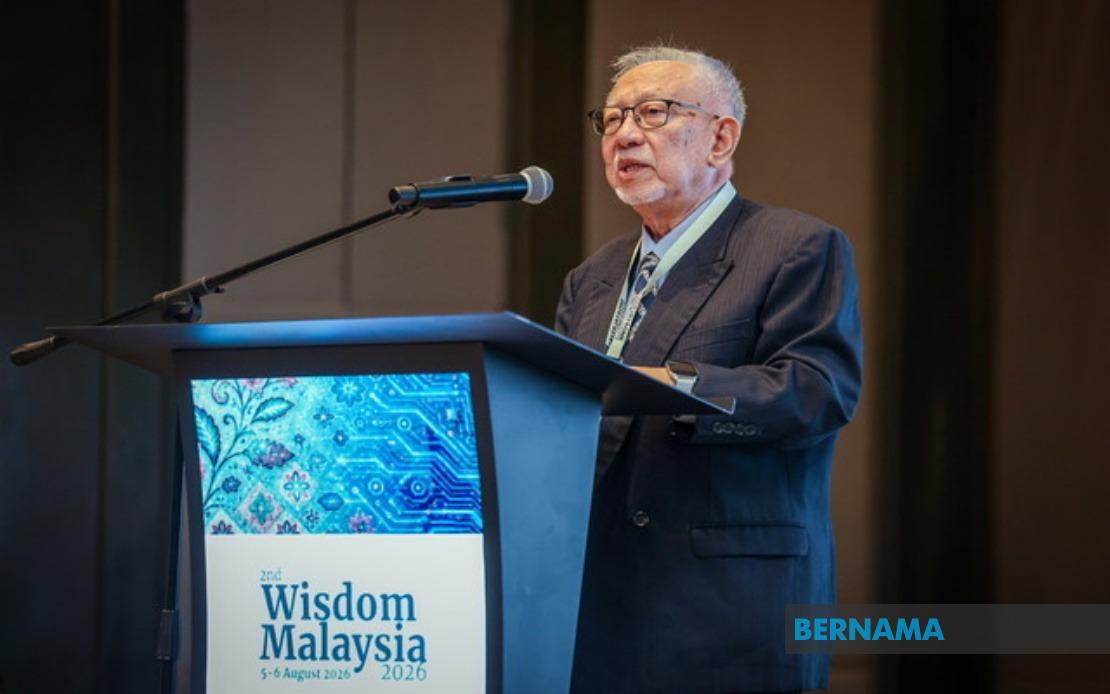
Datuk Syed Ahmad Idid Syed Abdullah, a retired High Court Judge with experience across Malaya and Borneo, has issued a stark warning about the dangers of failing to safeguard whistleblowers in the fight against graft. Speaking at the 2nd Wisdom Malaysia Conference 2026 in Kuala Lumpur, the former judge highlighted how intimidating those who report wrongdoing fundamentally weakens a nation's institutional capacity to detect and prevent corruption. When official channels become hostile to truth-tellers rather than investigative in nature, the result is a chilling effect that silences the very individuals best positioned to expose abuses of power and financial misconduct.
The mechanism of this suppression is straightforward but insidious. When organisations and government agencies respond to whistleblowers with intimidation rather than thorough investigation, a message spreads through the ranks that speaking up carries personal and professional risk. Honest officials observe the fate of colleagues who reported wrongdoing and make a rational calculation to remain silent. This creates precisely the environment in which corruption flourishes unchecked, allowing financial crimes to compound and spread throughout institutions before detection becomes inevitable and far more damaging.
Syed Ahmad Idid stressed during his dialogue session titled "The Life, Conscience and Costs of the Principled" that whistleblowing itself should never be conflated with slander or malicious gossip. Rather, it represents a legitimate instrument of justice intended to halt corruption and remedy dangerous workplace conditions that threaten both organisational integrity and public welfare. This distinction carries profound implications for how societies should structure their legal frameworks and workplace cultures. Countries that blur this line between whistleblowing and defamation effectively criminalise conscience and transform accountability into a liability.
The consequences of undetected corruption extend far beyond the immediate financial theft involved. Larger scandals emerge when smaller infractions are allowed to develop unchecked, creating a cascade of increasingly brazen misconduct as perpetrators realise the absence of meaningful oversight or consequences. The longer corruption operates beneath the surface, the more entrenched it becomes within institutional structures, making eventual detection and remediation far more costly and disruptive than earlier intervention would have been. This dynamic suggests that investing in whistleblower protection represents a form of financial prudence, not merely an ethical imperative.
When considering the potential benefits of rigorous anti-corruption measures, Syed Ahmad Idid painted a compelling picture of Malaysia's untapped potential. Should the nation successfully recover all proceeds derived from corrupt practices and infrastructure leakages, these funds would amount to a transformative financial resource. The scale would be substantial enough to finance comprehensive basic infrastructure projects benefiting the entire population, suggesting that corruption's true cost lies not merely in stolen sums but in forgone development and public services.
To illustrate the magnitude, he proposed that recovered funds could support construction of at least two fully equipped general hospitals in every Malaysian state. This would dramatically expand healthcare access, particularly in less developed regions where medical facilities currently lag behind urban centres. Beyond healthcare, he envisioned deploying such resources toward establishing twenty to fifty high-quality schools nationwide, fundamentally upgrading the nation's educational infrastructure at scale.
The ripple effects of such educational investment extend well beyond improved classroom conditions. Syed Ahmad Idid argued that world-class facilities, complete equipment, and enhanced teacher training would elevate Malaysia's entire education system to international standards. This transformation would produce human capital of exceptional quality, creating professional cadres capable of addressing complex national challenges. The security and defence sectors would benefit from recruits with superior educational grounding, while national sporting programmes would identify and develop talent within a broader, more comprehensively educated population base.
These broader implications reveal corruption's true cost to developing economies. Every ringgit lost to graft represents not merely missing funds but unrealised schools, hospitals, and infrastructure projects that would have generated economic and social returns across decades. The opportunity cost compounds across generations as human potential remains underdeveloped due to educational deficiencies traceable to diverted public resources. By this calculus, protecting whistleblowers becomes an investment in national prosperity as much as an ethical position.
Syed Ahmad Idid concluded by calling on all segments of Malaysian society to reject lenient or distorted interpretations of corrupt practices. He urged the nation to maintain unwavering commitment to principles of justice and integrity, framing these not as abstract virtues but as essential safeguards for the country's future. This invocation of principled leadership suggests that anti-corruption efforts ultimately depend less on elaborate legal mechanisms than on cultural and institutional commitment to accountability.
The 2nd Wisdom Malaysia Conference 2026, organised by Kerjaya One PLT, serves as a gathering place for experienced business leaders, government officials, and emerging professionals to exchange insights and knowledge. Such forums provide opportunity for current and former leaders across sectors to articulate positions on national challenges and influence thinking among the next generation of decision-makers. Syed Ahmad Idid's intervention at this conference reflects broader recognition among Malaysia's institutional leadership that whistleblower protection and anti-corruption commitment represent foundational requirements for sustainable national development and public trust.

