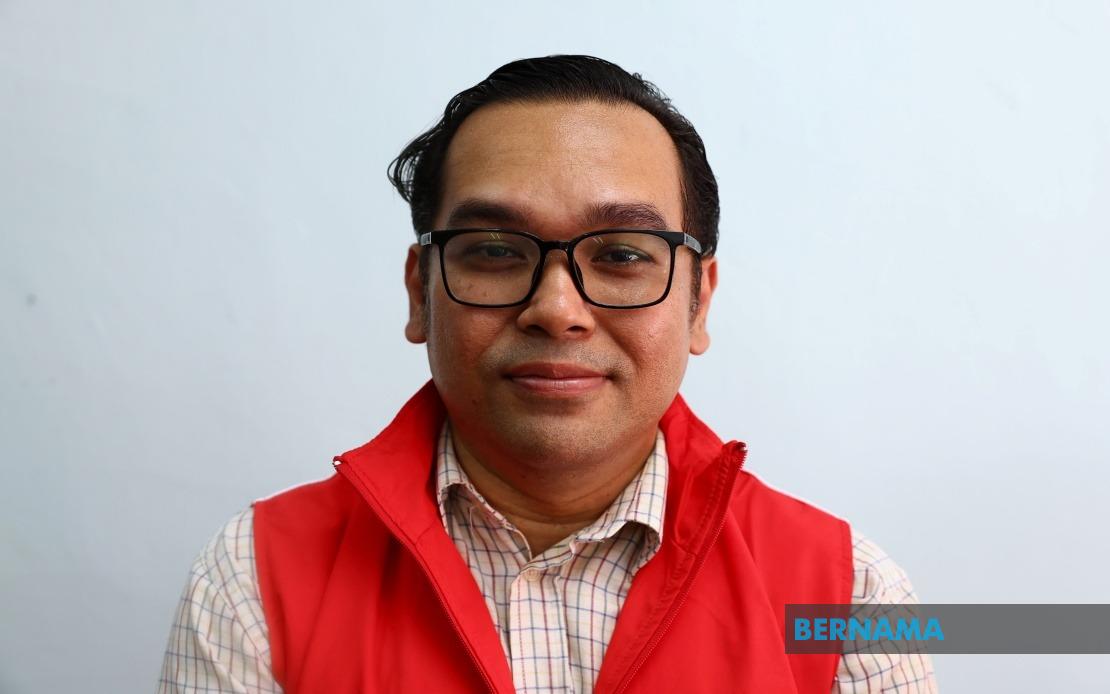
Parti Sosialis Malaysia (PSM) has put forward Amir Syafiq Ameer Soekre as its sole representative in the 16th Johor state election, with the 40-year-old marking his debut electoral campaign by positioning himself as an advocate for economically vulnerable Skudai residents. Speaking ahead of the July 11 polling date, Amir Syafiq articulated a platform centred on addressing the cost-of-living crisis, securing dignified wage levels, and improving the material circumstances of constituents, drawing on a personal trajectory spanning two decades of community-based organising.
The candidate's background reflects a progression from youth activism through to formal party affiliation and sustained engagement with workers and marginalised populations. Amir Syafiq has spent his career balancing employment as a sales executive with his role as PSM secretary, positioning himself as someone embedded within the very communities whose struggles he seeks to represent legislatively. This dual commitment to paid employment and political organising distinguishes his candidacy from politicians who operate solely through institutional channels, a distinction he emphasises when articulating his claim to understand constituents' daily realities.
Central to Amir Syafiq's campaign narrative is an observation about Skudai's structural economic relationship with neighbouring Singapore. He notes that substantial numbers of residents commute across the causeway for employment, departing as early as 3 or 4 in the morning to secure livelihoods unavailable within Malaysia's borders. This phenomenon, he argues, constitutes not merely an individual choice but rather a systemic indictment of local wage structures and living costs. The cross-border commuting pattern reflects a demographic reality often overlooked in electoral discourse: that for many working families, survival necessitates abandoning local labour markets entirely.
This analysis carries particular resonance for Malaysian policymakers and voters concerned with labour migration and economic competitiveness. When workers systematically choose employment across a border despite commuting costs and time burdens, the underlying message concerns inadequate local compensation and purchasing power. For Skudai, a constituency characterised by industrial and commercial activity, this dynamic suggests that wage levels have failed to keep pace with living expenses, forcing households into desperate calculations about survival and opportunity.
Amir Syafiq's Master's degree in International Business Management from Teesside University, United Kingdom, provides him with formal credentials in economic analysis, though he grounds his platform primarily in experiential knowledge rather than technocratic framing. His educational background appears secondary to his positioning as someone who has "lived" the problems he addresses, a rhetorical strategy that may resonate with voters sceptical of academic credentials divorced from practical understanding.
The campaign slogan "Skudai Saksama" (Equitable Skudai) articulates his vision through the concept of fairness and proportionate distribution, explicitly framing the election as an opportunity to advance multiracial social cohesion alongside economic redistribution. This dual emphasis—simultaneous attention to both social harmony and material equity—reflects a sophisticated understanding that sustainable political change requires addressing both intergroup relations and wealth distribution. The slogan's use of "saksama," implying judicial equity and fairness, suggests a legalistic framing of economic justice.
The Skudai contest presents a four-way competition that places PSM's ideological positioning within a broader electoral landscape. Amir Syafiq faces Barisan Nasional's Tan Hiang Kee, Pakatan Harapan's Kartiyaini Jeyapalan, and Parti Bersama Malaysia's Eugene Chua Meng Chong. The presence of four distinct candidates reflects Johor's complex political dynamics following the 2022 redistricting and shifting coalition alignments. Within this crowded field, PSM's representation through a grassroots organiser rather than a previously established political figure signals the party's commitment to bottom-up advocacy over hierarchical party structures.
Amir Syafiq's acknowledgment that each candidate possesses distinct strengths demonstrates political maturity and realistic assessment of the contest's competitive nature. His confidence that his "people-centric agenda" will persuade voters rests implicitly on an assumption that the electorate prioritises substantive engagement with lived economic hardship over established party machinery or institutional prominence. This gambit represents a characteristic PSM strategy: competing not on conventional electoral advantages but on ideological coherence and perceived authenticity.
The broader Johor election context encompasses 172 candidates competing across 56 state seats, with early voting scheduled for July 7 and general polling on July 11. This substantial contest—the 16th iteration of Johor state elections—occurs within Malaysia's ongoing political reconfiguration following the 2022 general election. The involvement of multiple parties including Pakatan Harapan, Barisan Nasional, and smaller entities like PSM and Bersama Malaysia suggests that Johor retains its position as a politically contested state despite Barisan Nasional's historical dominance.
For Malaysian voters and observers tracking economic justice issues, Amir Syafiq's campaign merits attention as a sustained expression of left-wing politics focused on worker welfare and cost-of-living concerns. While PSM's electoral prospects remain modest given its historic marginality within Malaysia's party system, the prominence of cost-of-living arguments across all parties demonstrates how economic anxiety has become a shared campaign concern. The question facing Skudai voters concerns which candidate's proposed solutions most credibly address these material pressures.
Amir Syafiq's first-time candidacy represents an opportunity for PSM to expand its parliamentary presence beyond its current minimal representation, while simultaneously offering Skudai residents an explicitly socialist alternative to both establishment parties and newer formations. His campaign's emphasis on fair wages, adequate public amenities, and equitable economic distribution positions him as representing a particular ideological tradition within Malaysian politics that emphasises structural economic analysis over individualised solutions to systemic problems.

