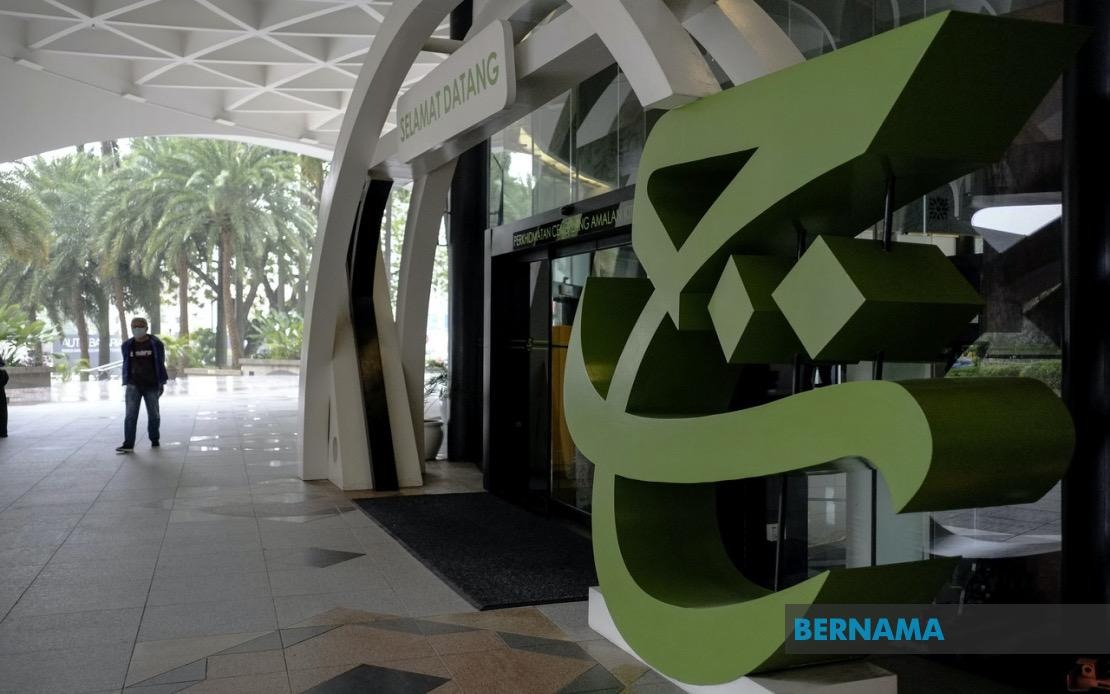
The Royal Commission of Inquiry report on Tabung Haji represents both a reckoning and a turning point for Malaysia's crisis-stricken pilgrimage fund, according to Muhammad Kamil Abdul Munim, political secretary to the Finance Minister. In a recent statement, he framed the RCI's findings as essential documentation of institutional failure that demands public acknowledgement rather than concealment, signalling the government's determination to confront one of the country's most controversial financial scandals head-on.
The RCI investigation has laid bare systemic misappropriation within Tabung Haji, an institution ostensibly designed to protect the savings of Muslims preparing for hajj pilgrimage. Muhammad Kamil emphasised that the exposure of these irregularities serves a democratic purpose beyond mere accountability, arguing that transparency itself becomes a moral obligation when public trust has been fundamentally breached. His framing reflects a deliberate policy choice by the current administration to prioritise revelation over reputation management, a stance that distinguishes the MADANI Government's approach from previous leadership's handling of institutional scandals.
Central to Muhammad Kamil's argument is the characterisation of Tabung Haji deposits as anything but discretionary wealth. He stressed that these funds accumulate through the most laborious forms of livelihood—rubber tapping, rice farming, orchard work, taxi driving, and small enterprise operation. Each deposited ringgit carries the weight of personal sacrifice and religious aspiration, representing decades of incremental saving by working-class Malaysians focused on a singular spiritual objective. This perspective reframes the misappropriation debate from a technical financial governance issue into a question of betrayed faith and violated trust at the community level.
The magnitude of this institutional breach extends beyond balance sheets and audit findings. When trusted repositories of communal savings fail, the damage touches millions of individual aspirations simultaneously. Muhammad Kamil articulated this damage with precision: what was violated was not merely an organisation's credibility but the accumulated hopes and prayers of Malaysians who dedicated years to accumulating funds for one of Islam's five pillars. The emotional and spiritual dimensions of the Tabung Haji crisis resonate differently from typical corporate scandals, particularly across Malaysia's Muslim-majority population.
The decision to fully disclose RCI findings despite potential political cost reflects a calculated shift in governance philosophy. Muhammad Kamil acknowledged that various parties would have preferred the matter quietly forgotten and filed away from public scrutiny. The temptation to protect previous administrations or shield individuals from accountability typically runs deep in political establishments. By choosing transparency instead, the current government signals awareness that concealment ultimately compounds damage to institutional legitimacy and public confidence in governance institutions more broadly.
Accountability mechanisms now represent the logical next step following disclosure. Muhammad Kamil's statement makes explicit that identification of failures must lead to consequences for those responsible, whether through legal proceedings, administrative action, or other remedial measures. This progression from investigation to accountability to institutional reform constitutes the implicit social contract being rebuilt with affected communities. Without visible consequences flowing from RCI findings, the transparency exercise risks appearing performative rather than substantive.
The broader governance implications for Malaysia extend beyond Tabung Haji specifically. Financial institutions entrusted with managing public or community assets operate within frameworks of implicit social contract. When such institutions fail, restoration of confidence requires not merely technical fixes but fundamental reconstruction of institutional culture and oversight mechanisms. The Tabung Haji reform trajectory now represents a test case for whether Malaysian governance institutions can genuinely transform following documented failures.
For the Muslim community whose savings anchored the fund's operations, the RCI report offers vindication of concerns that many had raised for years. Patterns of misappropriation did not occur overnight but accumulated across extended periods, suggesting that warning signs existed before the current crisis gained political momentum. The delay in addressing these concerns reflects previous governance failures that the current administration's transparency approach attempts to correct through institutional change.
International perspectives on Malaysian governance also shift based on how authorities handle institutional scandals. Jurisdictions that investigate thoroughly and implement consequences demonstrate commitment to rule of law and institutional integrity that enhances overall economic and political credibility. Conversely, scandals suppressed or inadequately addressed undermine confidence in entire governance systems. The choice to release RCI findings completely signals Malaysia's alignment with international expectations regarding institutional accountability.
The path forward for Tabung Haji reconstruction must address both technical governance and cultural transformation. Enhanced oversight mechanisms, strengthened audit procedures, and reformed board composition represent necessary structural changes. Equally important is cultivating an institutional culture where integrity takes precedence over protecting powerful figures or concealing inconvenient truths. Muhammad Kamil's emphasis on transparency serves as an opening statement in this longer reformation process.
For Malaysian citizens and the broader Muslim community, the RCI report's release represents an opportunity to understand precisely how institutional failures occurred and what safeguards now prevent recurrence. Public knowledge enables informed scrutiny of implementation of reform recommendations. When communities understand the mechanisms of past failures and visible progress toward institutional improvement, confidence gradually rebuilds despite historical betrayal.

