Voters in Pulai Sebatang will decide on July 11 between two fundamentally different approaches to governing the sprawling Pontian-based state seat. The election contest pits Pakatan Harapan's Haniff @ Ghazali Hosman, a 46-year-old repeat candidate, against the incumbent Hasrunizah Hassan, who has held the seat since 2022 under Barisan Nasional's banner. Their competing platforms reveal the broader strategic tensions shaping the 16th Johor state election, with implications for how the state's rural communities balance economic modernization against the preservation of traditional livelihoods.
Handiff's campaign rests on a framework of balanced, investment-driven development that he argues will unlock the constituency's substantial latent economic potential. Speaking from Pakatan Harapan's campaign headquarters in Pontian, he characterized Pulai Sebatang as a dormant asset whose geographic position—straddling Pontian town and adjacent to established economic zones—creates genuine opportunities for targeted foreign and domestic investment. His articulated strategy avoids the zero-sum narrative of either-or development by insisting that new economic activity need not come at the expense of the fishing and agricultural sectors that remain foundational to thousands of families in the area. This positioning reflects a calculated recognition that rural constituencies across Malaysia increasingly expect governance that can deliver multiple development outcomes simultaneously rather than forcing communities to choose between subsistence and growth.
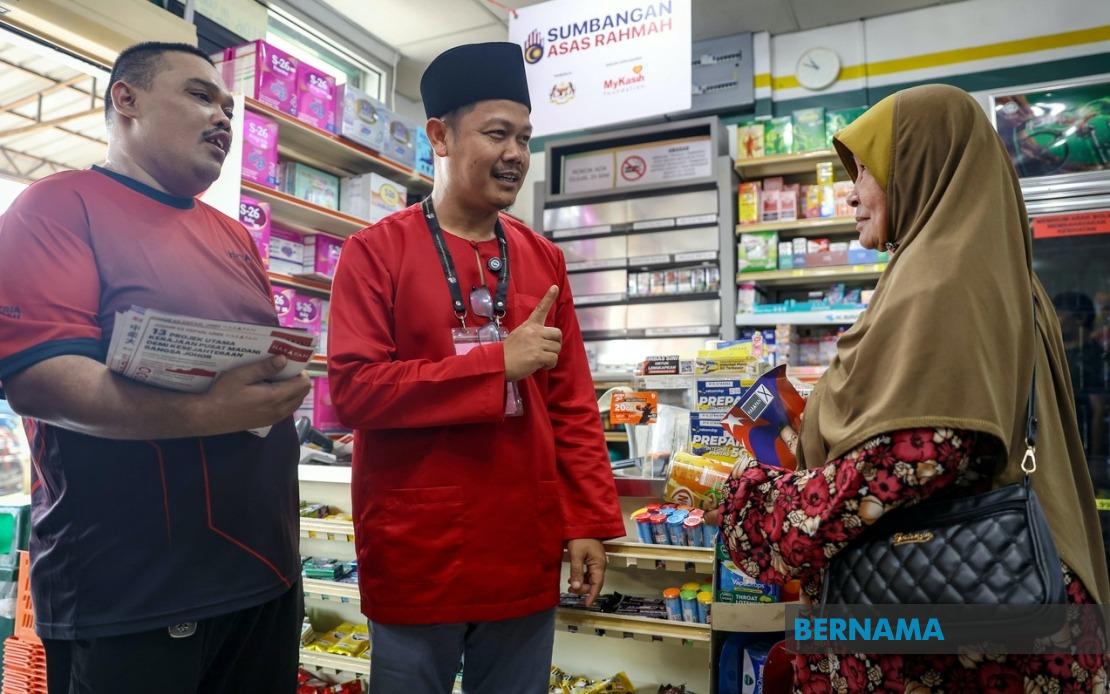
The transformation vision Haniff advances extends beyond abstract economic theory into specific community grievances he has identified through intensive grassroots engagement. He has committed to addressing long-standing compensation disputes affecting fishermen in Pontian Besar, a recurring source of frustration for a maritime community that feels historically undervalued in state development priorities. Equally significant are the drainage deficiencies plaguing Parit Datuk's farming region, where seasonal flooding threatens agricultural productivity and household stability. By elevating these concerns to campaign prominence, Haniff signals an understanding that rural voters evaluate candidates not primarily on macroeconomic messaging but on responsiveness to localized infrastructure failures and sectoral grievances. His door-to-door campaign methodology, emphasizing walkabouts and direct resident conversations, operationalizes this voter-centric approach rather than relying predominantly on mass media dissemination.
Handiff's electoral history reveals a pattern of competitive candidacy in nearby constituencies. His 2013 contest for the Pontian parliamentary seat and 2022 attempt in Benut demonstrate sustained political engagement in the region, though neither produced victory. This track record cuts both ways: it establishes him as a persistent, locally-embedded political presence while also raising questions about whether previous electoral losses indicate insufficient appeal to swing voters. However, he projects confidence based on feedback from recent grassroots interactions, positioning Pakatan Harapan's 2018 Johor election performance as a precedent for PH's viability in the state, even as that benchmark now lies several election cycles and considerable political turbulence in the rearview.
Hasrunizah's incumbent campaign emphasizes tangible project completion and institutional continuity. The proposed Pontian Hospital expansion occupies central prominence in her messaging, having emerged as the most frequently mentioned voter concern throughout her campaigning. The announcement that project approval has been obtained and procurement processes are underway allows her to reframe hospital infrastructure from aspirational promise into imminent concrete reality. This approach reflects the established BN playbook of converting foundational development projects into electoral assets by demonstrating that previous commitments are progressing toward completion rather than remaining perpetually deferred. For a constituency where healthcare access represents a genuine concern given Pontian's distance from major urban centers, visible hospital expansion legitimately addresses a material need.
Beyond infrastructure, Hasrunizah has anchored her continuity platform to the residual backlog of village road construction. Since assuming office in 2022, seventy-five village road applications have been catalogued, with twenty-five projects remaining incomplete. This accumulated project inventory provides substantial room for visible delivery over an extended tenure, allowing her to simultaneously claim productive work in progress while promising future accomplishment. The specificity of the twenty-five remaining projects offers voters a concrete metric against which to measure performance accountability. Complementing infrastructure commitments, Hasrunizah pledges sustained implementation of the state-level Kasih Johor assistance programme alongside housing support and first-home ownership initiatives. These welfare mechanisms address economic precarity among middle and lower-income constituencies who face persistent affordability challenges in Malaysian housing markets.
Hasrunizah's campaign strategy blends conventional grassroots activism with digital engagement, positioning Barisan Nasional's institutional machinery as a competitive advantage. The presence of Pontian Member of Parliament Datuk Seri Ahmad Maslan at campaign events, where he publicly endorsed both Hasrunizah and the Benut BN candidate Datuk Mohd Sumali Reduan, demonstrates coordinated elite alignment. Ahmad's emphasis on the candidates' educational credentials and demonstrated administrative records appeals to voters who prioritize demonstrable competence and professional qualification over transformative rhetoric. His framing of BN's campaign momentum as a factor deserving continuation through July 11 leverages organizational discipline as an asset, implying that established political machinery functions more effectively than nascent challengers.
The Pulai Sebatang contest reflects a broader electoral dynamic across Malaysian rural constituencies where economic anxiety intersects with competing visions of development governance. Haniff's transformation narrative appeals to voters convinced that incumbent administrations have insufficiently capitalized on investment opportunities and remain beholden to inefficient patronage structures. Conversely, Hasrunizah's continuity messaging targets voters wary of disruptive change and reassured by demonstrated institutional delivery. The constituency's economic foundation in fishing and agriculture creates particular salience for debates about sectoral protection during modernization, as these communities possess limited exit options if development policies prioritize higher-value sectors at their expense.
Early voting commences July 7, providing initial indicators of campaign effectiveness before the main polling date. The election assumes significance beyond Pulai Sebatang itself given Johor's status as Malaysia's second-largest state by population and a traditional power base for Barisan Nasional. Pakatan Harapan's performance in constituencies like Pulai Sebatang will indicate whether the coalition has sustained its 2018 electoral breakthrough or contracted in the intervening years. Conversely, BN's holding or expanding its Johor seat total will demonstrate resilience in its traditional stronghold despite recent national political turbulence. For Southeast Asian observers monitoring Malaysian electoral trends, the Johor results will offer updated assessment of whether Malaysia's political competition has stabilized into a sustainable two-coalition framework or remains volatile and subject to rapid realignment.

