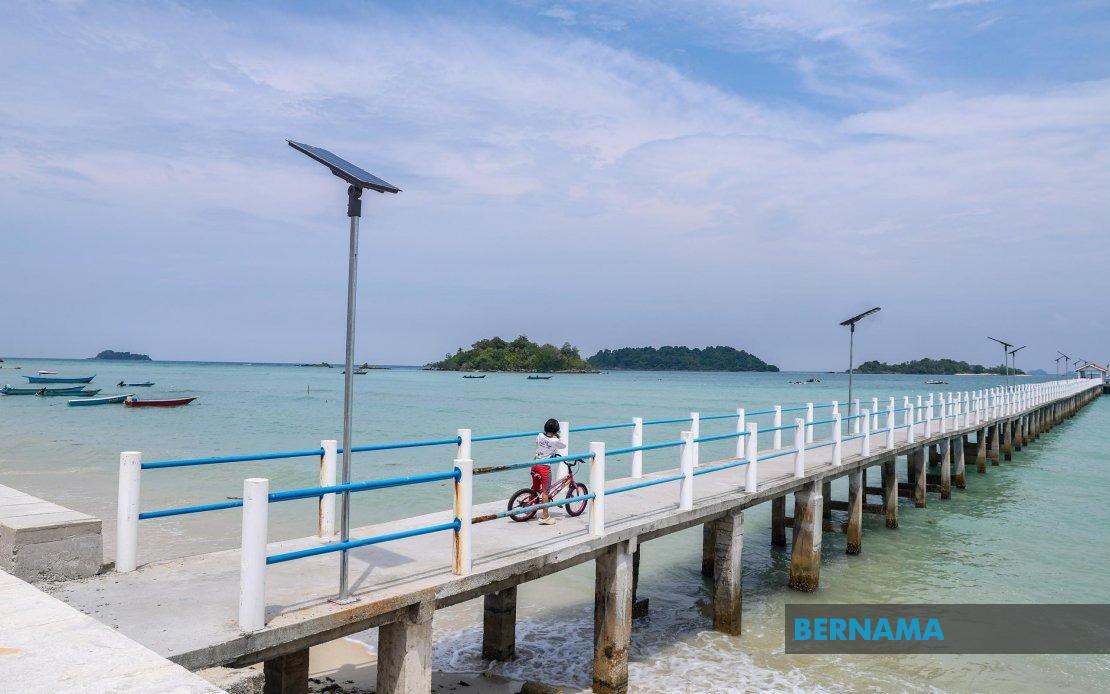
The isolated community on Pulau Tinggi, located off the Mersing coast in Johor, faces a pivotal moment as voters prepare for Saturday's state election. With approximately 150 residents split between two villages—Kampung Pasir Panjang and Kampung Tanjung Balang—the island's future hinges on whether the newly elected Tenggaroh state representative will prioritise the longstanding grievances that have plagued this fishing enclave for years. At the heart of their concerns lies a jetty that has deteriorated beyond recognition and a persistent lack of housing support for low-income fishermen, issues that underscore the broader challenge of delivering meaningful development to Malaysia's more remote communities.
The condition of the Kampung Pasir Panjang jetty exemplifies the neglect that island residents believe they have endured. Since approximately 2017, this critical piece of infrastructure has fallen into significant disrepair, yet it continues to serve as the lifeline for both the island's fishing community and visiting tourists. Rossana Hussin, the village chief who assumed her role in 2024, explained that applications to upgrade the facility were formally submitted to the Mersing District Office in March and have received encouraging preliminary responses. However, the momentum appears to have stalled, leaving residents anxious about whether bureaucratic enthusiasm will translate into actual construction work. The deterioration presents genuine safety concerns—residents have had to continuously remind one another to exercise caution while waiting for intervention that has not materialised.
Beyond the physical infrastructure challenge lies a more intimate crisis affecting the island's economic foundation. The B40 fishermen living in Kampung Tanjung Balang struggle with inadequate housing conditions that directly impact their quality of life and ability to sustain their livelihoods. Some residents require comprehensive housing repairs, while others face the frustration of incomplete construction projects that have left them in a state of limbo. According to Rossana, the housing assistance programme would represent a transformative intervention for this vulnerable population, not merely as a gesture of goodwill but as a practical acknowledgment that fishermen deserve dignified living conditions. The interconnection between housing security and economic productivity is particularly acute in fishing communities, where fatigue and poor health resulting from substandard accommodation directly diminish productivity and earnings.
The demographic trajectory of Pulau Tinggi tells a cautionary tale about rural development across Southeast Asia. What was once a thriving settlement has gradually emptied as younger residents have departed in search of employment opportunities elsewhere. Some have relocated to Felda schemes, while others have migrated to urban centres where economic prospects appeared more promising. This gradual exodus represents more than a statistical shift; it signals a breakdown in the social fabric and cultural continuity of a community with deep historical roots. Mariam Mamat, an 85-year-old resident, articulated the concern that without active intervention to revitalise the island's tourism sector and create meaningful employment pathways for young people, the departures will inevitably accelerate. The loss of youth represents the loss of institutional knowledge, energy, and the future sustainability of island life itself.
Tourism represents an underutilised asset for Pulau Tinggi. The island's scenic beauty and cultural heritage could potentially attract visitors seeking authentic experiences away from mainstream tourist corridors, yet this potential remains largely dormant. Revitalising the tourism sector would require coordinated effort across multiple fronts—improving access infrastructure like the jetty, supporting small-scale tourism enterprises, developing visitor facilities, and training residents in hospitality services. Such initiatives could generate employment that would retain young people on the island while generating income streams that complement traditional fishing. The irony is that many of the same infrastructure improvements needed for the local community's basic welfare—particularly the jetty rehabilitation—would simultaneously unlock tourism potential.
The upcoming Johor state election, scheduled for Saturday, will determine which political party controls the 56-seat state assembly and, critically for Pulau Tinggi residents, who will represent the Tenggaroh constituency. Approximately 2.7 million eligible voters across the state will cast ballots, yet the concerns of a 150-person island community risk being drowned out in the broader political narrative. This dynamic illustrates a fundamental challenge in representative democracy—how to ensure that peripheral, small communities receive meaningful attention from elected officials whose constituencies encompass far larger populations. Rossana's expressed hope that the winning representative and relevant government agencies will coordinate efforts to address the island's issues reflects a perhaps modest but realistic expectation that once the election dust settles, actual implementation mechanisms must activate.
The applications submitted in March to the Mersing District Office carry particular significance because they demonstrate that formal channels for seeking assistance do exist and can generate official acknowledgment. The positive feedback residents received suggests that the proposed projects—jetty upgrading and fishermen's housing support—are technically feasible and administratively viable. What remains unclear is the timeline for actual commencement and whether political will at the state level can overcome any budgetary constraints or bureaucratic inertia that might delay implementation. For residents who have waited six years since the jetty began deteriorating, another protracted delay would represent another missed opportunity for development.
The housing assistance component addresses not only immediate humanitarian concerns but also reflects broader questions about social equity in Johor's development model. The concentration of B40 fishermen in substandard accommodation on Pulau Tinggi suggests systemic gaps in the social safety net that purports to support low-income Malaysians. While nationwide poverty alleviation programmes exist on paper, their implementation at the island and peripheral community level remains inconsistent. Housing repair assistance for fishermen should be viewed as preventive investment in human capital and dignity, not merely as welfare spending. When residents can work, rest, and maintain their health in adequate housing, entire family units benefit through improved educational outcomes and reduced healthcare burdens.
The election presents an opportunity for both voters and candidates to recalibrate expectations about what constitutes meaningful development. Pulau Tinggi's residents are not demanding extraordinary investment or grandiose projects; they seek basic infrastructure maintenance and modest housing support that would be unremarkable in urban Malaysia but represents critical need on an island where alternatives are minimal. The elected Tenggaroh representative would be well-served to make explicit commitments regarding timelines and responsible agencies for both the jetty upgrade and housing assistance, transforming vague bureaucratic promises into concrete accountability frameworks. Such specificity would signal genuine commitment to addressing peripheral communities' concerns rather than offering the conventional post-election silence that often follows campaign season.
Looking forward, Pulau Tinggi's fate depends on whether the incoming state government recognises that small, isolated communities require sustained attention precisely because market forces and economic gravity naturally push development toward urban centres. Without deliberate counterbalancing investment and infrastructure prioritisation, places like Pulau Tinggi will continue their demographic decline, eventually becoming economically unviable and culturally depleted. The jetty and housing issues are not merely infrastructure problems; they represent the structural conditions that determine whether island communities can survive and thrive. The election outcome will reveal whether politicians view these small constituencies as worth the administrative effort required to deliver tangible results or as peripheral afterthoughts to be acknowledged rhetorically but neglected in practice.

