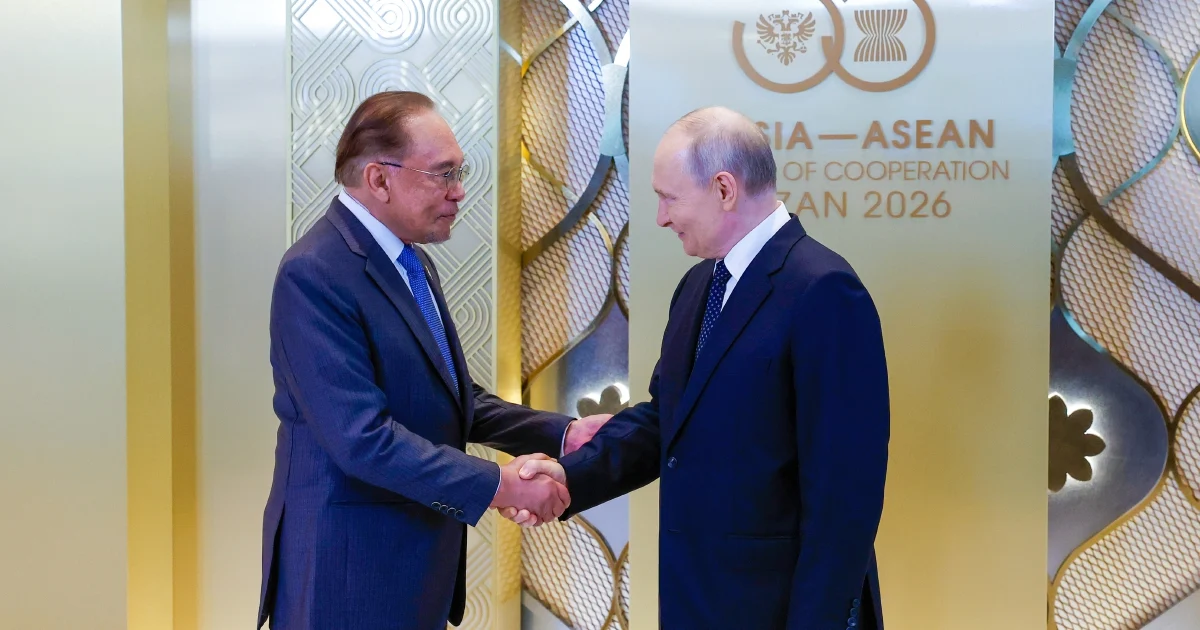
Prime Minister Datuk Seri Anwar Ibrahim announced that Malaysia has obtained assurances from Russian President Vladimir Putin concerning sustained energy supply arrangements, marking a significant development in the nation's approach to energy security and international relations. Speaking in Bintulu, the Prime Minister framed this diplomatic engagement as part of a deliberate strategy to diversify Malaysia's energy partnerships and reduce vulnerability to supply disruptions in an increasingly volatile global market.
The commitment represents a continuation of Malaysia's pragmatic approach to foreign policy, whereby the country cultivates relationships with multiple energy-producing nations across different continents to ensure stable access to critical resources. Rather than relying on a narrow set of suppliers, this diversification strategy reflects lessons learned from global energy crises and recognises that geopolitical tensions can rapidly reshape supply chains. For Malaysia, which operates as both a regional hub and a developing economy with significant energy demands, securing such assurances provides important certainty for long-term economic planning.
Anwar Ibrahim's emphasis on strategic partnerships underscores Malaysia's recognition that energy security extends beyond mere commercial transactions. By elevating these arrangements to the level of bilateral diplomatic commitments, the government signals that energy access is fundamental to national development and regional stability. This approach aligns with broader Southeast Asian efforts to assert greater autonomy in international relations, avoiding complete dependence on any single supplier or bloc while maintaining pragmatic engagement across geopolitical divides.
Russia's willingness to provide assurances regarding Malaysia's energy needs reflects Moscow's strategic interest in deepening economic ties across Asia as Western sanctions limit its traditional markets. For Russian energy companies, the Malaysian market represents a valuable alternative outlet, particularly as European demand faces structural headwinds from decarbonisation efforts and geopolitical realignment. This mutual benefit creates a foundation for stable, long-term commercial relationships that serve both parties' strategic interests.
The timing of this announcement carries significance given the evolving energy landscape in Southeast Asia. Regional economies are simultaneously pursuing decarbonisation commitments while managing immediate energy demands from growing populations and industrial bases. Malaysia's approach of securing long-term supplies from conventional energy sources while pursuing renewable energy investments reflects the practical challenge faced by most developing nations: the need to transition gradually rather than abruptly, as an immediate energy cutoff would devastate industrial competitiveness and household welfare.
For Malaysia specifically, the energy security imperative takes on particular urgency given the nation's substantial manufacturing sector, which requires reliable and affordable power to remain competitive in global supply chains. The chemical, petrochemical, and semiconductor industries that underpin Malaysia's exports all depend on stable energy access. Disruptions or price volatility can quickly erode competitiveness against regional competitors, making government-level energy diplomacy an essential economic policy tool.
The Bintulu location of the announcement carries additional symbolic weight, as the region hosts Malaysia's major liquefied natural gas facilities and petrochemical complexes. This choice emphasises the connection between diplomatic arrangements and Malaysia's economic infrastructure, grounding international relations within the specific context of regional prosperity. The presence of industrial stakeholders in Sarawak would underscore to domestic audiences the tangible benefits flowing from the government's foreign policy decisions.
Anwar Ibrahim's statement also reflects Malaysia's consistent positioning as a non-aligned nation capable of engaging with major powers regardless of their alignment in broader geopolitical contests. This capacity to maintain productive relationships across different blocs has historically served Malaysian interests well, allowing the country to benefit from competition among external powers for economic and diplomatic influence. However, this balancing act requires sophisticated diplomatic management to ensure that deepening ties with any particular power do not create perceptions of alignment that could complicate relationships elsewhere.
The energy security framework outlined by the Prime Minister extends beyond bilateral arrangements to encompass regional cooperation mechanisms. Malaysia's role within ASEAN and various sub-regional groupings means that decisions about energy partnerships carry implications for Southeast Asian stability and development prospects. A region characterised by predictable energy access and moderate pricing creates conditions for sustained industrial growth and poverty reduction, while energy volatility and supply uncertainty can rapidly unwind development gains.
Looking forward, Malaysia's multi-pronged energy strategy combining conventional sourcing with renewable energy development and energy efficiency improvements offers a template for other developing nations navigating similar pressures. By securing traditional supply arrangements while investing in transition infrastructure, the government buys time to develop domestic renewable capacity without forcing disruptive immediate changes that could impede economic growth. This gradualist approach acknowledges that energy transition represents a multi-decade process requiring sustained investment and technological development rather than rapid discontinuation of established systems.
The assurances obtained from Moscow also provide Malaysia with greater negotiating flexibility in other international forums. When discussing climate commitments or energy transition timelines in multilateral settings, governments with secured conventional supply agreements can approach negotiations from positions of relative stability rather than desperation. This strengthens Malaysia's voice in global energy and climate discussions and enhances the country's capacity to shape outcomes reflecting developing-world interests.
Ultimately, Anwar Ibrahim's announcement reflects the complex reality facing contemporary policymakers: the imperative to transition toward sustainable energy systems coexists with the immediate necessity of providing affordable, reliable power to growing populations and dynamic economies. By securing long-term energy partnerships with established suppliers while gradually developing renewable capacity, Malaysia exemplifies the pragmatic middle ground between climate urgency and development necessity that characterises most successful Southeast Asian energy policy.

