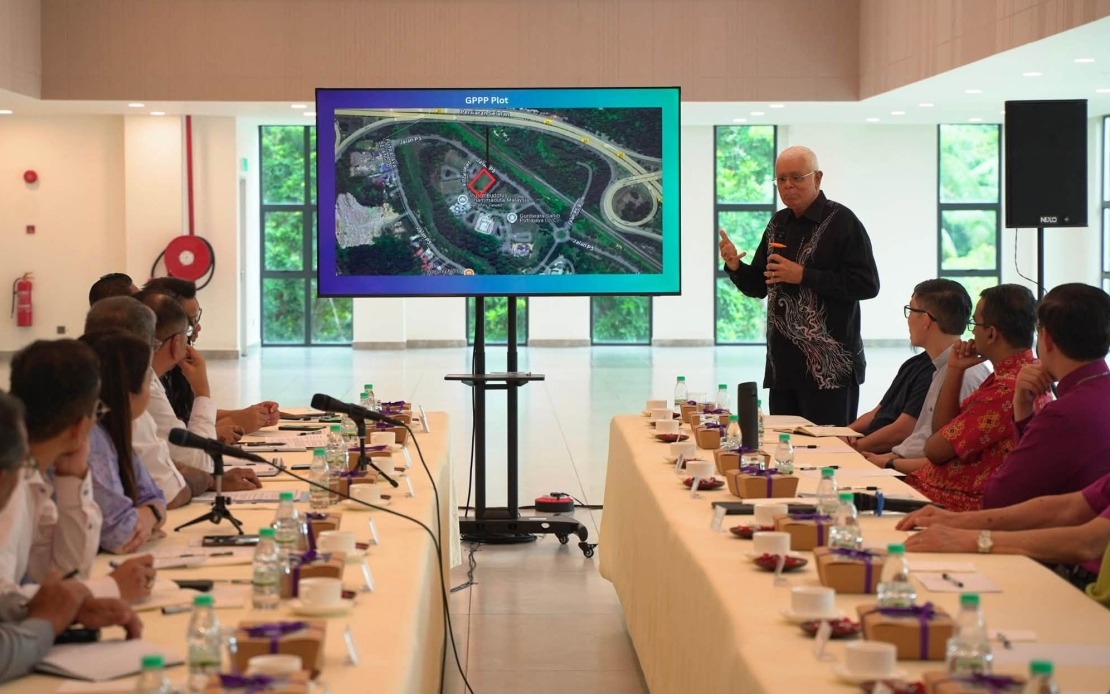
The National Unity Ministry has confirmed that Putrajaya's Precinct 20 has been earmarked as a dedicated space for non-Muslim religious communities for over a decade, representing a deliberate government commitment to religious pluralism in the nation's administrative centre. Speaking in Putrajaya on August 26, National Unity Minister Datuk Aaron Ago Dagang outlined how the federal government's long-standing policy reflects its vision of fostering coexistence among Malaysia's diverse faith communities through thoughtful urban design and infrastructure allocation.
The initiative reflects a broader governmental strategy to embed religious tolerance into the physical planning of major urban centres. Rather than leaving the accommodation of minority faiths to ad-hoc arrangements or market forces, the intentional reservation of dedicated Precinct 20 sites demonstrates how policy and planning can work together to normalise religious diversity across public spaces. This approach recognises that access to appropriate, dignified worship spaces contributes materially to social cohesion and reduces potential friction between communities competing for limited religious facilities.
Datak Aaron emphasised that the Precinct 20 development aligns with Policy 17 of the Putrajaya Structure Plan 2050, which explicitly commits to building an inclusive and compassionate community. This policy framework ensures that future urban development in the capital territory will continue prioritising interfaith harmony alongside infrastructure and economic growth. By embedding religious inclusion into long-term structural planning documents, the government creates legal and administrative frameworks that survive changes in political leadership or ministerial priorities, offering greater stability for minority faith communities.
The practical manifestation of this policy is already visible on the ground. The Prince of Peace Church, a newly established congregation, now operates within Precinct 20, alongside the Dhammaduta Malaysia Buddhist Centre which commenced operations in 2023. Currently under construction are the Gurdwara Sahib Putrajaya, Dewi Sri Lalithaambigai Alayam Hindu temple, and San Qing Taoist Temple, reflecting the religious diversity being accommodated. A dedicated site has also been reserved for a Roman Catholic church, indicating the government's proactive approach rather than reactive responses to individual community requests.
The ministerial visit included National Unity Minister Datuk Aaron Ago Dagang and Minister in the Prime Minister's Department (Federal Territories) Hannah Yeoh meeting with members of the Prince of Peace Church, signalling official recognition and support for these faith communities. Such high-level engagement sends important symbolic messages to both majority and minority communities about the government's commitment to religious freedom and interfaith cooperation, while also demonstrating that government leaders take these matters seriously enough to visit and listen directly.
Datak Aaron positioned this development within the broader Harmoni MADANI initiative launched by the National Unity Ministry in 2024. This nationwide framework promotes the principles of "Understand, Respect, Accept and Celebrate" across Malaysia's multireligious society. By explicitly connecting Precinct 20 to this national narrative, the government frames religious diversity not as a problem requiring management but as an asset requiring celebration and intentional cultivation. This reframing has implications for how other federal territories and municipalities approach religious infrastructure planning.
The concept of Precinct 20 as an emerging interfaith hub extends beyond mere physical coexistence of worship spaces. The minister articulated a vision where different faith communities interact through shared facilities for dialogue, education and mutual understanding. This moves beyond simple tolerance—where different religions are merely allowed to exist separately—toward active engagement and relationship-building. Such hubs can facilitate interfaith councils, joint community service projects, educational exchanges about different belief systems, and collaborative responses to social challenges.
For Malaysian readers and Southeast Asian observers, this development carries significance for understanding how multicultural democracies manage religious pluralism. Malaysia's constitutional framework recognises Islam's special position while guaranteeing religious freedom to other communities, creating ongoing tensions that require careful balancing. Putrajaya's Precinct 20 represents a government strategy to manage these tensions through proactive spatial planning rather than reactive crisis management. By deliberately creating spaces for minority faiths before tensions arise, the government addresses grievances preventatively.
The decade-long planning horizon—with sites designated since 2013—also demonstrates that inclusive urban development requires patience and long-term commitment. The gap between policy designation and physical completion, particularly evident in the ongoing construction of multiple temples and the forthcoming Catholic church, reflects the practical challenges of implementing inclusive development. However, the fact that projects continue progressing despite political changes and other competing priorities suggests genuine institutional commitment rather than superficial gestures.
For other Malaysian states and municipalities, Precinct 20 offers a replicable model. Rather than allowing religious infrastructure to emerge organically through individual applications and potential conflict, planners can proactively designate zones for religious diversity. This reduces administrative friction, ensures adequate space for all communities, prevents discrimination in site allocation, and sends clear messages about official commitment to religious freedom. The model also has commercial implications, as areas with diverse religious infrastructure attract diverse populations and support the development of inclusive communities.
The interfaith dimension of this initiative becomes increasingly important given rising religious tensions globally and within the region. Southeast Asia has experienced incidents of religious conflict and communal violence in recent years. By deliberately constructing infrastructure that brings different faiths together and creating regular occasions for interaction, Putrajaya's Precinct 20 contributes to building social ties and mutual understanding that can dampen communal tensions. Personal relationships and regular positive interaction between members of different faiths constitute powerful preventative measures against polarisation.
Looking forward, the success of Precinct 20 as an interfaith hub will depend partly on whether the physical infrastructure translates into genuine community engagement. Government provision of worship spaces represents necessary but insufficient conditions for interfaith harmony. The ministry's Harmoni MADANI initiative and the minister's emphasis on dialogue and interaction suggest awareness that active programming and facilitation will be required. This may include joint celebrations, collaborative charitable work, educational visits between communities, and formal interfaith forums.
The Putrajaya development also reflects broader regional patterns where Southeast Asian capitals increasingly emphasise inclusive governance and multicultural values as sources of national competitive advantage. As the region integrates economically and competes globally, nations projecting stability, religious tolerance and intercommunal harmony attract investment, talent and international confidence. In this context, Precinct 20 functions not merely as accommodation for minority faiths but as a strategic asset demonstrating Malaysia's commitment to pluralism and social cohesion.

