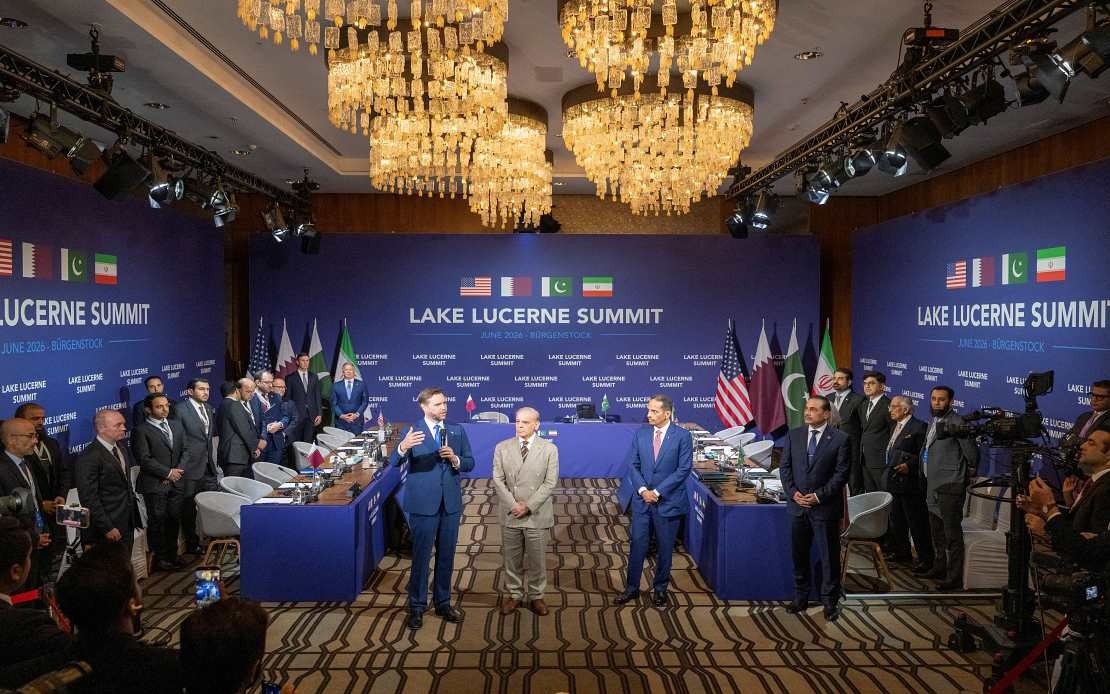
Diplomatic mediation efforts between the United States and Iran have entered a new phase of structured engagement following the opening round of high-level talks at the Lake Lucerne Summit in Switzerland. Qatar and Pakistan, serving as key mediators in these negotiations, jointly announced on Monday morning that the first day of discussions had unfolded in what they characterised as a constructive and positive atmosphere, marking what both nations described as encouraging progress toward resolving the longstanding tensions between Washington and Tehran.
The breakthrough centres on the establishment of institutional mechanisms designed to sustain momentum across multiple negotiating channels. A joint statement released by the mediation parties revealed that participants had agreed to create a formal framework for ongoing technical discussions, moving beyond the ad-hoc nature of previous engagement formats. This structural innovation reflects recognition that achieving lasting agreement on complex matters spanning nuclear policy, economic sanctions, and maritime security requires sustained, coordinated effort across parallel working streams rather than sporadic high-level meetings.
Central to the emerging architecture is the formation of a high-level political oversight committee tasked with maintaining strategic coherence throughout the mediation process. This committee will receive regular briefings from lead negotiators engaged in direct technical discussions and will exercise supervisory authority over specialised working groups addressing the three primary areas of contention: Iran's nuclear programme, the sanctions regime imposed by the United States, and mechanisms for dispute resolution that would enable effective implementation of the recently signed Memorandum of Understanding.
The emphasis on dispute resolution mechanisms carries particular significance for regional stability. The parties have explicitly acknowledged that any eventual agreement will require robust implementation safeguards and channels for addressing grievances or alleged violations without immediate escalation to conflict. This forward-looking approach suggests negotiators are focused not merely on reaching an initial accord but on constructing durable arrangements that can survive the inevitable strains of long-term compliance and changing political circumstances.
A specific timeline has emerged from the Lake Lucerne discussions, with participating delegations agreeing to a 60-day horizon for concluding a final agreement. This compressed schedule indicates heightened urgency and reflects apparent mutual recognition that prolonged uncertainty undermines confidence and creates space for spoiling actions by parties opposed to reconciliation. The roadmap establishing this deadline has been endorsed by the high-level committee, suggesting meaningful consensus exists among negotiators regarding both the possibility and desirability of near-term resolution.
Immediate technical negotiations are set to commence following the conclusion of the inaugural summit round, with working groups scheduled to address the nuclear programme, sanctions architecture, and implementation mechanisms. The parallel operation of these specialised groups, coordinated through the high-level committee framework, is designed to prevent protracted deliberation on any single issue from blocking progress across the entire negotiation portfolio. This basket approach has proven effective in previous international disputes where multiple interlocking concerns required simultaneous resolution.
A significant practical element of the emerging agreement involves the establishment of a direct communication channel between the United States and Iran, specifically designed to prevent accidental escalation and manage maritime incidents in the strategically vital Strait of Hormuz. This deconfliction mechanism addresses a persistent source of tension, where naval encounters between American and Iranian vessels have repeatedly threatened to spiral into broader confrontation. The channel, explicitly referenced in the Memorandum of Understanding signed the previous week, aims to ensure safe passage for commercial shipping and reduce the risk of miscalculation transforming localised incidents into systemic crises.
For Malaysia and the broader Southeast Asian region, the implications of progress in US-Iran negotiations extend beyond the immediate Middle East context. The Strait of Hormuz remains critical infrastructure for regional energy security, with substantial volumes of oil and liquefied natural gas transiting through these waters toward Asian markets. Any reduction in US-Iran tensions and strengthened mechanisms for preventing maritime accidents directly diminish risks of supply disruptions that would reverberate through ASEAN economies. Malaysian energy costs and broader inflation pressures bear sensitivity to Middle Eastern geopolitical volatility, making these diplomatic developments relevant to domestic economic management.
The role of Qatar and Pakistan as mediators underscores shifting patterns in international diplomacy, where traditional great power intermediation has given way to regional actors playing bridging roles. Both nations bring distinct assets to mediation: Qatar's close relationships with the United States and Iran, developed through decades of backdoor diplomacy and commercial engagement, and Pakistan's historical ties across the Islamic world and broader experience navigating great power competition. This represents recognition that effective conflict resolution often requires intermediaries with genuine relationships to all parties rather than distant, neutral third parties lacking authentic leverage.
The institutional innovations emerging from Lake Lucerne—particularly the high-level oversight committee and the structured working group framework—suggest negotiators have learned from previous negotiation cycles. Earlier attempts at US-Iran rapprochement have foundered partly due to inadequate mechanisms for maintaining political momentum, managing competing interpretations of agreements, and preventing technical disputes from cascading into broader political ruptures. The deliberate construction of multiple reinforcing oversight and communication layers indicates determination to avoid reproducing these earlier failures.
Looking forward, the 60-day timeline will face substantial stress-testing from various constituencies opposed to normalisation on both sides. Domestic political pressures within both the United States and Iran, allied states with distinct preferences regarding US-Iran relations, and non-state actors benefiting from ongoing confrontation all retain capacity to disrupt negotiations. The establishment of robust communication channels and regular high-level political oversight structures represents an effort to insulate the negotiation process from these external pressures and maintain dialogue even when political turbulence threatens the formal process.
The announcement of encouraging progress carries importance partly because it signifies both parties are sufficiently invested in potential resolution to publicly acknowledge forward movement, risking domestic criticism for making concessions or moderating hardline positions. When mediators and negotiators transition from vague statements about continuing dialogue to announcing specific institutional innovations and concrete timelines, it typically reflects genuine underlying shifts in position rather than mere diplomatic theatre. The Lake Lucerne announcements therefore represent meaningful indicators of seriousness on both the American and Iranian sides, though the demanding work of translating institutional frameworks into substantive agreements across nuclear, sanctions, and security dimensions still lies ahead.

