President Prabowo Subianto's flagship initiative to provide free nutritious meals to schoolchildren and pregnant women faces mounting scrutiny as beneficiaries themselves question whether the scheme delivers what it promises. The programme, designed to combat stunting and improve child nutrition across the archipelago, has encountered significant implementation challenges that are prompting both users and critics to call for a comprehensive pause and review. Rather than defending the meals they receive, some programme participants are openly stating they would prefer temporary suspension to continued distribution of substandard food, marking a striking reversal of expectations around government assistance.
The crisis became public earlier this week when Nesti Nagari, a mother from Kediri in East Java, posted images on social media showing the meal provided for her eight-month-old baby—a clumped white paste so unappetising that she fed it to her chickens instead. The post resonated widely, accumulating over 11,000 likes within 24 hours and sparking broader conversation about what is actually reaching beneficiary households. Nagari told journalists she would have preferred not to receive the meals at all, stating that her household possesses sufficient resources to prepare adequate nutrition independently. She expressed openness to the programme being temporarily halted for proper evaluation or even permanently discontinued, arguing that the substantial budget allocation could be redirected toward education and healthcare systems that face their own resource constraints.
Nagari's experience is far from isolated. Diah Farika, a nursing mother in Semarang, Central Java, enrolled in the programme since May, has systematically documented quality problems including unripe fruit and portion sizes she deems inadequate for proper nutrition. When she raised concerns with the nutrition fulfillment service unit (SPPG) responsible for meal preparation, she received dismissive responses that discouraged further feedback. Like Nagari, Diah has declined to accept meals, though she framed her position differently—she stated that if the nutritional content were genuinely balanced and appropriate, she would participate. Her criticism extends beyond the meals themselves to the kitchen operations; she called for a comprehensive inspection of all SPPG facilities by the National Nutrition Agency (BGN) to assess management quality and identify problem facilities requiring intervention or replacement.
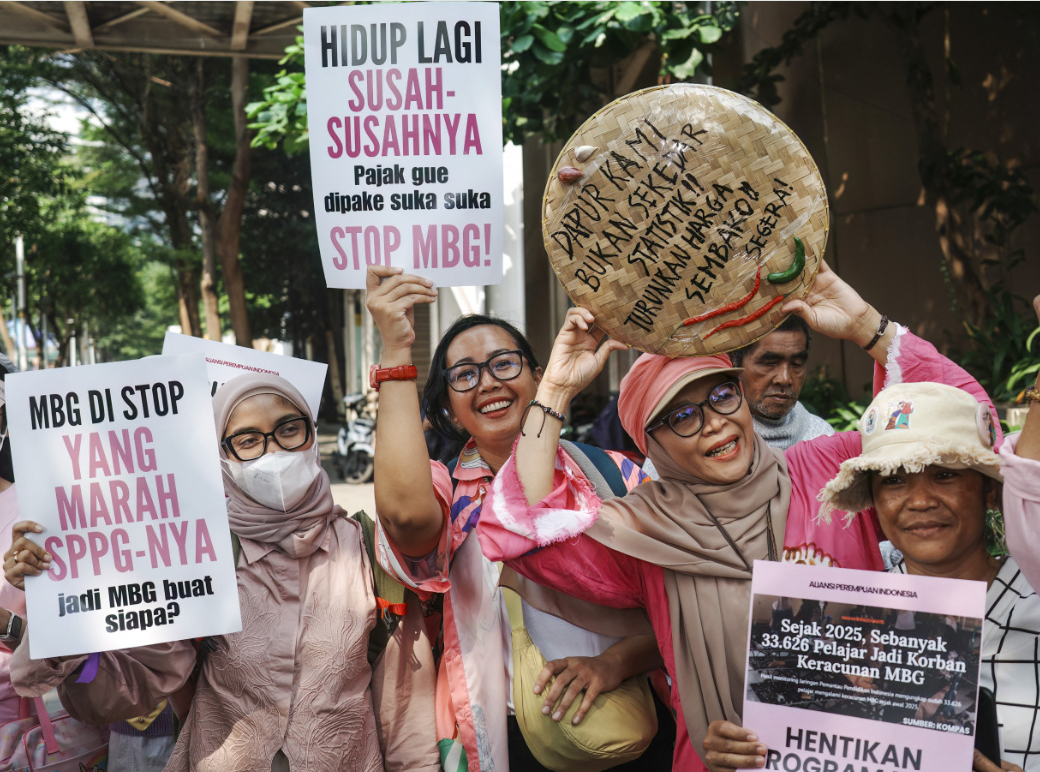
These individual complaints have catalysed broader activism around the programme. On Thursday, dozens of women's rights activists organised under the banner of the Indonesian Women's Alliance staged a public rally in Central Jakarta demanding that the government halt the scheme entirely and conduct a thorough review before resuming operations. The demonstration reflects growing public concern that the programme, despite its enormous budget, is not delivering the intended benefits and may even be wasting resources on ineffective provision. This convergence of beneficiary reluctance, media exposure of quality failures, and organised civil society pressure has created a credibility crisis for what should be an uncontroversial public health initiative.
However, the push for evaluation or suspension has created acute anxiety within the private sector stakeholders who have invested substantially in the programme's infrastructure. Operators of individual SPPGs, and a broader group of investors, have expressed deep concerns about the programme's continuity following a recent corruption scandal involving former BGN leadership. The new BGN administration responded to the scandal by halting further expansion of the SPPG network, which currently encompasses approximately 27,000 kitchens nationwide. Private investors who report having committed hundreds of billions of rupiah to establish these facilities have approached the BGN seeking assurances about their financial security should the programme be suspended or restructured.
Operational problems have already created disruption across the network. In early June, several SPPG facilities reported temporary closures due to delayed government funding, though some have since resumed operations. These funding gaps expose the vulnerability of the system to administrative delays and suggest that even basic operational reliability remains unresolved. The combination of quality failures, corruption concerns, and funding instability has eroded public confidence in the entire initiative, according to assessments by civil society monitoring organisations.
MBG Watch, an independent oversight platform established by civil society groups, argues that these mounting problems have fundamentally undermined public trust in the programme's governance and objectives. Isnawati Hidayah, a policy researcher at the Center of Economic and Law Studies and MBG Watch initiator, pointed out that beneficiaries and the broader public are now questioning what the massive budget actually funds and who ultimately benefits from the expenditure. This observation strikes at the heart of concerns about whether the money is being spent to improve child nutrition or merely to create a large delivery infrastructure with questionable outcomes.
The budget allocation itself reflects the scale of the government's commitment and the controversy surrounding it. Initially set at Rp 335 trillion (approximately US$18.74 billion) for 2026, the budget was subsequently reduced to Rp 268 trillion as part of efficiency measures following public scrutiny about the programme's cost and its potential impact on education funding. Notably, a CELIOS study revealed that approximately 34 per cent of current beneficiaries—roughly 61 million children and pregnant women—do not belong to the groups most requiring assistance. This finding indicates that many economically secure households with adequate nutritional access are receiving meals intended for vulnerable populations, suggesting significant targeting problems within the system.
In response to these revelations, the BGN has begun implementing corrective measures, including narrowing the beneficiary pool by removing recipients deemed capable of obtaining adequate nutrition independently. As of Thursday, the agency had removed 76 schools across Java from the programme, affecting over 39,000 beneficiaries. BGN deputy head Agustina Arumsari explained during a televised briefing that this refocusing strategy aims to concentrate resources on citizens who genuinely require government intervention. The agency is simultaneously introducing cost controls, including the elimination of daily incentives for kitchens during periods when they are not operating, and conducting reviews of underperforming facilities.
These corrections, however, arrive after significant damage to the programme's reputation and legitimacy. The question of whether narrowed targeting and improved kitchen oversight will satisfy beneficiaries like Nagari and Diah remains unresolved. Their willingness to forgo assistance if quality is not substantially improved reflects a sophisticated understanding that poorly executed welfare programmes may create dependency on inadequate support rather than genuinely improving nutrition. For Malaysia and other Southeast Asian nations observing Indonesia's experience, the case demonstrates that large-scale nutritional intervention programmes require not just adequate funding but also rigorous quality control, transparent beneficiary targeting, and willingness to implement corrections when problems emerge.
The weeks ahead will test whether the BGN's corrective measures can restore public confidence before further criticism forces more fundamental programme restructuring. The agency faces the dual challenge of addressing legitimate operational failures while reassuring private investors about the scheme's long-term viability. For beneficiaries themselves, the central issue remains simple: will their children actually receive meals of sufficient quality and nutritional value to justify the government's enormous investment and their participation in the scheme?

