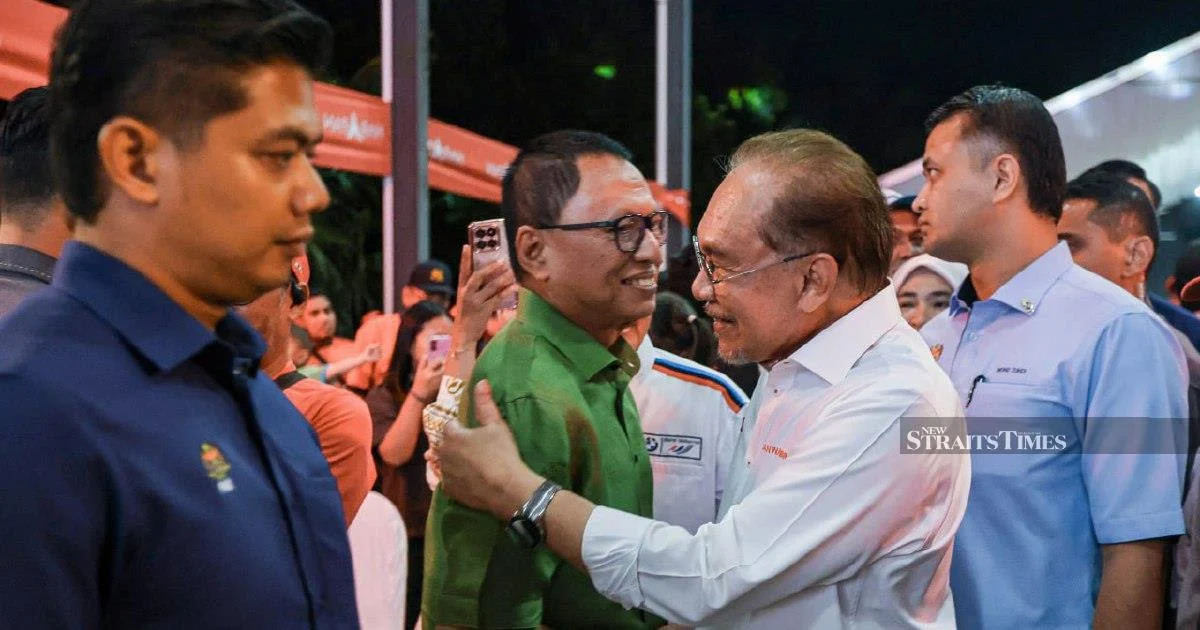
Bersama leader Datuk Seri Rafizi Ramli has publicly taunted Datuk Dr Mohd Puad Zarkashi following a high-profile encounter between Puad and Prime Minister Anwar Ibrahim in Johor Baru on Saturday, with Rafizi suggesting that the encounter signals a fundamental change in political positioning.
The jab represents the latest chapter in ongoing tensions within Malaysia's complex political ecosystem, where shifting coalitions and strategic realignments frequently attract public commentary and criticism from rival factions. Rafizi's remarks highlight the fluid nature of Malaysian politics, where visible public interactions between figures from different political camps often generate scrutiny and become fodder for inter-party commentary.
The significance of Puad's interaction with Anwar extends beyond a simple courtesy meeting. In the context of Malaysia's fractious political landscape, where allegiances have become increasingly transactional and coalition-building remains a paramount concern, such public displays of warmth carry symbolic weight. The embrace between the Prime Minister and Puad appears to have caught the attention of opposition-aligned figures, suggesting that observers view the gesture as potentially meaningful to the current political dynamics.
Rafizi's decision to comment on the encounter through humorous criticism reveals how Malaysian political figures utilise public commentary and social media to highlight perceived inconsistencies or shifts in their rivals' positions. The Bersama leader's quip about Puad switching his "portfolio" operates on multiple levels—it simultaneously mocks the physical gesture of the embrace while implying a broader realignment or recalibration of political interests and loyalties.
Puad's background and current political positioning remain significant factors in understanding why this interaction attracted notice. As a prominent figure with historical connections to Umno, any visible association or cordial engagement with the current administration warrants examination by those tracking the evolving configuration of Malaysia's political landscape. The public nature of the Saturday meeting ensured that such observations would inevitably emerge from various quarters.
The incident underscores a broader pattern in contemporary Malaysian politics where photographs and visual records of political encounters become subjects of interpretation and commentary. What might have been intended as a simple courtesy or acknowledgement of a fellow politician has transformed into an occasion for rival figures to offer pointed observations about shifting positions and changing allegiances.
For Malaysian observers seeking to understand current political dynamics, such moments of visible interaction between figures from different camps offer valuable insights into the ongoing negotiations and repositioning that characterise the nation's political arena. The fact that Rafizi felt compelled to comment publicly suggests that political circles are actively monitoring these interactions and interpreting them as potentially significant developments.
The Bersama leader's intervention also highlights the role that such public commentary plays in political competition. By offering a humorous but pointed critique of Puad's meeting with Anwar, Rafizi ensures that the interaction remains in public discourse rather than fading quietly from attention. This strategy of maintaining and amplifying political narratives through timely commentary has become increasingly common among Malaysian political figures seeking to shape perceptions and maintain their profile.
Understanding the context of such interactions requires recognition that Malaysian politics operates within a system where coalition mathematics constantly shift. Political figures must navigate relationships with multiple potential partners, and any public gesture toward an alternative bloc automatically invites scrutiny and commentary from those occupying different positions within the political ecosystem.
The broader implications of this exchange for Malaysian politics remain to be seen. Whether Puad's embrace with Anwar signals any substantive realignment of political positioning or simply represents a diplomatic gesture between senior figures remains unclear. However, the fact that Rafizi felt the encounter warranted public comment indicates that observers view such moments as potentially indicative of deeper political movements and shifting calculations among Malaysia's political elite.
As Malaysia's political landscape continues to evolve with the incumbency of the current administration and the ongoing repositioning of various factions, such visible interactions between political figures will likely continue to attract scrutiny and interpretation from rival camps. The incident serves as a reminder that in Malaysian politics, even seemingly routine courtesies between figures from different political alignments can become subjects of broader analysis and commentary.

