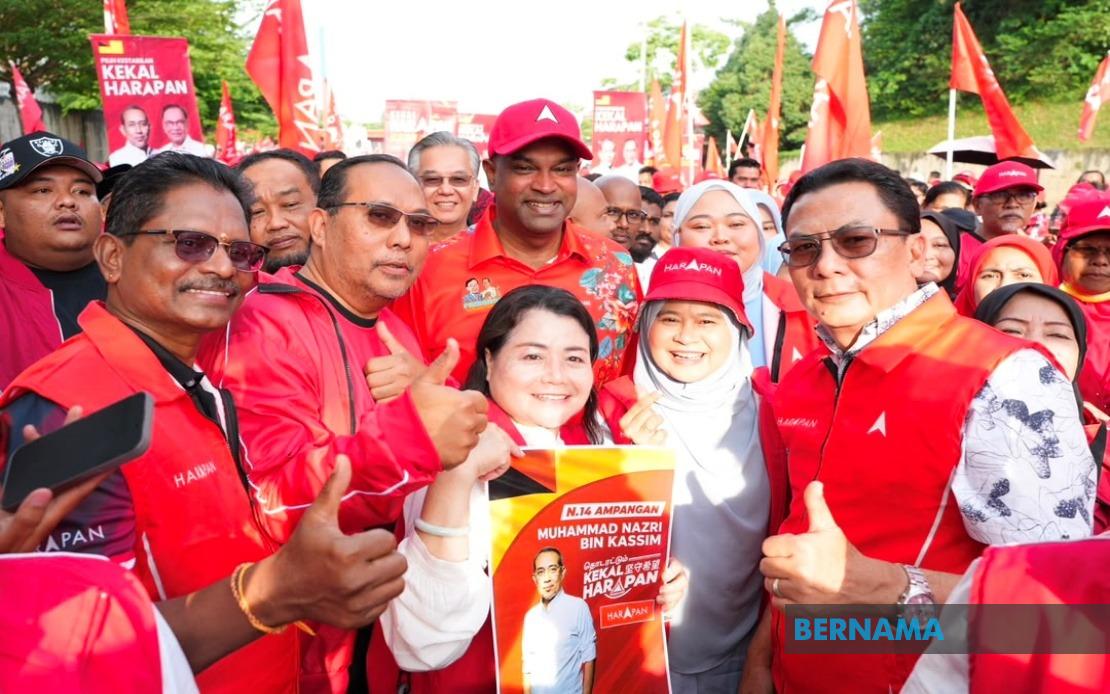
With the nomination process complete, the campaign trail in Negeri Sembilan officially began on July 18 as senior coalition figures demonstrated their commitment to the ruling Pakatan Harapan's bid to retain control of the state assembly. At the Seremban City Council Building, PKR vice-president Datuk Seri R. Ramanan, who represents Sungai Buloh in Parliament, joined other PH leaders in a show of solidarity with six candidates seeking seats in the upcoming state poll. The high-profile appearance underscored the competitive nature of the contest and the determination of the coalition partners to maintain their foothold in a key peninsular state.
Ramanan was accompanied by DAP deputy secretary-general Steven Sim and other PH representatives as they lent their backing to candidates contesting across six constituencies. The slate included Nor Azman Mohamad in Sikamat, Datuk Muhammad Nazri Kassim in Ampangan, Zarinna Abu Zarin in Lenggeng, Chew Seh Yong in Lobak, J. Arul Kumar in Nilai, and Ho Weng Wah in Temiang. The geographical spread of these candidacies reflects the coalition's efforts to maintain representation across the state, from the central districts to outer areas surrounding Kuala Lumpur's southern boundaries.
The presence of multiple senior leaders at a single nomination event served a dual purpose within PH's electoral strategy. Internally, it sent a signal of party unity and coordination between the coalition's major components—PKR, DAP, and their allies—at a moment when questions about coalition cohesion have periodically surfaced. Externally, the show of strength aimed to project confidence to voters and party machinery alike that PH remains organised and committed despite the fractious politics that have characterised Malaysian governance since the 2022 general election.
Ramanan's remarks during the event emphasised the mobilisation of party workers and grassroots supporters, stating that the turnout at the nomination centre reflected genuine enthusiasm within PH ranks. He pledged sustained engagement with constituents throughout the campaign period and highlighted the importance of strong party machinery in each electoral division. His framing of the contest centred on themes of stability and developmental continuity, positioning PH's prospective administration as the safer choice for voters concerned about governance disruption or policy shifts.
The timeline for the Negeri Sembilan contest reflects an accelerated electoral schedule following the dissolution of the state assembly on June 5. The Election Commission compressed the preparation period considerably, setting early voting for July 28 and the main polling day for August 1. This compressed calendar meant that the nomination period and subsequent campaign window operated on a truncated timeline compared to typical state elections, placing emphasis on the efficiency and readiness of party machinery to mobilise supporters quickly.
The 36-seat Negeri Sembilan State Legislative Assembly has been a significant battleground in Malaysia's regional political landscape, sitting strategically between Selangor and the southern peninsula. Control of the state carries implications beyond its borders, as it affects inter-state coordination on development initiatives, water resources management, and transport connectivity affecting the Klang Valley and Selangor economies. For PH, retaining Negeri Sembilan would reinforce its dominance across the west coast corridor of Peninsular Malaysia, whereas any loss of ground would encourage opposition Barisan Nasional to intensify efforts in other states.
The campaign period, which commenced immediately after nomination day and was scheduled to conclude on July 31, presented a condensed opportunity for candidates to reach voters. With the main polling day just three days after campaign closure, parties relied heavily on pre-election groundwork and the visibility of leadership figures to influence voter sentiment. The participation of Ramanan and Sim in the nomination ceremony was thus part of a broader media strategy to maintain PH's presence in news cycles and demonstrate leadership engagement with the electoral process.
For Malaysian observers tracking coalition dynamics, the visible cooperation between PKR and DAP at Negeri Sembilan nomination warranted attention. The two parties have navigated periods of tension over seat allocations and policy positions since forming PH after the 2018 general election, with internal disagreements occasionally surfacing publicly. Joint appearances by senior figures from different coalition partners, particularly in high-visibility electoral moments, serve to paper over such tensions and project an image of coherent strategic direction to both supporters and potential swing voters.
The composition of the six candidates themselves offered insight into PH's selection strategy for the state. The inclusion of candidates with varying backgrounds—from those with corporate or professional credentials to those with grassroots activist profiles—suggested an attempt to broaden appeal across socioeconomic and demographic segments. This diversification approach reflects lessons learned from previous electoral contests where targeted appeals to specific voter blocs proved decisive.
Looking forward, the outcome in Negeri Sembilan would carry symbolic weight within Malaysia's broader political economy. A strong PH performance would validate the coalition's continued relevance and organisational capacity following the complexities of national governance since 2022. Conversely, any significant swing toward opposition candidates would prompt strategic recalibration within PH and potentially embolden Barisan Nasional to accelerate efforts in other state contests scheduled for later in the electoral cycle.
The nomination-day solidarity shown by Ramanan and Sim exemplified how contemporary Malaysian electoral contests operate at multiple levels simultaneously—as platforms for local constituency issues, as tests of coalition viability, and as indicators of broader voter sentiment toward national political trajectories. The compressed campaign period amplified the importance of these high-profile endorsements, which functioned as both morale boosters for party cadres and messaging opportunities to reach undecided voters through media coverage of leadership participation in the nomination process.

