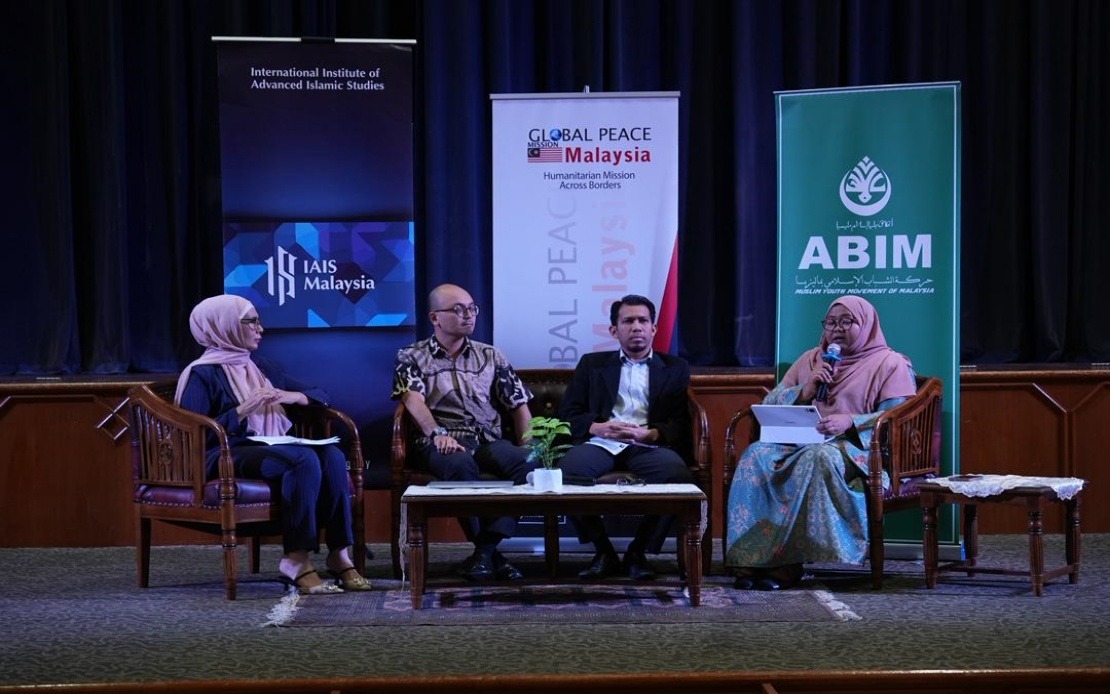
Malaysia's refugee policy framework took a significant step forward as a major stakeholder conference concluded with the adoption of ten resolutions designed to reshape how the country addresses the complex challenges surrounding displaced populations. The Kuala Lumpur: Solidarity with Refugees Conference, held on June 20 in conjunction with World Refugee Day, brought together civil society representatives, academics, humanitarian workers and international bodies at the International Institute of Advanced Islamic Studies to forge consensus on a path that balances humanitarian obligations with legitimate national security concerns.
The centerpiece of the conference's outcome is a call for the government to construct an integrated action plan that reconciles three sometimes competing priorities: safeguarding Malaysia's national interests, protecting the welfare of local communities and fulfilling humanitarian responsibilities toward displaced persons. This triangular approach represents a deliberate attempt to move beyond polarised debates that have increasingly characterised public discourse around refugee issues in the country. Ahmad Fahmi Mohd Samsudin, president of Angkatan Belia Islam Malaysia (ABIM), articulated this philosophy as organisers announced they would present their findings to Members of Parliament and other key stakeholders to catalyse broader policy discussions.
The conference, jointly organised by Global Peace Mission Malaysia, ABIM and IAIS Malaysia, emerged from recognition that Malaysia's unique position as a non-signatory to the 1951 Refugee Convention has nonetheless positioned it as a de facto regional refuge destination. The country's institutional experience managing refugee populations from Vietnam, Syria, Bosnia and Palestine demonstrates both capacity and complexity that policymakers must acknowledge. Rather than treating refugees as an abstract humanitarian category, organisers emphasised that Malaysian officials and civil society have accumulated practical knowledge spanning decades that should inform future policy direction.
A critical component of the resolutions focuses on correcting what organisers describe as widespread misconceptions and misinformation regarding refugee populations. Ahmad Fahmi explicitly warned that failing to address anti-refugee sentiment responsibly risks allowing xenophobic attitudes to metastasize across other vulnerable communities, transforming what currently appears as a refugee-specific problem into a broader threat to social cohesion. This framing shifts the conversation from whether Malaysia should help refugees to how polarisation around refugee issues itself threatens national unity—a compelling argument for pragmatic engagement with what remains a politically sensitive topic.
The resolutions unambiguously reject all manifestations of hatred, discrimination and dehumanisation directed toward refugees, asylum seekers and other vulnerable populations. However, the conference simultaneously acknowledged that communities harbour legitimate concerns regarding security, law enforcement, social services capacity and communal harmony. This dual recognition—condemning discrimination while validating public anxieties—represents sophisticated policymaking that resists the false choice between compassion and security. The approach demands that government responses be grounded in empirical evidence rather than fear-based narratives or dismissive rhetoric that ignores genuine community challenges.
Data infrastructure emerged as another cornerstone recommendation, with participants endorsing enhanced collaboration between Malaysia's government, the United Nations High Commissioner for Refugees (UNHCR) and other international partners to strengthen refugee registration, documentation and management systems. Improved data collection addresses multiple stakeholder needs simultaneously: it provides UNHCR with reliable information for international advocacy, gives Malaysian authorities transparent visibility into refugee populations for security and resource planning purposes, and enables humanitarian organisations to deliver more targeted assistance. The emphasis on orderly, transparent management suggests that organisers believe many concerns about refugee populations stem partly from informational voids filled by speculation and rumour.
Public education and media literacy initiatives feature prominently in the adopted resolutions, reflecting growing recognition that information environments significantly shape policy trajectories. Participants called for sustained campaigns combating misinformation, hate speech and xenophobic content, particularly on social media platforms where unchecked narratives can rapidly poison public opinion. This represents an implicit acknowledgement that Malaysia's refugee challenges are not purely administrative or security-oriented but substantially communicative—shaped by how stories about refugees circulate and evolve across digital networks.
The conference also supported establishment of dedicated mechanisms through which NGOs, activists and humanitarian organisations can address coordinated attacks, slander and disinformation campaigns targeting their work. This reflects practical concerns from organisations working directly with refugee communities who face considerable social media harassment and reputational damage from coordinated online campaigns. By proposing institutional support structures, the resolutions attempt to level an asymmetrical information landscape where well-funded disinformation efforts can overwhelm the communications capacity of civil society actors.
For Malaysia's regional standing, these resolutions carry implications extending beyond domestic policy. As Southeast Asia's primary refugee destination and a nation hosting significant Rohingya, Palestinian and Syrian populations, Malaysian positions on refugee management influence how other regional governments approach similar challenges. The conference's emphasis on balancing security and humanitarian concerns offers ASEAN peer nations a template for navigating contentious refugee issues without resorting to either securitised rejection or unrealistic integration commitments.
Ahmad Fahmi indicated that follow-up engagement with the Home Ministry and the National Security Council would test whether policymakers genuinely embrace the conference's balanced framework or merely acknowledge it ceremonially. The real measure of the conference's impact will emerge over coming months as government officials respond to these recommendations and either advance toward the proposed integrated action plan or retreat into existing bureaucratic patterns. Malaysia's refugee policy trajectory remains unresolved, but this conference has established intellectual and political foundations upon which more sophisticated approaches might yet be constructed.

