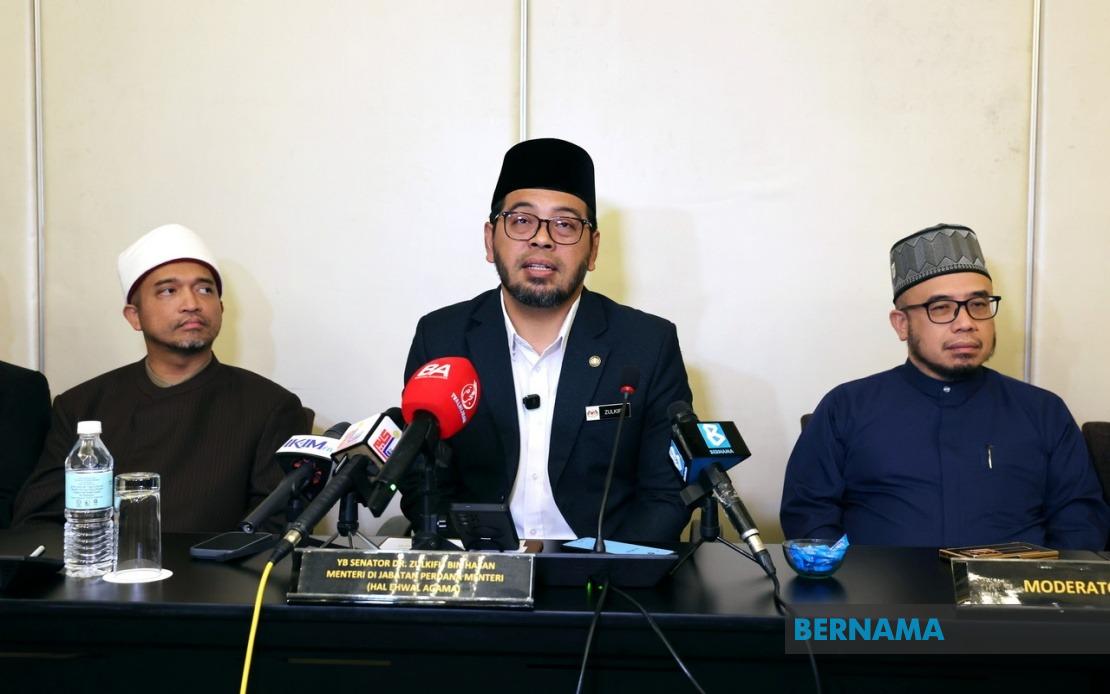
Religious Affairs Minister Dr Zulkifli Hasan has ruled out the application of the Islamic theological term 'kafir harbi' within the Malaysian context, asserting that its use runs counter to the constitutional principles that bind the nation together. Speaking in Putrajaya on August 10, Zulkifli explained that the conclusion emerged from a dedicated roundtable discussion convened specifically to examine the contentious terminology and its implications for Malaysian society.
The minister's intervention addresses growing concerns about the appropriateness of deploying religiously-charged language that could undermine social cohesion. The term 'kafir harbi' originates from classical Islamic jurisprudence and historically refers to non-Muslims outside the realm of Islamic governance. Its invocation in contemporary Malaysian discourse has sparked debate about whether such classifications remain relevant or constructive in a multi-faith nation built on constitutional foundations that guarantee religious freedom and equal citizenship.
Zulkifli's position rests fundamentally on the principle that Malaysian citizens, regardless of their faith, operate within a unified constitutional framework that establishes their common status and mutual obligations. He emphasised that all Malaysians share responsibility for defending and developing the nation, making divisive religious categorisations both inappropriate and counterproductive. This framing reflects the government's effort to position constitutional nationalism above sectarian interpretations of religious identity.
The roundtable discussion brought together stakeholders to deliberate on whether traditional Islamic terminology can be meaningfully applied to modern Malaysian society. Zulkifli indicated that presentations and substantive exchanges across participants yielded broad consensus that the term lacks legitimacy in the Malaysian context. This convergence suggests that even among religious scholars and officials, there is growing recognition that importing concepts designed for different historical and geographical contexts may create unnecessary friction in pluralistic societies.
The Department of Islamic Development Malaysia (JAKIM) will now spearhead a coordinated effort with other government agencies and ministries to disseminate information and clarification regarding this issue. This institutional approach signals that the government intends to move beyond isolated statements to embed these principles across the bureaucracy. By involving multiple agencies, the initiative aims to ensure that public messaging remains consistent and that the clarification reaches diverse audiences through various channels.
Zulkifli stressed that this collaborative framework is essential precisely because national integration requires whole-of-government commitment rather than responsibility confined to the religious sector alone. The approach acknowledges that terminology and its implications touch upon broader questions of citizenship, belonging, and national identity that extend beyond religious departments. When the government houses, education, security, and other civil agencies coordinate, the message that divisive religious categorisation lacks official sanction becomes embedded throughout state institutions and public discourse.
The minister's call for strengthened unity emphasises mutual respect, cultural understanding, and interfaith dialogue as foundations for the nation's future. His language pivots away from abstract theological debates toward practical expressions of shared citizenship and common purpose. By framing the issue in terms of concrete national development and collective responsibility, he positions the rejection of 'kafir harbi' not as a religious concession but as a logical consequence of Malaysia's constitutional compact and developmental needs.
For Malaysian readers, this statement carries particular significance given the nation's history of managing religious and ethnic diversity within a constitutional democracy. Malaysia's success depends substantially on citizens perceiving themselves as part of a single national community despite their different beliefs, practices, and cultural backgrounds. The government's active stance against potentially divisive terminology signals commitment to reinforcing constitutional nationalism over sectarian identity markers, a principle that has guided Malaysian statecraft since independence.
The timing and context of this pronouncement also reflect broader regional dynamics. Southeast Asia contains several Muslim-majority democracies grappling with how to accommodate religious identity within modern governance frameworks. Malaysia's explicit rejection of theology-based exclusionary categories offers a model for managing the tension between respecting religious conviction and maintaining inclusive citizenship. The decision to publicise these conclusions through official channels demonstrates deliberate intention to shape public understanding and discourage informal use of contested terminology.
For minority religious communities in Malaysia, the statement provides reassurance that the government recognises their constitutional standing and refuses to countenance interpretations that question their legitimate place within the nation. The emphasis on shared citizenship and constitutional protection offers legal and ideological grounding for equality claims. Simultaneously, the government's engagement with Islamic scholars and JAKIM in reaching these conclusions demonstrates effort to build consensus among religious authorities themselves rather than imposing secular frameworks on religious questions.
The practical implementation of this position will likely emerge through official guidance documents, educational materials, and public statements from JAKIM and partner agencies. How effectively these messages penetrate popular discourse and discourage informal use of the term among ordinary Malaysians remains to be seen. The success of this initiative will depend on sustained commitment across government, visible endorsement from diverse religious and community leaders, and integration of these principles into civic education and public institutions.

