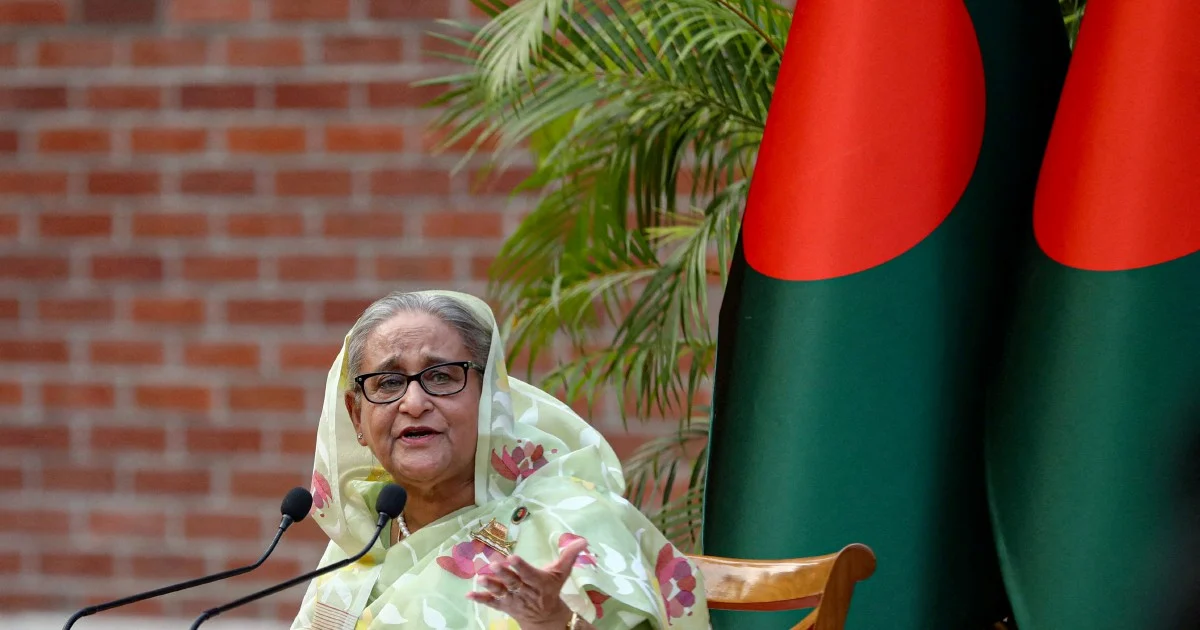
Ousted Bangladeshi Prime Minister Sheikh Hasina confronts a stark choice between remaining in exile or facing incarceration upon her return home, according to a senior government official in Dhaka on Monday. The warning marks a significant development in the ongoing political crisis that has gripped the South Asian nation since Hasina's departure, and directly contradicts her recent public statements to international media that she intends to come back in December and submit herself to judicial proceedings.
The divergence between the interim administration's threat and Hasina's declared intentions underscores deep tensions within Bangladesh's transitional political landscape. Having left for India following widespread civil unrest, Hasina has maintained through recent interviews with Reuters that she views return and cooperation with the courts as the appropriate course of action. Her stated willingness to face legal proceedings stands in sharp contrast to the government's explicit suggestion that imprisonment, rather than due process, awaits her.
Bangladesh has been navigating turbulent waters since the upheaval that precipitated Hasina's departure. The interim government has taken charge of state affairs amid the vacuum left by her exit, introducing sweeping policy shifts and institutional reforms. This transitional authority appears determined to consolidate its position and ensure accountability for alleged governance failures during Hasina's tenure. The prospect of her return has evidently become a matter of significant concern for officials overseeing the current administration.
The threat of imprisonment carries particular weight given the historical context of Bangladesh's political dynamics, where former leaders have frequently faced legal complications upon losing power. Whether such consequences represent genuine judicial concerns or politically motivated consequences remains a subject of considerable debate among observers of South Asian politics. The pattern reflects broader regional challenges in managing peaceful transfers of power and ensuring accountability without weaponizing the legal system.
From Hasina's perspective in her Indian refuge, the calculation has become more complex. Her previous assertions about returning in December presumed a functioning judicial environment where she could present her case. The official warning suggests that the interim government may have no intention of affording her such opportunities, fundamentally altering the terms under which any homecoming would occur. This escalation in rhetoric indicates that political reconciliation remains distant.
For Malaysia and other Southeast Asian nations observing Bangladesh's internal developments, the situation reflects broader concerns about democratic resilience and institutional stability in the region. Southeast Asia has experienced its own cycles of political upheaval, and the mechanisms through which nations manage leadership transitions carry implications for regional governance standards. Bangladesh's approach may influence how neighbouring states address similar challenges.
The international community has been watching the Bangladesh situation closely, with particular attention from India, which is hosting Hasina. India's position as both a neighbouring power and a sanctuary for the exiled leader creates diplomatic complexities. New Delhi's interests in maintaining regional stability must be balanced against considerations of sovereignty regarding a guest on its soil. The timing of the government's formal warning suggests possible coordination regarding expectations for Hasina's status.
Legal proceedings against Hasina have reportedly already commenced during her absence, with allegations ranging from corruption to human rights violations. The interim government's comments Monday serve as a formal notification that returning would result in enforcement of these legal actions through detention. Whether the charges constitute legitimate accountability or political retribution depends partly on the transparency and independence of Bangladesh's judiciary in managing such cases.
Hasina's political career has been marked by periods of power alternating with episodes of opposition and legal troubles, reflecting the cyclical nature of Bangladesh's politics. Her family's role in the nation's founding has ensured her continued prominence, but also made her a polarizing figure. The current situation represents perhaps her most precarious position, stripped of executive authority while facing potential confinement.
For Bangladeshi diaspora communities across Southeast Asia, including significant populations in Malaysia and Singapore, the unfolding situation carries personal and political significance. Many maintain ties to the homeland and have relatives navigating the changed circumstances. The prospect of Hasina's imprisonment would represent a dramatic conclusion to her political career and signal the complete consolidation of power by the interim administration.
The December timeline Hasina mentioned appears increasingly unlikely to materialize as stated. The government's explicit warning functions as a deterrent while simultaneously calling the former Prime Minister's bluff regarding her commitment to judicial processes. Whether she remains in India indefinitely, attempts an alternative political arrangement, or defies the government's threats by returning faces, the coming weeks will clarify her options and Bangladesh's commitment to rule of law versus political settlement through detention.
This standoff encapsulates larger questions about Bangladesh's democratic trajectory and institutional maturity. A functioning state governed by laws rather than personalities would offer Hasina due process and public accountability. The government's instead preference to announce imprisonment as a condition precedent to return suggests that governance arrangements remain rooted in power struggles rather than institutional frameworks. How this situation resolves will carry implications for Bangladesh's political future and the regional stability of South Asia.

