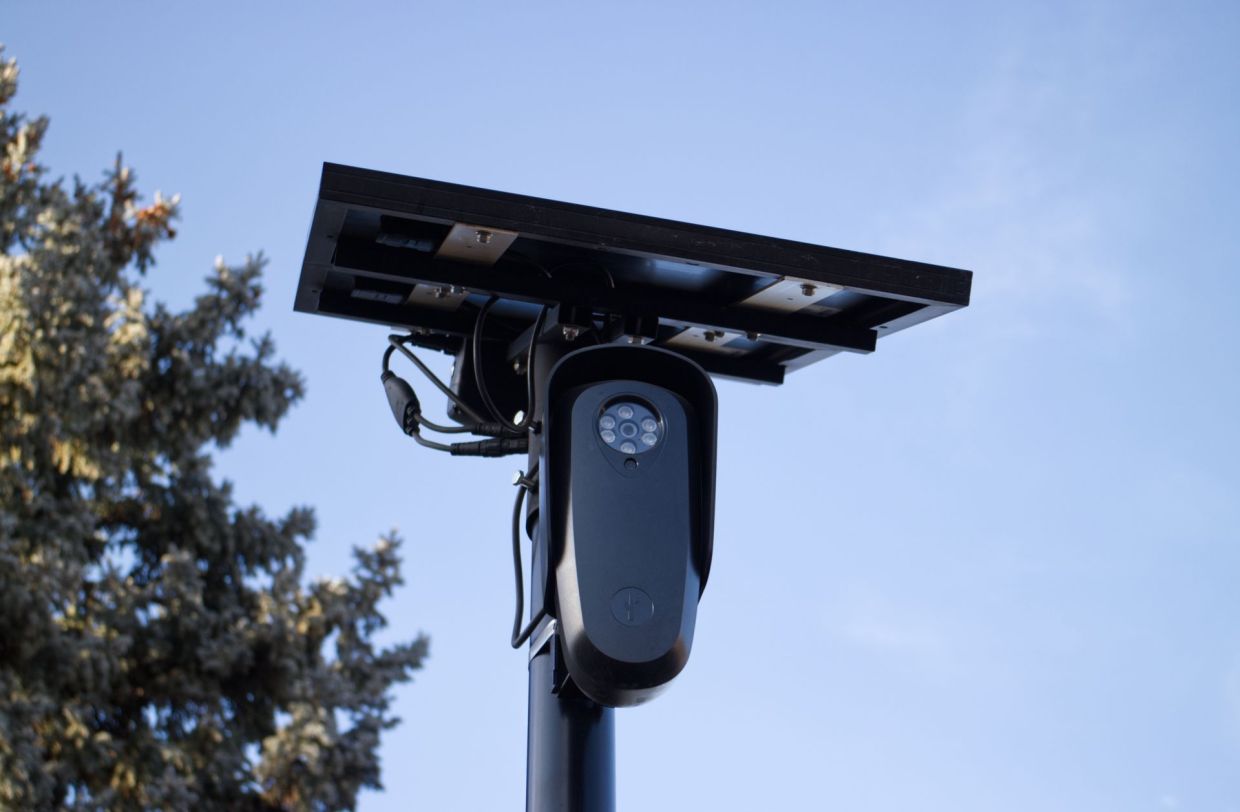
The proliferation of automatic license plate readers across American cities has triggered an unusual alliance of civil libertarians, privacy advocates, and conservative activists who view the technology as an existential threat to personal freedoms. What began as scattered protests has evolved into a coordinated grassroots campaign that combines traditional civic engagement with direct action, reflecting deep anxieties about surveillance capitalism and unchecked law enforcement powers in the digital age.
Flock Safety, the company at the forefront of this surveillance expansion, operates a network of cameras fundamentally different from conventional security systems. Rather than recording continuous video footage, these devices capture static images of vehicles—recording license plates, make, model, colour, and other identifying features—which are then uploaded to cloud servers and retained for up to a month. The networked nature of this infrastructure means data can be shared across state lines and queried by multiple law enforcement agencies, creating what critics describe as an unparalleled window into the movement patterns of ordinary citizens. This technical architecture, while designed to assist in criminal investigations, has inadvertently created infrastructure for mass surveillance at scale.
Proponents of the technology highlight legitimate investigative advantages. Richmond police officer Jon Bridges describes how Flock helped solve a domestic-related double homicide in May 2024, enabling detectives to rapidly identify a suspect's vehicle and coordinate an arrest across county lines. Such successes have made the system attractive to police departments seeking efficient tools for solving serious crimes. Richmond's department has deployed Flock since 2023, and similar adoption has spread across the country as municipal law enforcement budgets increasingly prioritize technological solutions to crime.
Yet concerns about abuse are not theoretical. An investigation by The Washington Post documented at least 50 police officers accused of misusing Flock systems, predominantly to monitor current or former romantic partners without authorization. Media reports have further exposed instances where officers used the platform to track women seeking abortions in states where the procedure is illegal, while some personnel illegally transferred data to immigration enforcement agencies. These documented cases have galvanized opposition beyond traditional privacy advocates to encompass diverse constituencies concerned about state power.
The anti-Flock movement operates through both conventional and unconventional channels. A Facebook group called DeFlock America has amassed over 600,000 members and continues expanding daily, serving as a hub for sharing crowdsourced maps of camera locations, technical information about disabling devices, and coordination of civic action. Meanwhile, activists have taken more direct approaches, with individuals like the Minneapolis-based Nomark—a 20-year-old with 500,000 Instagram followers—publicizing methods for rendering cameras inoperable while documenting approximately 30 such incidents near his residence. Though Nomark acknowledges the illegality of his actions, he has framed them as justified resistance to mass surveillance, and his followers have replicated similar vandalism nationwide.
What distinguishes this movement is its politically heterogeneous composition. The campaign has attracted support from libertarian conservatives, progressive civil libertarians, and centre-right figures including former Fox News host Tucker Carlson, who has publicly praised the vandals as "decent, patriotic Americans" exercising justified self-help remedies. This cross-partisan consensus reflects how surveillance concerns transcend traditional left-right divides in American politics, with skepticism about concentrated technological power resonating across ideological lines.
The American Civil Liberties Union has characterized the movement's growth as "stunning," with senior policy counsel Chad Marlow noting the genuine grassroots character of the opposition. Rather than merely reactive online activism, organized groups across the country are engaging municipal governments directly, petitioning city councils and mayors to terminate Flock contracts. Steven Keener, a criminology professor at Christopher Newport University, notes that such conventional advocacy channels remain available to residents seeking to contest their cities' surveillance investments.
These efforts have achieved measurable success. According to ACLU documentation, more than 70 municipalities—ranging from Los Angeles to small Virginia towns—have discontinued their relationships with Flock in recent months. This represents a significant reversal for a company whose technology appeared poised for nationwide expansion just months earlier. The pattern suggests that when mobilized, public opinion can constrain the adoption of surveillance infrastructure, particularly where local governments remain responsive to constituent pressure.
Flock CEO Garrett Langley has responded to critics by characterizing some opponents as "terrorists," rhetoric that has only intensified polarization rather than addressing substantive privacy concerns. This defensive positioning has inadvertently validated the movement's claims about the company's dismissiveness toward legitimate oversight questions.
For Malaysian and Southeast Asian observers, this American conflict carries important implications. The expansion of automated license plate readers mirrors similar surveillance infrastructure projects throughout the region, often implemented with minimal public consultation or legal frameworks governing data usage. The American experience demonstrates that once such systems are deployed, removing them becomes exponentially more difficult, even when documented abuses emerge. The political consensus opposing Flock in the United States—spanning ideological boundaries that normally prevent cooperation—offers a model for how diverse constituencies might unite around privacy protections.
The movement also illustrates the growing tension between technological capability and democratic accountability. Surveillance infrastructure often precedes legal frameworks governing its use, creating situations where technologies designed for legitimate purposes become instruments of abuse before regulatory mechanisms can be established. The American pushback against Flock suggests that public awareness and grassroots mobilization can constrain such overreach, though only if engaged sufficiently early in the deployment cycle.
As this confrontation continues, it raises fundamental questions about the relationship between security and liberty in democracies. The fact that opposition transcends political divisions suggests that concerns about surveillance resonate more deeply than partisan tribalism in democratic societies. Whether this American moment represents a turning point in how democracies approach surveillance infrastructure remains uncertain, but the scale and diversity of the movement suggests that the era of unquestioned technological expansion in law enforcement has entered a new, contested phase.

