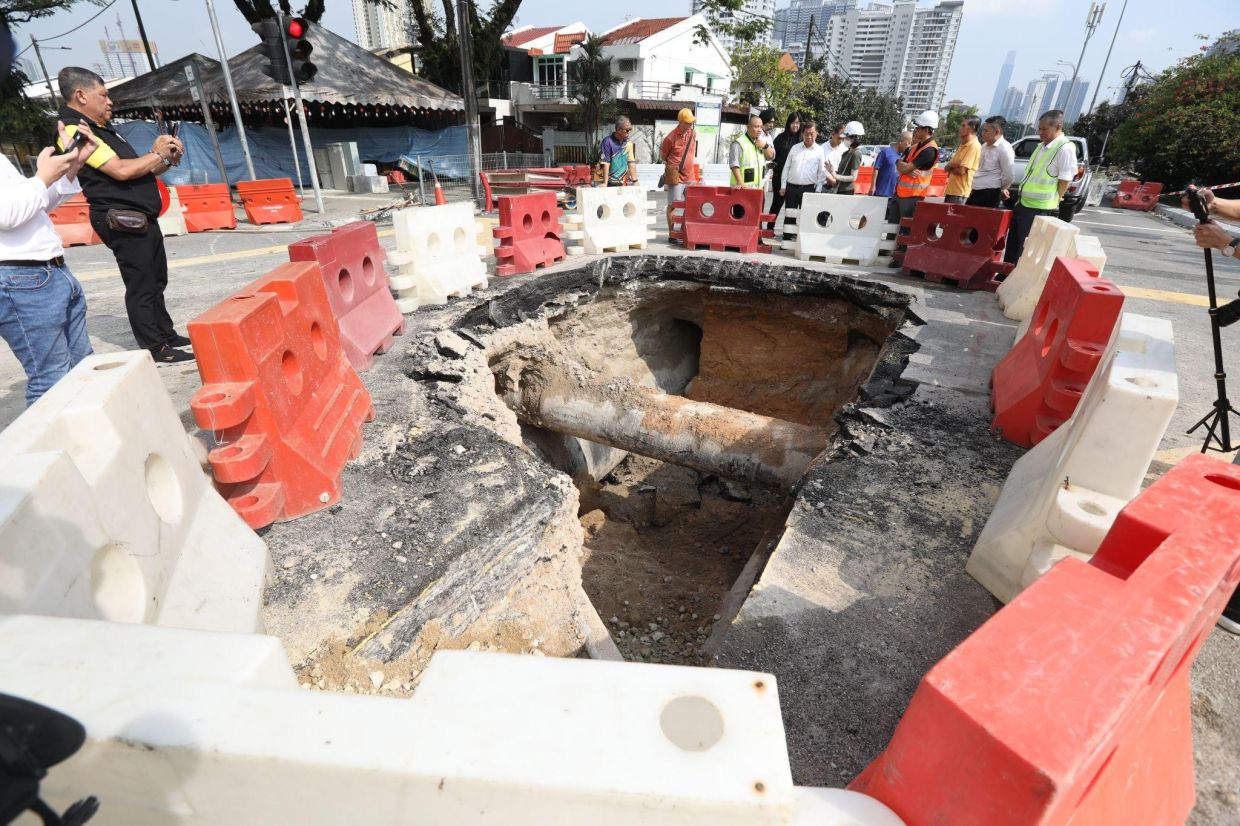
Malaysia's susceptibility to sinkholes is intensifying as the country grapples with increasingly severe and unpredictable weather patterns. The phenomenon, which can emerge suddenly and cause significant damage to roads and property whilst endangering lives, stems from a complex interplay of geological, hydrological and infrastructural factors. When heavy rainfall saturates the ground, it weakens soil stability whilst simultaneously overwhelming underground sewerage networks designed for conventional precipitation levels. As these systems fail under stress, surrounding earth is gradually eroded away, creating concealed voids that eventually collapse without warning.
The mechanics behind sinkhole formation are multifaceted and vary substantially depending on local conditions. Natural underground water flows interact with artificial drainage systems, whilst construction activities can further destabilise soil structures. Ageing pipes themselves constitute a primary vulnerability—as concrete deteriorates and joints separate, water escape and infiltration accelerate subsurface erosion. Hydrogen sulphide gas, a byproduct of sewage decomposition that accumulates in large trunk sewers operating near capacity, compounds this problem by chemically corroding concrete at an accelerated rate. Each incident requires thorough investigation to establish causation, reflecting the layered complexity of diagnosing underground failures after they occur.
Indah Water Konsortium, the national sewerage operator, confronts this challenge whilst managing approximately 22,500 kilometres of public sewer pipelines spanning the entire country. The infrastructure estate includes thousands of critical reinforced concrete conduits measuring 600mm in diameter and above—large trunk sewers that transport raw sewage at high velocity through densely populated areas. These assets operate under extreme conditions, frequently flowing at or approaching maximum capacity, which amplifies both mechanical stress and chemical degradation. The combination of physical pressure, corrosive gas environment and structural age creates a scenario where deterioration can accelerate rapidly, potentially leading to catastrophic failure without adequate preventive measures.
IWK's response centres on a proactive, risk-based asset management philosophy that prioritises early detection and intervention. The utility conducts periodic technical assessments on critical sewer assets utilising cutting-edge inspection methodologies. Ground Penetrating Radar technology allows engineers to detect anomalies without excavation, whilst Closed-Circuit Television crawler systems provide detailed visual documentation of internal pipe conditions. Push rod and pole cameras offer alternative inspection approaches suited to varying site constraints and operational accessibility. This multi-technology approach ensures comprehensive coverage across diverse pipeline configurations and environmental settings, enabling IWK to identify degradation before pipes catastrophically fail.
Regeneration measures implemented following inspection discoveries include trenchless sewer lining—a technique that installs new protective barriers within existing pipes without requiring extensive excavation—and selective pipeline replacement in cases where structural integrity cannot be restored. These interventions aim to rebuild pipe strength, prevent breakthrough failures and maintain the continuous, reliable operation essential for public health and sanitation. By addressing deterioration proactively rather than reactively, IWK reduces the cascading consequences that follow pipe ruptures, including soil displacement, sinkhole formation and widespread service disruptions affecting multiple communities simultaneously.
According to IWK Chief Executive Officer Narendran Maniam, the connection between intensifying weather extremes and underground infrastructure vulnerability has become undeniable. Heavy rainfall directly destabilises ground through saturation, physically shifting and misaligning sewer conduits that span the subsurface. These movements obstruct flow and fracture joints, whilst the sustained pressure from elevated water volumes can crack or rupture aged pipes entirely. Replacement of failed sections becomes necessary immediately, yet the underlying soil around breached pipes continues eroding as stormwater escapes into adjacent ground. Over time, these underground cavities expand until the surface layer collapses inward, creating the dramatic and dangerous sinkholes that appear without antecedent warning to unsuspecting road users and residents.
The vulnerability intensifies when considering how stormwater penetrates sewerage networks through pre-existing cracks, deteriorated joints and manhole covers that fail to seal properly. During intense rainfall events, massive volumes of water surge through these entry points, exponentially overwhelming systems already stressed by normal sewage flows. Older infrastructure proves particularly susceptible to this flooding, as decades of service have already compromised structural integrity through corrosion and fatigue. The additional hydraulic pressure destabilises pipes further, increasing the likelihood of shifts and breaches that expose surrounding soil to washout and void formation. This cascade of failures demonstrates how weather extremes can trigger multiple failure modes simultaneously, compounding sinkhole risk across broad geographic areas.
Recognising these cascading vulnerabilities, IWK invested in comprehensive emergency preparedness through a Crisis Simulation Exercise conducted at its Asian Sewerage Training, Research & Innovation Centre of Excellence. The exercise modelled a catastrophic sinkhole scenario involving casualties and suspected major pipeline damage, testing IWK's ability to mobilise operational teams, execute crisis management protocols and coordinate effectively with the Fire and Rescue Department, Royal Malaysia Police and complementary agencies. The structured simulation allowed senior leaders and operational staff to identify procedural gaps, clarify decision-making hierarchies and strengthen inter-agency communication pathways before an actual emergency demanded rapid deployment under crisis conditions.
Outcomes from the simulation exercise informed significant enhancements to IWK's crisis management standard operating procedures. The utility systematically documented protocols for major incident response, ensuring all personnel understand their designated roles and responsibilities when emergencies occur. This structured preparation proves essential given the speed at which sinkholes can develop and the serious consequences for public safety when major sewerage assets fail catastrophically. By investing in tabletop exercises and protocol development before crises materialise, IWK builds institutional muscle memory that enables faster, more coordinated response when lives and critical infrastructure hang in the balance.
The broader challenge extends beyond individual infrastructure assets to embrace systemic resilience across Malaysia's entire sewerage estate. As climate patterns destabilise and extreme weather becomes the new baseline rather than anomalous occurrence, utilities cannot rely on defensive reactions to infrastructure failures. Instead, forward-looking operators must fundamentally reshape how they allocate resources toward prevention, detection and rapid mitigation. IWK's multi-pronged approach—combining advanced inspection technologies, condition-based rehabilitation, emergency preparedness training and inter-agency coordination—reflects this strategic reorientation. The initiative acknowledges that protecting public safety whilst maintaining continuous sewerage services requires constant vigilance, substantial capital investment and willingness to embrace evolving technologies.
Malaysian communities increasingly recognise that sinkhole incidents are not isolated geological accidents but symptomatic of broader infrastructure strain accumulating across decades of urban growth and accelerating environmental change. The visibility of sinkholes—their dramatic appearance and capacity to disrupt traffic and damage property—makes them visceral reminders of invisible systems sustaining modern urban life. IWK's commitment to strengthening sewerage resilience operates largely beyond public view, yet determines whether millions of Malaysians can rely on uninterrupted sanitation services and safe streets. As weather patterns continue shifting, the coming years will test whether proactive asset management, emergency preparation and sustained investment prove sufficient to meet intensifying demands on infrastructure systems designed for climatic conditions that no longer exist.

