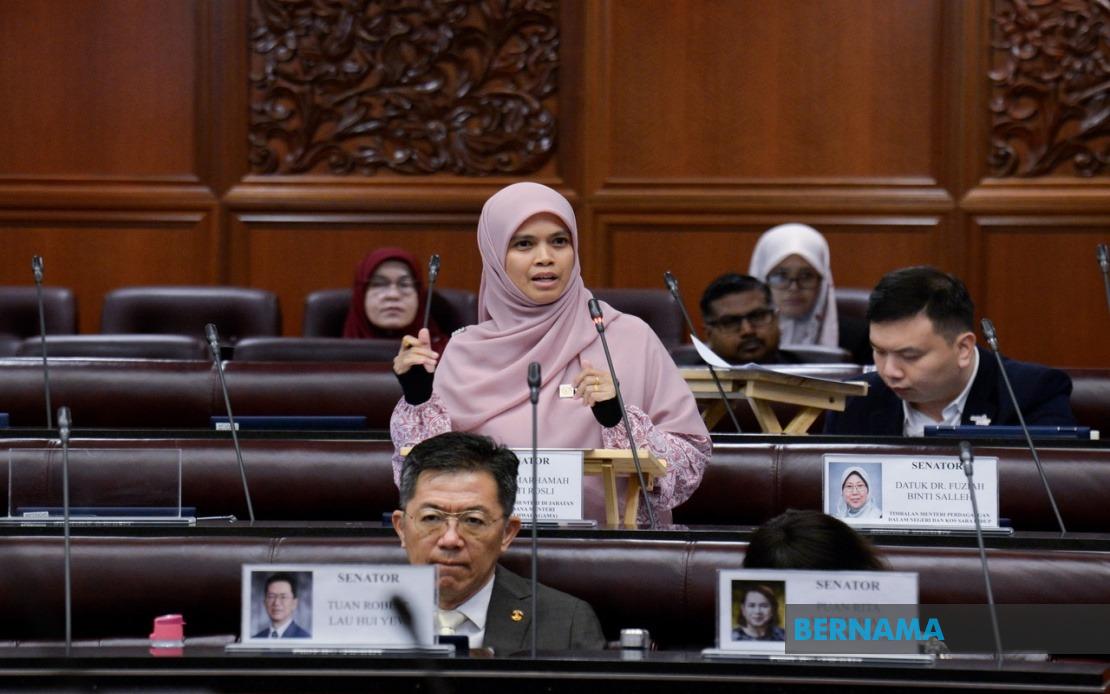
The MADANI administration has approved funding for 92 mosque construction projects valued at RM160.82 million since 2023, according to Deputy Minister in the Prime Minister's Department (Religious Affairs) Senator Marhamah Rosli, who disclosed the figures during parliamentary proceedings on August 3. The widespread initiative reflects the government's commitment to expanding religious infrastructure across Malaysia, with 54 projects already completed and a further 16 currently in active construction phases.
The remaining 22 approved projects remain in earlier stages of implementation, either navigating the pre-implementation phase or working through procurement processes that typically determine final timelines and costs. This distribution indicates a measured approach to rolling out the programme, allowing for proper planning and execution rather than attempting simultaneous launches that might strain administrative resources or compromise construction quality. Marhamah's statement came in response to parliamentary inquiry from Senator Mohd Hasbie Muda regarding mosque construction progress during the current administration's tenure and whether such projects adequately address the evolving needs of Malaysia's Muslim population.
The approval framework for new mosque construction incorporates multiple layers of assessment to ensure strategic placement and relevance. State religious authorities submit recommendations that weigh demographic factors including Muslim population growth and concentration in specific regions, spatial adequacy of existing facilities in terms of capacity and geographical accessibility, site suitability and land status, alongside confirmed financial commitments from respective state governments. This collaborative approach reflects a 2022 decision by the 139th Meeting of Menteri Besar and Chief Ministers on June 28, whereby mosque development costs are shared between federal and state authorities, distributing financial responsibility and encouraging coordinated planning at both levels of government.
The expansion of Malaysia's mosque network carries particular significance for Southeast Asia's largest Muslim-majority nation, where rapid urbanisation and internal migration have fundamentally reshaped population distributions over the past two decades. Many urban areas experience concentrated Muslim populations that existing mosque facilities cannot adequately serve, while simultaneously some established mosques operate below capacity due to neighbourhood demographic shifts. The strategic assessment criteria employed here represent an attempt to align religious infrastructure with contemporary settlement patterns, though implementation timelines extending across multiple years suggest the challenge remains substantial.
Beyond their primary religious function, Malaysian mosques increasingly serve as community anchors providing essential social services, particularly for vulnerable populations. Marhamah highlighted various welfare initiatives channelled through mosque networks, executed in collaboration between the Department of Islamic Development Malaysia (JAKIM), state Islamic religious departments, councils, non-governmental organisations and other community partners. These programmes encompass targeted assistance for asnaf groups—those traditionally classified as deserving of zakat support—alongside food basket distribution and community kitchen operations that address food insecurity.
The welfare role extends to emergency interventions addressing acute poverty and educational barriers, with financial assistance and counselling services available through mosque-based structures. Funeral management support provides particular value within Muslim communities where religious observance intersects directly with crisis response, while temporary shelter facilities address homelessness among urban poor populations. This multifaceted approach positions mosques as integrated service delivery points rather than purely devotional spaces, acknowledging the institution's embedded role within Malaysia's social safety net architecture.
Senator Mohd Hasbie's supplementary questioning specifically probed how newly constructed and existing mosques contribute to reaching homeless populations, the urban poor, and low-income communities—constituencies increasingly visible across Malaysian cities as economic pressures mount. The Deputy Minister's response emphasised coordination across government departments and non-governmental actors, suggesting recognition that no single institution can effectively address homelessness or urban poverty without integrated strategies. This acknowledgment carries weight given Malaysia's growing visibility of rough sleeping and informal settlement clusters in major urban centres.
The RM160.82 million investment must be contextualised within broader government spending and Malaysia's fiscal constraints. While substantial in isolation, the allocation averaged across 92 projects suggests individual mosque construction costs ranging from approximately RM1.7 million to RM2 million, figures that appear modest relative to comparable infrastructure but reflect the modular, community-responsive nature of mosque design. Cost-sharing arrangements between federal and state governments mean neither tier bears the complete burden, yet coordination challenges and procurement delays frequently affect such programmes, explaining why 22 projects remain in earlier phases despite approval.
For Malaysian policymakers and communities, this expansion programme addresses a documented infrastructure deficit while simultaneously signalling commitment to religious institutional development under the current administration. The programme's inclusivity across 92 separate projects distributed nationwide—rather than concentrating resources in particular regions—reflects political sensitivity to equitable resource allocation, a consideration particularly important in Malaysia's federal context where state governments maintain significant autonomy over local development priorities.
The completion rate thus far, with over half of approved projects finished within roughly 18 months, suggests reasonable execution velocity, though the 16 projects currently under construction alongside 22 in pre-implementation stages indicate a possible slowdown in the pipeline. Procurement processes, land acquisition complications, and coordination delays between federal and state authorities commonly affect infrastructure timelines, and mosque projects face additional complexities involving community consultation and religious authority approvals. As Malaysia's Muslim population continues growing and concentrating in urban areas, sustaining and potentially accelerating this construction pace will likely become increasingly important for maintaining adequate religious infrastructure capacity.

